
James Riady: Diplomacy Must Deliver Investment and Jobs
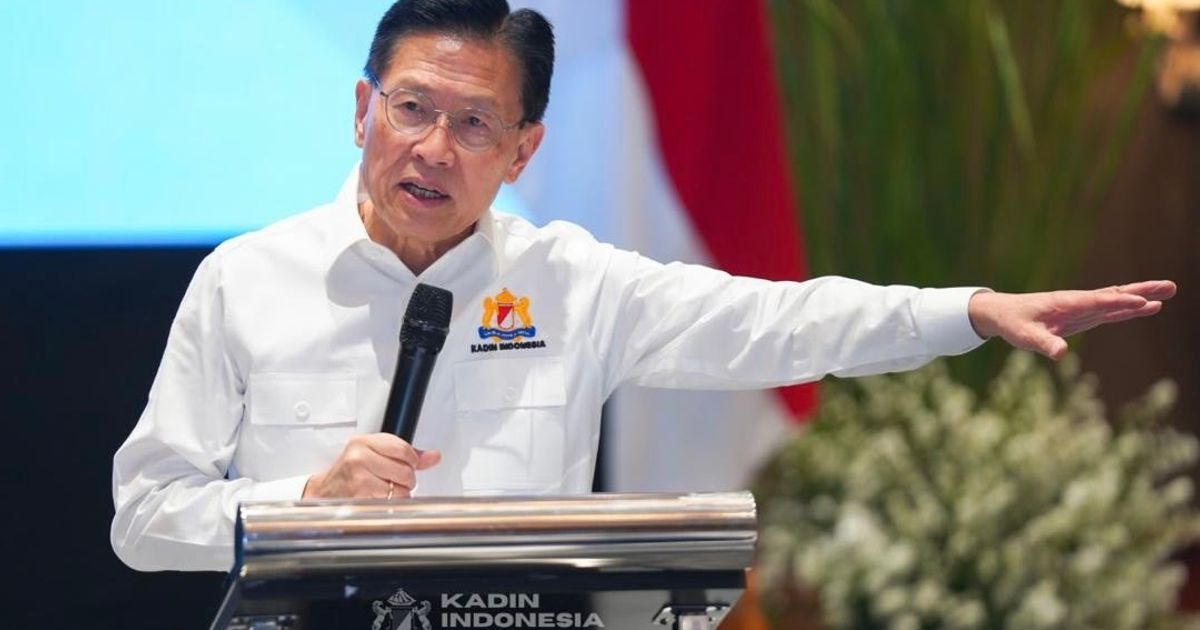
JAKARTA, Investortrust.id — James Riady, Deputy Chair of Kadin Indonesia’s Coordinating Board for Foreign Affairs, said Indonesia’s good relations with various countries must be translated into investment, increased exports, industrial development and job creation. The success of economic diplomacy should be measured by its tangible benefits to the national economy, not simply by the number of visits, business forums or memoranda of understanding signed.
James made the remarks at the 2026 National Coordination Meeting of Kadin Indonesia’s Foreign Affairs Board at Hotel Aryaduta in Menteng, Jakarta, on Monday (19 October 2026). He said Kadin’s international network was an important asset for strengthening global business confidence in Indonesia and opening opportunities for entrepreneurs across the regions. “Our challenge now is how to turn those good relations into economic confidence and economic results,” James said.
He said the next step for Kadin’s Foreign Affairs Board was to turn relations into trust, trust into investment, and investment into concrete outcomes such as exports, factories, technology, jobs and business opportunities. In this way, international relations would have a measurable impact on strengthening the domestic economy.
“We must start asking not only how many visits, forums and MoUs there have been, but what has changed for Indonesia because of the relations we have built,” he said.
James said that question had to be answered through the realisation of new investment, improved market access for Indonesian companies, the arrival of technology, and the growth of industry and employment. Opportunities for regional businesses were also an important measure of economic diplomacy’s success.
He said Indonesia’s foreign relations were generally in a good position. During the first nearly two years of his administration, President Prabowo Subianto had worked hard to build bridges with various global centres of power and preserve Indonesia’s room for cooperation amid rising international tensions.
He cited Indonesia’s relations with the United States, China, Russia, India and Brazil, as well as BRICS countries and partners in Europe, ASEAN, APEC, the Middle East and Africa, as part of the country’s diplomatic assets. Indonesia’s ability to maintain ties with many parties had become increasingly valuable as the world faced war, protectionism, economic fragmentation, competition between major powers and changing supply chains.
“We want good relations with everyone, without having to become part of the conflict between one side and another. That is a position we must preserve,” James said.
However, he cautioned that good political and diplomatic relations still needed to be accompanied by stronger economic confidence. James highlighted pressure on the capital market and the rupiah, as well as international investors’ attention to MSCI-related issues, transparency, governance and market confidence. He said all these matters had to be taken seriously.
Nevertheless, James said financial-market challenges needed to be kept in perspective. He said strong diplomatic relations provided a basis for building investor confidence, while transparency, governance and credibility needed attention if opportunities for cooperation were to be realised.
In this context, he stressed the importance of Kadin maintaining consistent communication with the diplomatic community, government and international business. Relationships needed to be nurtured regularly and over the long term, including when there was no immediate transaction or specific business agenda.
James cited the monthly Monthly Economic Diplomatic event, which brings together the diplomatic community, Kadin and various Indonesian ministries and institutions. The forum enables ambassadors to understand policy, engage directly with decision-makers and broaden their ties with the business community.
According to James, holding the event consistently was beginning to build trust. He said ambassadors increasingly viewed Kadin as one of the main channels for engaging with Indonesian businesses, while its partnership with the Ministry of Foreign Affairs was also growing. He specifically praised Grace Salim and everyone involved in ensuring the event takes place every month.
James also highlighted the role of bilateral and permanent committees in receiving delegations, organising business forums and visits, establishing contacts and following up on opportunities. Some of this work produced benefits quickly, while other efforts took months or years to bear fruit. For that reason, sustained follow-up was an essential part of successful international cooperation.
He stressed that the benefits of these networks must reach businesses beyond the country’s economic centres. Kadin’s regional network could connect international opportunities with investment needs, market development and improved productivity among companies in different parts of the country.
“Economic diplomacy must not stop in Jakarta, and its benefits must not be enjoyed only by large companies,” James said.
He explained that opening new markets had to be accompanied by support to help Indonesian businesses enter them. Foreign investors’ interest needed to be matched with concrete business opportunities in the regions, while technology partnerships should be geared towards improving the productivity of Indonesian companies.
James praised regional Kadin chairpersons who regularly took part in the monthly events and supported international cooperation. He said regional involvement was important to ensure that relations built at national level created broader business opportunities. “The success of foreign relations must be felt more strongly at home,” he said.
James added that having many friends was a strategic strength for a country in an increasingly divided world. That strength had to be underpinned by trust built through integrity, consistency, policy credibility and alignment between promises and implementation.
“Trust is not built in one meeting, with one speech or one roadshow. Trust is built through consistency, integrity and policy credibility,” he said.
According to James, every relationship maintained, every problem resolved and every partner made comfortable working with Indonesia would help strengthen confidence in the country. Building international relations therefore required perseverance, follow-up and the ability to resolve partners’ concerns.
At the meeting, James also praised Kadin Indonesia chairman Anindya Novyan Bakrie for his involvement in strengthening Kadin’s international relations. He said Anin had devoted attention and energy through overseas trips, participation in state agendas, and meetings with governments and global businesses.
He also thanked the deputy chairpersons, permanent and bilateral committee members, staff, secretariat and volunteers. Behind every visit, forum or cooperation agreement, he noted, was a lengthy process of preparation, coordination, partner identification, problem-solving and follow-up that was often not visible to the public.
James hoped the national coordination meeting would produce clear, measurable work targets for the next one to two years. The priorities need not be numerous, he said, but they should have a clear direction and deliver concrete results for Indonesia.
“Let us continue to maintain the relations we have built. Let us continue to strengthen trust in Indonesia. And most importantly, let us convert those relations into tangible results for Indonesia,” James concluded.
Source: jawawa.id (https://jawawa.id/newsitem/james-riady-diplomacy-must-deliver-investment-and-jobs-1792500644)
Originally published by investortrust.id (https://investortrust.id/business/119873/james-riady-diplomasi-harus-berbuah-investasi-dan-lapangan-kerja), translated from Indonesian