
James Riady: CEPA Must Not Remain on Paper; EU Should Build Industry in Indonesia
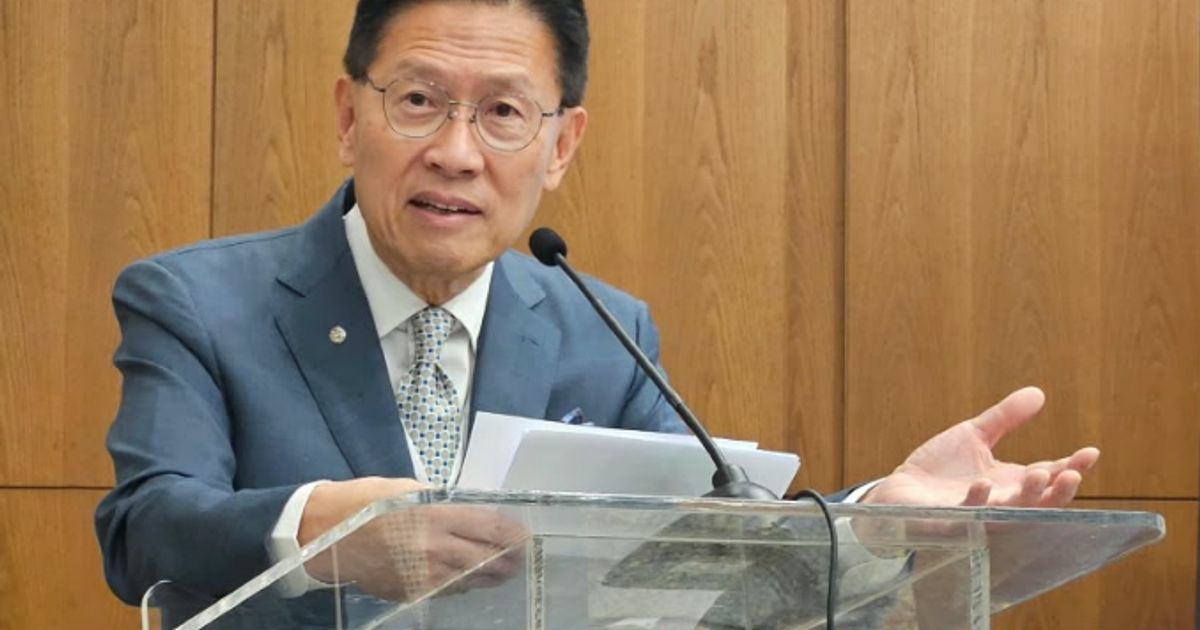
TANGERANG, Investortrust.id — James Riady, Coordinating Deputy Chairman of Kadin Indonesia, has called on businesses and the government to turn the Indonesia–European Union Comprehensive Economic Partnership Agreement (IEU-CEPA) into practical cooperation that attracts investment, builds industry, expands exports and creates jobs. Indonesia-EU relations, he said, should move beyond trade in commodities and machinery towards a partnership that builds joint production capacity.
“This agreement is important. But an agreement by itself does not generate exports, build factories, create jobs or bring in investment. Businesses do that,” James said in a keynote address entitled “Unlocking the EU Market: From Agreement to Strategic Partnership” at the Indonesia Convention Exhibition on Thursday, 15 October 2026.
He cautioned Indonesia and the EU against spending too much time celebrating the agreement. The more important question, he said, is what concrete steps governments and businesses will take to seize the opportunities it offers.
James said the strengthening of Indonesia-EU ties comes at a time of considerable uncertainty in international trade. Geopolitical fragmentation is making trade policy increasingly subject to strategic concerns, including tariffs, industrial development, critical minerals, energy security, technological sovereignty and supply-chain security.
That uncertainty, however, has not halted trade, technology or investment. Supply chains continue to adapt, the development of artificial-intelligence infrastructure is creating new demand, and Asia remains a source of growth.
“The world is not deglobalising. It is reorganising itself,” James said. In that process, Indonesia and Europe have an opportunity to choose one another as strategic partners.
For Europe, diversifying economic relations is becoming increasingly important to secure new markets, sources of growth, manufacturing partners, energy and critical resources. Indonesia can meet those needs with a population of more than 280 million, a growing domestic market, natural resources and a strategic position in ASEAN.
James also highlighted Indonesia’s approach of maintaining relations with a range of countries. Economic partnerships, he said, need not require exclusive political alignment. This approach gives Indonesia an opportunity to act as an economic bridge in an increasingly fragmented world.
Europe, meanwhile, brings capital, technology, industrial capabilities, engineering expertise, pharmaceuticals, healthcare, green technology, research institutions and a consumer market with high standards. These complementary strengths should form the basis of a more productive relationship.
“This relationship should not simply involve Indonesia selling commodities to Europe and Europe selling machinery to Indonesia. That is the old relationship. The next stage must be Europe and Indonesia building together,” he said.
James said bilateral goods trade had reached nearly €29 billion a year, making the EU Indonesia’s fourth-largest trading partner. EU foreign direct investment in Indonesia stood at about €24.7 billion in 2024. Although significant, he said, these figures could grow further given the economic potential of both sides.
Once implemented, the IEU-CEPA will remove tariffs on more than 98% of tariff lines, James said. The agreement also covers services, investment, customs procedures, digital trade, standards and other areas that affect how easily companies can do business.
But tariff removal only opens the door, he warned. The real challenge is ensuring Indonesian companies can enter and compete in the European market.
European consumers and businesses demand quality, certification, traceability, sustainability and accountability for carbon emissions. Exporters must also contend with requirements such as the EU Deforestation Regulation (EUDR), the Carbon Border Adjustment Mechanism (CBAM), food standards, technical requirements, packaging rules and product liability.
“Removing tariffs does not automatically make Indonesian companies competitive. The next phase must therefore focus on business readiness, not just market access,” he said.
James proposed three steps to build that readiness. First, the IEU-CEPA should become an exporter-development programme. Kadin, the government, the European business community and diplomatic representatives should identify around 100 companies and Indonesian products with genuine potential to increase sales in Europe.
Support should be tailored, covering everything from identifying markets and prospective buyers to meeting certification requirements, securing finance, preparing logistics and addressing regulatory barriers. Promising sectors include textiles, footwear, furniture, food, fisheries, processed agricultural products, consumer goods, creative products, components and digital services.
The programme’s success, he said, should be measured by an increase in the number of companies able to export significant volumes to Europe over the next three years. The number of seminars should not be the main measure.
Second, Indonesia should shift the conversation: the question should not only be how to sell more to Europe, but also what European companies can build in Indonesia.
James proposed exploring partnerships in advanced manufacturing, healthcare and pharmaceuticals, the energy transition, food processing, digital and artificial-intelligence infrastructure, transport, industrial technology, education and human-resource development. This would allow trade relations to develop into investment and production.
European companies, he said, should view Indonesia both as a production base serving ASEAN and the wider Asian market, and as a large domestic market.
Third, the government and businesses should establish implementation indicators to be reviewed annually. The review should track growth in trade and investment, the number of new exporters, European companies expanding production in Indonesia, jobs created, and regulatory barriers that have been removed or remain.
James said the shift in the centre of economic growth towards the Indo-Pacific makes it even more important for Europe to build partnerships with Indonesia. Such ties need not come at the expense of cooperation with China, India, Japan, South Korea or other countries.
“Come not only to sell to us. Come and build with us,” he said. That means building factories, energy systems, pharmaceutical capacity and digital infrastructure, while training workers, developing suppliers and conducting research.
At the same time, Indonesian companies must demonstrate a serious commitment to improving their capabilities. “Europe will not lower its standards because we have signed a CEPA. We must raise our own standards,” James said.
For him, the success of the IEU-CEPA will ultimately be evident in prepared companies, clearly identified markets, standards met, investment realised, factories built, exports shipped and jobs created. Those tangible results will turn a trade agreement into a strategic partnership for the future of Indonesia and Europe.
Source: jawawa.id (https://jawawa.id/newsitem/james-riady-cepa-must-not-remain-on-paper-eu-should-build-industry-in-indonesia-1792050626)
Originally published by investortrust.id (https://investortrust.id/macro/119373/james-riady-cepa-jangan-hanya-di-atas-kertas-uni-eropa-harus-bangun-industri-di-indonesia), translated from Indonesian