
Jambi Provincial Council proposes reducing severely damaged mangroves to below 10 per cent
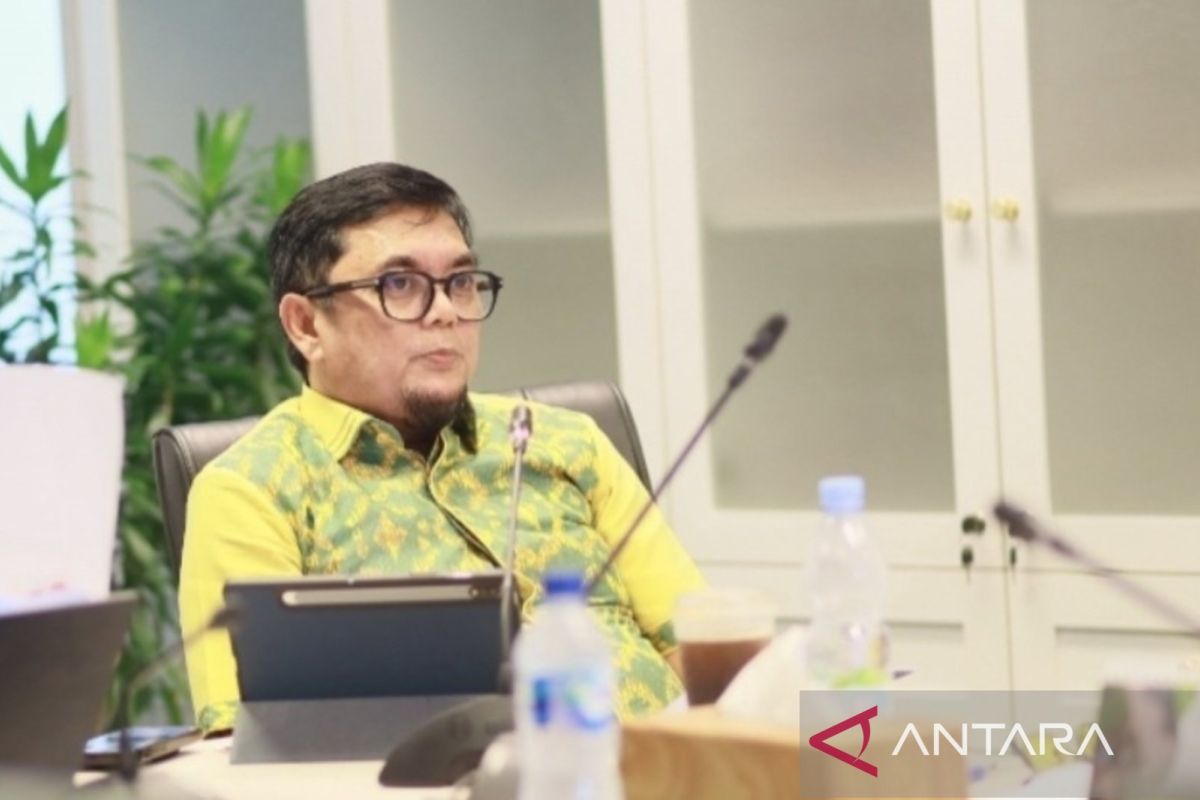
Jambi (ANTARA) – The Jambi Provincial Legislative Council (DPRD) is urging the regional government to prepare a mangrove recovery programme for the eastern coast, with the aim of reducing the proportion of severely damaged areas from around 22 per cent to below 10 per cent by 2029.
Ivan Wirata, deputy speaker of the Jambi Provincial DPRD, said in Jambi on Wednesday that the regional government should promptly prepare an integrated mangrove management proposal following plans to establish the National Peatland and Mangrove Management Agency (BPGMN).
“Jambi needs to prepare a concrete proposal from the outset. This should not only set out planting requirements, but also map the areas, priority villages and erosion sites, identify budget needs, and allocate responsibilities between the government and communities,” he said.
Ivan said the indicative area of mangroves in Jambi Province was 12,583.9 hectares, spread across East Tanjung Jabung and West Tanjung Jabung regencies.
About 22 per cent of that area is reported to be severely damaged, while coastal erosion in Kuala Tungkal, West Tanjung Jabung Regency, has caused the shoreline to retreat by as much as 115 metres.
He said the situation required an integrated response focused not only on replanting mangroves, but also on protecting the areas, controlling erosion, preventing forest and land fires, and empowering coastal communities.
The mangrove management targets advocated by the DPRD through 2029 include reducing the proportion of severely damaged mangroves to below 10 per cent and gradually rehabilitating 500 to 1,000 hectares.
Ivan also called for a single map of Mangrove Landscape Units (KLM) to be agreed by all stakeholders.
He said data needed to be aligned because estimates of mangrove area still differed owing to the use of different maps, calculation methods and measurement years.
Mangrove rehabilitation should also be accompanied by controls on land conversion and spatial planning, so that restored areas do not become degraded again.
Ivan said the mangrove and peatland ecosystems along Jambi’s coast were interconnected and should therefore be managed as a single landscape.
The approach should involve community fire-prevention groups, village administrations, fishers and coastal communities, including the Duano people.
He also urged the development of a blue economy through ecotourism, fisheries and the use of non-timber forest products, to improve residents’ livelihoods without damaging the ecosystem.
According to Ivan, the success of mangrove recovery should not be measured solely by the area planted, but also by whether erosion threats are reduced and communities gain greater economic benefits.
To support the programme, the DPRD has asked the Jambi Provincial Government to strengthen coordination with regency governments, relevant technical agencies, mangrove working groups, village administrations and field partners.
The regional mangrove working group’s action plan should also be aligned with the BPGMN’s institutional framework once it has been established by the central government.
Earlier, President Prabowo Subianto approved the establishment of the BPGMN on Thursday (24 September) to strengthen the management of peatland and mangrove ecosystems and prevent forest and land fires.
The Ministry of Forestry subsequently held a workshop on establishing the BPGMN on 1–2 October to formulate its mandate and institutional structure, as well as a draft presidential regulation to provide the legal basis for the agency.
The BPGMN is designed to have three main mandates: ecosystem protection, restoration of degraded areas, and the sustainable development of economic benefits for communities.
Ivan hopes the agency’s establishment will provide an opportunity for Jambi to accelerate mangrove recovery, particularly in East Tanjung Jabung and West Tanjung Jabung.
“Jambi has the opportunity to become a model for integrated peatland and mangrove management. The keys are reliable data, clearly identified locations, coordinated programmes, and measurable outcomes that communities can feel,” he said.
Source: jawawa.id (https://jawawa.id/newsitem/jambi-provincial-council-proposes-reducing-severely-damaged-mangroves-to-below-10-per-cent-1791949892)
Originally published by Antara (Indonesian) (https://www.antaranews.com/berita/5785037/dprd-jambi-usulkan-mangrove-rusak-berat-turun-di-bawah-10-persen), translated from Indonesian