
Jambi forest and land fire task force uses containment strategy to prevent spread
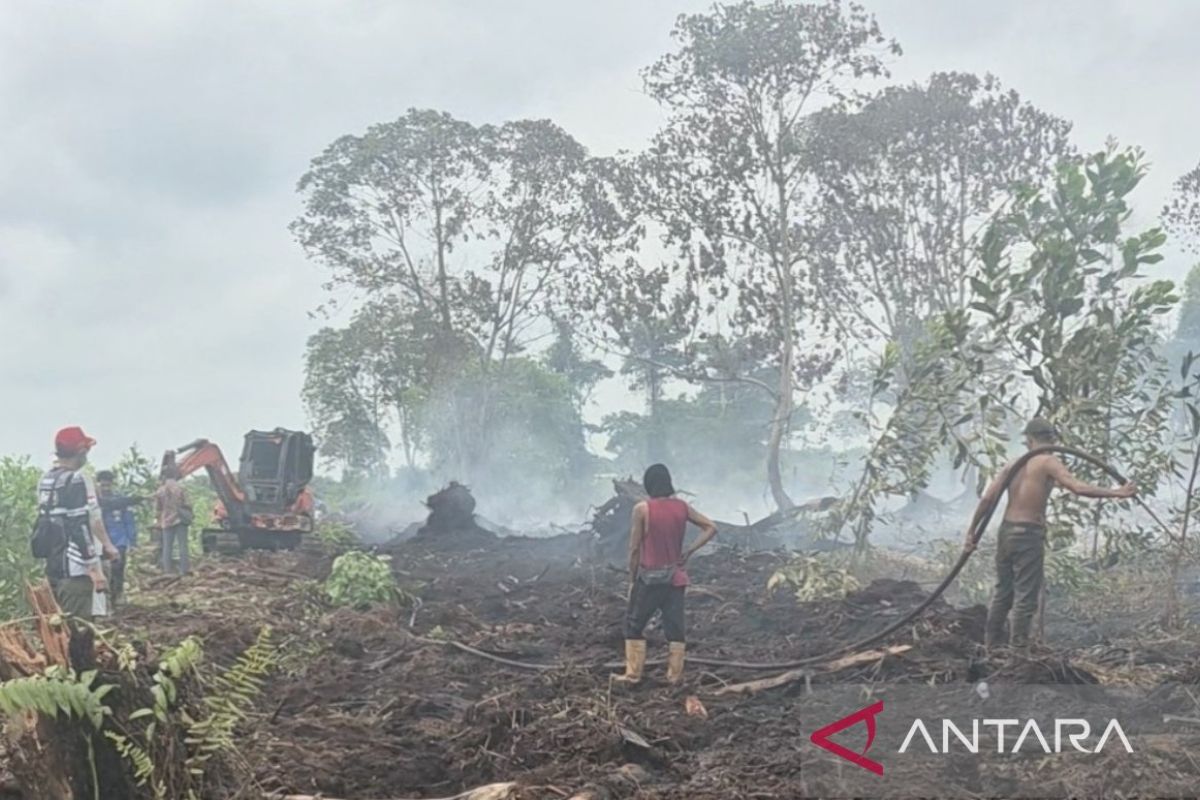
The forest and land fire task force (Satgas Karhutla) together with disaster-resilient village community groups (Destana) in Jambi is implementing a containment strategy to prevent fires from spreading further. “The fire is under control. At the moment our colleagues from Destana, the sub-district fire brigade and colleagues from nearby companies are able to control the flames; only cooling remains,” said Rawasari Village Head Abdul Rokib at the fire location in Berbak District, Tanjung Jabung Timur Regency, on Wednesday. He said that without containment measures, the fire could spread rapidly and become increasingly uncontrollable. The containment effort is being carried out by digging the ground using two units of heavy equipment provided by companies holding land concessions around the fire area. “We continue to focus on extinguishing the fire via land routes using available water; we are involving everyone,” he said.
Berbak Sub-district Head Nopi Ardiansyah said the first fire report was received from the local village head, Manggala Agni, and Destana on Sunday (25/8) at around 3.30 p.m. Western Indonesia Time. The burned land is a combination of residents’ oil palm plantations and uncultivated scrubland. “Last night firefighting was temporarily halted at around 9 p.m. because the terrain conditions did not allow it. However, before it was halted, officers had carried out containment using excavators to cut off the spread of the fire,” he explained. He said firefighting efforts from the first day until now have involved a joint team from the Indonesian National Armed Forces (TNI), Destana, the sub-district fire brigade, Manggala Agni, the Regional Disaster Management Agency (BPBD), plantation companies and local residents.
Although the number of personnel involved is quite large, officers in the field are currently facing obstacles, such as water sources being located quite far from the fire hotspots, making the cooling process difficult. Strong winds can also produce thick smoke and trigger new hotspots. “The community here is quite responsive in helping with firefighting. We have received additional manpower from companies and BPBD, who are now on their way here to help,” the sub-district head concluded.
Tanjung Jabung Timur Deputy Regent Muslimin Tanja previously said that during the period from January to August, the number of hotspots in his area reached 135. The highest number of hotspots occurred during August, with 53 recorded. As a result of the dry season, the burned area has reached 108 hectares, all within peatland areas. “Of the 514,000 hectares of land area in Tanjung Jabung Timur, 56 per cent is peatland, which is very vulnerable. The presence of the minister (24/8) is expected to serve as motivation that the government’s attention is truly present,” he said.