
Jakarta's Waste Management Undergoing Total Transformation as Universities Take Strategic Role
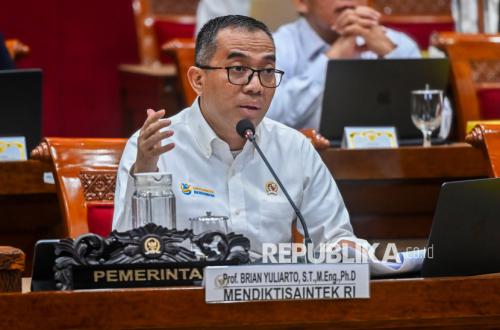
The Minister of Higher Education, Science, and Technology, Brian Yuliarto, has stated that universities are prepared to serve as strategic partners for the Jakarta Provincial Government in addressing urban waste issues through the application of research-based technology. This synergy is expected to accelerate the transformation of waste management systems into more modern, efficient, and sustainable models.
Brian noted that President Prabowo Subianto has instructed relevant ministries to seek various technological solutions to resolve increasingly complex waste problems across various regions, including Jakarta. “The President has indeed asked us to work together to identify which technologies might be possible to solve the problem,” Brian said in a statement in Jakarta on Friday.
According to Brian, waste management cannot rely solely on the construction of large-scale processing facilities. The most decisive stage begins with the waste sorting process at the source, as the quality of sorting determines the effectiveness of the processing technologies used.
The Ministry of Higher Education, Science, and Technology has identified various innovations resulting from university research that have the potential to support the capital’s waste management system. Several technologies deemed ready for implementation include biodigesters, composting, and hydrothermal carbonisation (HTC). Each technology possesses different characteristics, allowing them to be tailored to specific waste types, processing capacities, and regional needs.
Brian believes that a decentralised approach, through the construction of processing facilities at the local level, will make waste management more efficient. In addition to reducing the burden on landfills, this pattern is believed to be able to lower transportation costs, which have historically been one of the largest components of urban waste management.
“We are working together to identify technologies that have been developed in universities. Together with the Head of the Department, we have also conducted studies in DKI Jakarta,” said Brian.
He added that universities should not only play a role in generating innovations in laboratories but also ensure that research results can be commercialised and applied in reality to meet community needs. Therefore, collaboration between local governments, universities, the business world, and industry is a crucial factor in ensuring that developed technologies can be implemented widely.