
Jakarta's Waste Emergency and the Opportunity to Build a New Economy
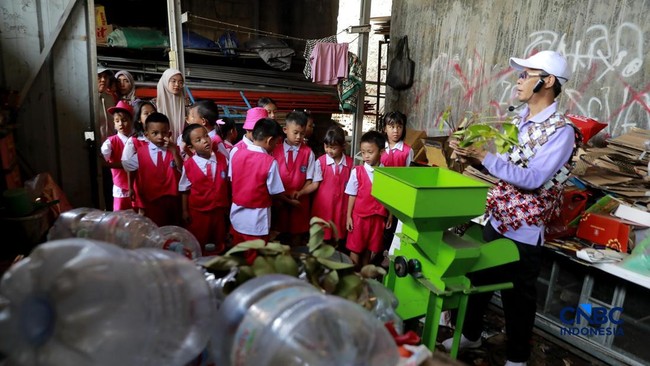
While traversing the streets of South Jakarta, a member of the legislature encountered a group of workers clearing fallen tree branches. Upon inquiring where the debris would be taken, the official was shocked to learn that the organic waste would be transported to the Bantargebang Integrated Waste Treatment Site (TPST) in Bekasi, far from Jakarta. This practice reflects a missed opportunity, ignoring the adage that ‘one man’s trash is another man’s treasure.’ Instead of being discarded, materials such as tree branches, plastics, fabrics, and food scraps could be repurposed through recycling or composting.
Jakarta is currently in a state of waste emergency. Recent events have sparked discussions regarding the potential closure of the Bantargebang landfill. The Jakarta Provincial Government has begun mandating that residents sort their own waste, supported by NGOs and volunteer communities working to provide concrete solutions for waste reduction. If the provincial government responds proactively to this new momentum, Jakarta could not only reduce its waste output but also establish a new economic sector that promotes community prosperity. However, this requires the right perspective, appropriate policies, and consistent implementation.
The waste problem in Jakarta is mounting. The Bantargebang landfill, which serves as the capital’s primary disposal site, is struggling to manage the volume. In 2014, the site received 5.7 tonnes of waste daily; by 2019, this rose to 7.7 tonnes. According to the Jakarta Environmental Agency’s report to the Provincial DPRD in March 2026, the figure has now reached approximately 8.6 tonnes per day.
This report followed a landslide at the landfill triggered by heavy rain, which caused unstable waste piles to collapse onto workers, resulting in seven fatalities. This tragedy has raised serious questions regarding the operational safety of the Bantargebang open-dumping system. Consequently, the Minister of Environment, Hanif Faisol Nurofiq, has urged a transformation in waste management and requested that the Jakarta Provincial Government proceed with the closure of Bantargebang, ideally by 2027. This places Jakarta in a challenging position, as the city must find alternative waste management methods within approximately one year.
Starting from August 2026, Bantargebang will only accept residual waste. Organic, inorganic, and household hazardous waste must be sorted at the source. To initiate this transition, Jakarta Governor Pramono Anung issued Governor’s Instruction (Ingub) No. 5/2026 on 10 May 2026, regarding the Movement for Waste Sorting and Processing at the Source, making waste sorting mandatory for all residents. The Jakarta Provincial Government and its citizens are undertaking a significant gamble: if successful, the volume of waste sent to Bantargebang will decrease significantly, easing the pressure on the landfill. However, failure to provide adequate capacity, equipment, and necessary infrastructure could lead to severe consequences.