
Jakarta’s TB Treatment Rate Exceeds 90%, but Preventive Therapy Reaches Only 40%
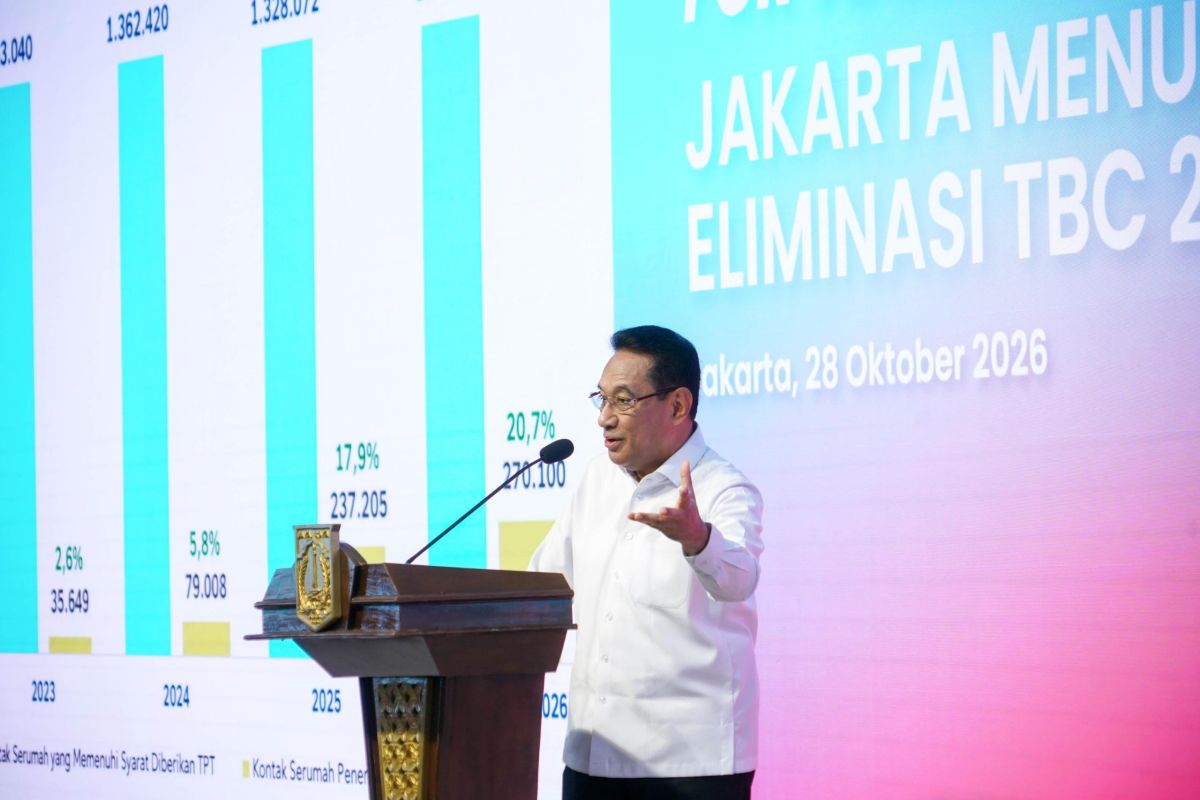
Jakarta (ANTARA) — The Ministry of Health says the tuberculosis (TB) treatment rate in Jakarta has exceeded 90 per cent, but coverage of TB Preventive Treatment (TPT) for household contacts remains relatively low, at around 40 per cent.
“Treating people who are ill with TB is important. Indonesia’s TB treatment performance is already very good. But unless we pursue prevention through TPT and close-contact tracing more aggressively, TB cases will continue to recur next year,” Deputy Health Minister Benjamin Paulus Octavianus said in Jakarta on Thursday.
The ministry is therefore working with the Jakarta administration to strengthen TB prevention through TPT and close-contact tracing, in order to break the chain of transmission and eliminate TB by 2030.
Global data rank Indonesia second in the world for the number of TB cases. The country accounts for about 10 per cent of global cases, with an estimated 1.08 million people falling ill and 126,000 dying from TB each year.
Unlike other regions, where more TB cases are first identified at primary healthcare facilities, 62–64 per cent of cases in Jakarta are first detected at hospitals. Octavianus said this underlined the importance of hospitals—whether public, private or run by the Indonesian National Armed Forces and National Police—in an integrated TB response.
To accelerate TB control, the ministry is strengthening diagnostic infrastructure in Jakarta. All community health centres (Puskesmas) are to be equipped with rapid molecular testing machines. In addition, 32 lightweight, portable X-ray units have been allocated to trace close contacts, including in densely populated neighbourhoods.
TPT involves providing preventive medicines to people at high risk or in close contact with an active TB patient who are not themselves ill. The treatment aims to prevent latent TB infection from developing into active TB later.
On the ground, TB community workers and health teams play an important role in tracing close contacts by visiting residents’ homes. X-ray examinations and supportive, considerate guidance on TPT help patients’ families feel protected and ease anxiety about the risk of transmission in their neighbourhoods.
Jakarta Governor Pramono Anung, speaking at the same event, stressed the need to make the most of the city’s network of 197 hospitals and hundreds of Puskesmas.
He said access to healthcare must not be restricted according to possession of a Jakarta identity card, given the high mobility of people across the metropolitan area.
“I fully support the goal of eliminating TB in Jakarta by 2030. This effort cannot be half-hearted. I hope the policy continues even when there is a change in leadership,” Pramono said.
Jakarta Health Agency head Ani Ruspitawati highlighted the importance of integrating services across healthcare facilities.
“The number of cases detected at Jakarta’s hospitals is very high. Integrating contact tracing between hospitals, Puskesmas and community workers is key to ensuring every patient receives support until fully recovered and that the chain of transmission in surrounding communities is completely broken,” Ani said.
Source: jawawa.id (https://jawawa.id/newsitem/jakartas-tb-treatment-rate-exceeds-90-but-preventive-therapy-reaches-only-40-1793289233)
Originally published by Antara (Indonesian) (https://www.antaranews.com/berita/5820355/kemenkes-pengobatan-tb-jakarta-lampaui-90-persen-namun-tpt-40-persen), translated from Indonesian