
Jakarta’s Main Challenge: Pramono Outlines Strategy to Tackle Poverty
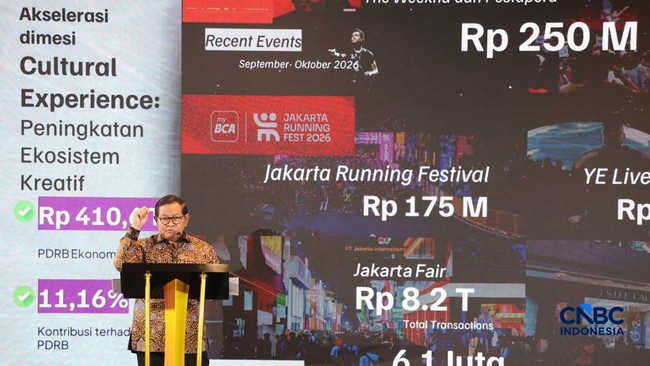
Jakarta Governor Pramono Anung has said poverty remains one of the city’s biggest problems and must be addressed seriously. He also identified economic and social inequality as major concerns.
“Jakarta’s main problem is its Gini ratio, which stands at 0.45 and needs to be reduced. One way we will do this is through education,” Pramono said at Kearney 100 Years of Impact, themed “Jakarta Towards 500: Shaping the Next Global City Together”, according to a report published on Thursday (29 October 2026).
The Jakarta provincial government is seeking to improve the quality of education by providing scholarships, enabling residents to improve their prospects. Pramono said no other city currently provides as many scholarships as Jakarta, which supports 707,000 primary, junior secondary and senior secondary pupils, as well as about 15,800 university students. From next year, the Jakarta administration will also offer scholarships modelled on the Indonesia Endowment Fund for Education (LPDP) programme for undergraduate, master’s and doctoral study.
“I believe education is the way for families who are less well-off to break the cycle of disadvantage. The Jakarta Excellent Student Card used to be only for undergraduate study; now I have authorised it for undergraduate, master’s and doctoral degrees,” Pramono said.
Pramono said the administration would also make government more transparent, open and accountable, so that public tax revenues are used properly.
“In the Jakarta administration, we are making things transparent and open. Everyone can see how much tax is collected each day and how much will be spent. We are managing it transparently because we believe this is what builds trust,” he said.
Pramono has also prepared measures to address Jakarta’s longstanding challenges, including congestion, flooding and waste. He said waste is a major issue, with the capital generating 9,000 tonnes a day, and requires effective management. With support from the central government, Jakarta is set to have three waste-to-energy plants, which are expected to help address the city’s waste problem.
“We will have three waste-to-energy plants: at Bantargebang, Tunjungan/Kamal Muara and Sunter. We also have the RDE facility in Rorotan, so hopefully by 2028–2029 waste will no longer be a problem in Jakarta,” he said.
On flooding, Pramono pledged to continue prevention and mitigation efforts to stop floods from recurring in the capital. One measure is the normalisation of several rivers, including at Kebun Melati in Tanah Abang.
To ease congestion, the provincial government will continue to improve public transport, including by introducing Transjabodetabek, in the hope that more people will switch from private vehicles. The aim is to reduce traffic, particularly on roads linking satellite cities with central Jakarta.
“This is significant because the shift from private vehicles to public transport has risen sharply. The increase can reach 15 per cent, and Jakarta’s connectivity now stands at 93 per cent,” he said.
Source: jawawa.id (https://jawawa.id/newsitem/jakartas-main-challenge-pramono-outlines-strategy-to-tackle-poverty-1793271094)
Originally published by CNBC Indonesia (https://www.cnbcindonesia.com/news/20261029164253-4-780663/jadi-masalah-utama-jakarta-pramono-ungkap-strategi-atasi-kemiskinan), translated from Indonesian