
Jakarta's June 2026 Inflation Remains Under Control, Lowest in Java
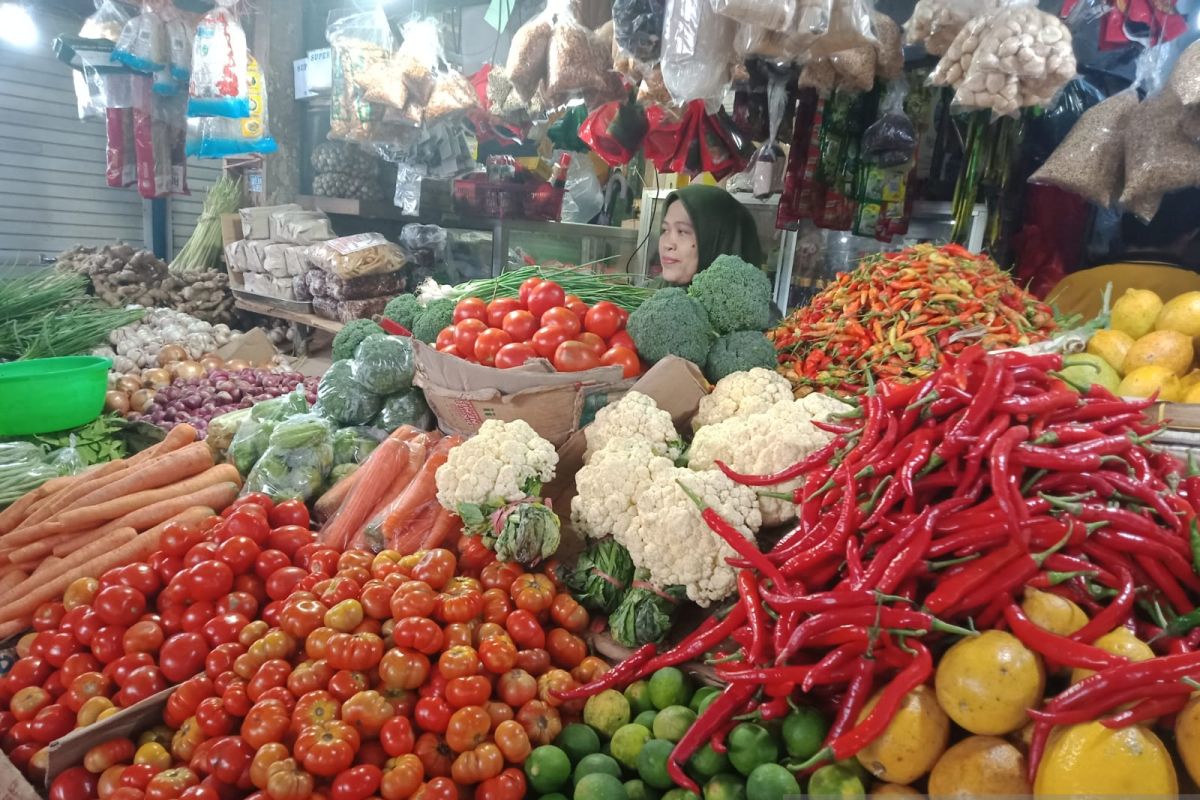
The inflation rate in Jakarta Province in June 2026 remained under control. According to the latest data, the month-to-month (mtm) inflation was recorded at 0.41%, slightly higher than the 0.12% seen in May 2026, yet still below the national inflation rate of 0.44%.
On a year-on-year (yoy) basis, Jakarta’s inflation reached 2.78%, making it the lowest among all provinces on the island of Java and lower than the national inflation rate of 3.34%. This achievement demonstrates the resilience of Jakarta’s economy amidst energy price dynamics and global uncertainty.
The increase in inflation in June 2026 was primarily driven by the transport group. The price adjustment of non-subsidised fuel (BBM) at the beginning of June was a major factor triggering higher petrol prices. Additionally, increased travel demand during the school holiday period contributed to rising airfares.
On the other hand, inflationary pressures were mitigated by a decrease in the prices of several food commodities. The prices of broiler chicken, chicken eggs, and bird’s eye chillies experienced a decline due to improved supply from production centres, which helped restrain the overall rate of price increases.
The Head of the Representative Office of Bank Indonesia for Jakarta Province, Iwan Setiawan, stated that Jakarta’s inflation remains at a healthy level despite price adjustments in several sectors.
“Jakarta’s inflation in June 2026 remains under control. Although there is pressure from energy price adjustments and increased public mobility during the school holidays, the adequacy of food supply and inflation control synergy through the TPID (Regional Inflation Control Team) have been able to maintain price stability, ensuring Jakarta’s annual inflation remains the lowest in Java,” said Iwan Setiawan in a statement on Thursday (2/7).
The transport group recorded inflation of 2.54% (mtm), an increase from the previous month’s 0.55%. This increase was mainly influenced by the non-subsidised fuel price adjustment on 10 June 202<0xE2><0x80><0x89>6, which made the largest contribution to inflation through rising petrol prices. Furthermore, the surge in flight demand during the school holiday season also pushed up airfares.
Inflationary pressure was also influenced by rising imported inflation due to the weakening of the Rupiah exchange rate. This condition caused the prices of several imported components, including vehicle spare parts and electronic components, to rise. One commodity that recorded a significant increase was mobile phones, with inflation at 4.01% (mtm), the highest in the last four years. Consequently, the Information, Communication, and Financial Services group experienced inflation of 0.53%, higher than the previous month’s 0.13%.
Meanwhile, the Household Supplies, Equipment, and Routine Maintenance group recorded inflation of 0.29%, driven by price increases in several household commodities that had a relatively limited contribution to overall inflation.
Amidst the increases in several expenditure groups, Jakarta’s inflationary pressure was held back by deflation in the food, beverage, and tobacco group. The decrease in the prices of broiler chicken and chicken eggs occurred because the supply from production centres remained adequate amidst relatively stable demand. The price of bird’s eye chillies also decreased thanks to increased supply, particularly from West Java, and the normalisation of demand following the National Religious Holidays (HBKN).
Additionally, the prices of papaya and mackerel also experienced a decline. However, deeper deflation was restrained by the rising prices of carrots and red chillies due to decreased agricultural productivity influenced by hot weather.
Throughout June 2026, the Jakarta Provincial Inflation Control Team (TPID) continued to strengthen the implementation of the 4K strategy: Availability of Supply, Affordability, Smoothness of Distribution, and Effective Communication. Efforts to maintain affordability were carried out through the organisation of cheap markets, the Subsidised Food Programme, and the distribution of food assistance in the form of rice and cooking oil.
To strengthen supply, the TPID encouraged increased production through training in the downstream processing of chillies and onions, the development of urban farming, and strengthened coordination between Bank Indonesia, the Department of Food Security, Marine and Agriculture (DKPKP), and the Coordinating Ministry for Economic Affairs. Regarding distribution, the optimisation of mobile truck fleets by BUMD (Regional Government-Owned Enterprises) continues to be carried out to ensure smooth supply. Meanwhile, the preparation of strategic food requirement projections has also been strengthened through increased capacity and coordination among stakeholders.
Moving forward, the Jakarta TPID will continue to strengthen inflation control strategies to anticipate various risks, both from global and domestic factors. Global risks are still influenced by geopolitical uncertainty, which can impact energy prices and exchange rates, while domestic risks stem from the potential of El Nino, which is expected to peak from July to August 2026 and could potentially disrupt food production.
Through sustained synergy between the TPID and all stakeholders, Jakarta’s inflation is expected to remain within the national inflation target range of 2.5±1% throughout 2026.