
Jakarta's 'Ghost' Office Count Soars as Vacancies Remain Rife
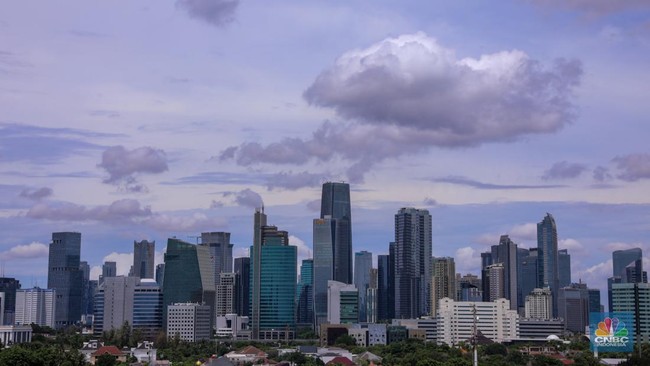
The office market in Jakarta continues to be overshadowed by high vacancy rates, even as leasing activities begin to show signs of recovery. As of the second quarter of 2026, approximately 3 million square metres of office space remains unoccupied, intensifying competition between buildings and prompting developers to adjust their business strategies.
The vast amount of vacant space is creating opportunities for companies looking to move into higher-quality buildings. With the market currently favouring tenants, many building owners are offering various incentives to ensure their spaces remain attractive without having to significantly slash rental prices.
“We can see there is about 3 million square metres of vacant space. One of the market’s primary concerns right now is indeed the large volume of available vacancy, which is around 3 million. About 1.76 million of that is located within the CBD, while the remainder is outside the CBD,” said Ferry Salanto, Head of Research at Colliers Indonesia, during a press conference on Wednesday (8/7/2026).
Much of the vacancy within the Central Business District (CBD) is concentrated in premium-class office buildings. The highest vacancy is found in the Sudirman area (39%), followed by Gatot Subroto (18%), Rasuna Said (16%), Mega Kuningan (12%), Thamrin (9%), and Satrio (5%).
Outside the CBD, vacancy is more concentrated in South Jakarta, which is dominated by Class B buildings. This surplus of space presents a golden opportunity for companies to relocate, particularly into the CBD.
“What is interesting is that most of the vacancies in the CBD are actually in Grade A buildings, particularly along the Sudirman corridor. Outside the CBD, the concentration is in South Jakarta, and it is mostly dominated by Class B buildings,” said Ferry.
Amidst these high vacancy rates, developers are assessed to be increasingly cautious about launching new projects. Their focus has shifted from increasing supply to enhancing the quality of existing assets to remain competitive amidst changing tenant needs.
This strategy is expected to help the market absorb the vacant space gradually while maintaining a balance between supply and demand in the coming years. Meanwhile, tenant companies are leveraging this situation to secure more strategic locations with greater cost efficiency.
“However, if we look at this condition, it is not merely a challenge for building owners; rather, it is an opportunity for companies looking to relocate to higher-quality buildings. They can do so without significantly increasing occupancy costs because this is a tenant’s market. Many companies are taking advantage of this situation to move to buildings that are more modern, more efficient, and closer to public transport,” Ferry explained.
Colliers also noted that there is almost no new speculative office building construction taking place. Developers are preferring to renovate and upgrade the quality of existing buildings rather than taking the risk of adding new supply while vacancy remains high.
“Developers are becoming increasingly cautious. There is almost no new speculative office building construction. Their focus is now more directed towards the renovation and quality improvement of existing assets. In our view, this strategy will help the market absorb vacant space gradually while maintaining the balance between supply and demand over the next few years,” Ferry concluded.