
Jakarta's Free Private Schools: Breaking the Chain of Misfortune through Inclusive Education
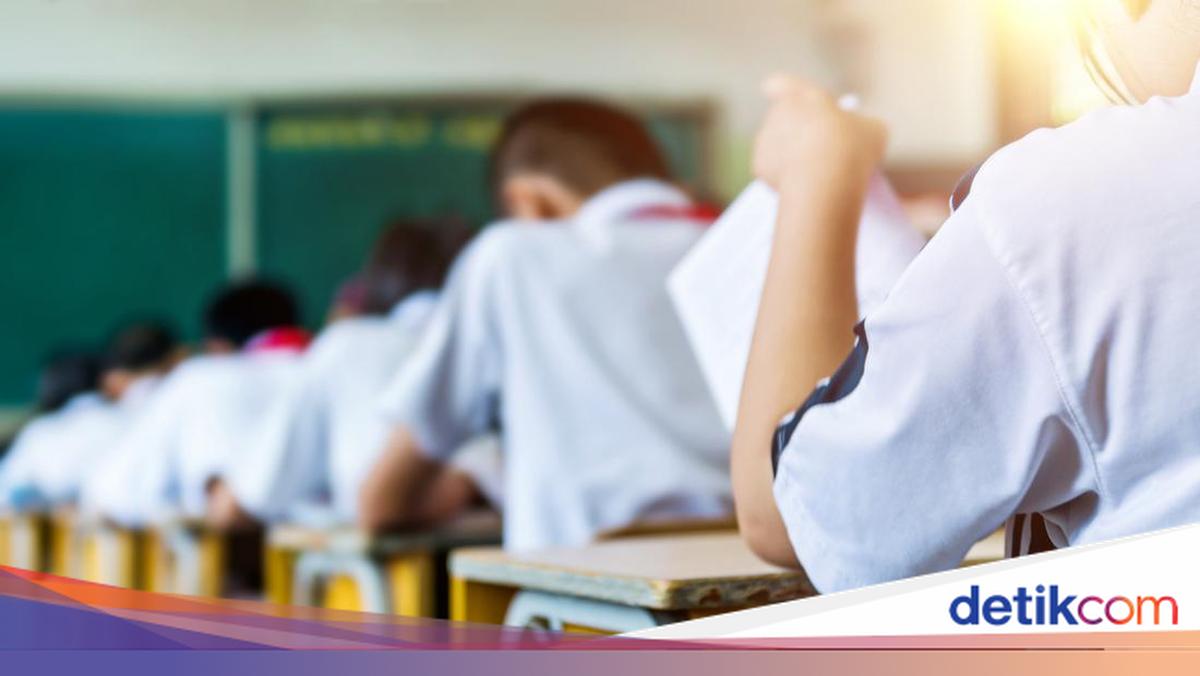
This programme is not merely temporary assistance but a long-term commitment to ensure that every child in Jakarta, regardless of their parents’ economic background, receives quality education. For the 2026/2027 academic year, in accordance with Governor’s Decree Number 312 of 2025, the DKI Jakarta Provincial Government has allocated a budget of Rp253.6 billion for 103 private schools spread across five administrative city regions. This amount represents a significant increase from the previous year, when the programme began gradually with around 40 schools. Now, with the addition of 63 new schools, the programme covers levels from primary schools (SD), junior secondary (SMP), senior secondary/vocational (SMA/SMK), to special needs schools (SLB)—all with full funding so that students are no longer burdened with any fees.
The projected benefits are immediately tangible: around 23,694 students will be positively impacted. The majority are children from underprivileged families who previously relied on the Jakarta Smart Card (KJP) or were even at risk of dropping out due to financial limitations. With this scheme, private schools are no longer a “luxury option”; they become part of an inclusive and equitable education ecosystem. Parents no longer have to choose between paying school fees or meeting basic family needs. Children can focus on learning, playing, and growing without burdens.
Notably, the programme is designed with high budget efficiency principles. Instead of building dozens of new public schools that require large infrastructure investments and long timelines, the Provincial Government leverages the existence of established private schools. Strict selection is applied: schools must have official permits, National School Identification Numbers (NPSN), accreditation, and consistent receipt of School Operational Assistance (BOS) from the central government for the past three years. Priority is given to schools in sub-districts with few public schools. As a result, with Rp253.6 billion, the Provincial Government can reach tens of thousands of students without disproportionately inflating regional spending. Funding is provided in full for 12 months to existing schools and 6 months for those newly joining starting July 2026—a phased approach that ensures sustainability.
Of course, Jakarta is not the only region concerned with education. The central government through the BOS programme has provided significant operational support to hundreds of thousands of educational units across Indonesia, helping schools cover routine costs and improve learning quality. Various provinces and regencies/cities also run similar initiatives, from tuition subsidies to regional scholarships. What Jakarta is doing merely complements the national mosaic in a contextual way: leveraging the strengths of the private sector, which has long been an important partner in education. It is not competition, but synergy—where regional funds are focused on filling gaps that are not yet fully addressed, such as full access for students who fail to enter public schools due to zoning or age limitations.
In practice, the programme’s impact is already felt on the ground. Parents who once worried about costs now report that their children are more enthusiastic about going to school. The risk of school dropout has decreased, and opportunities for children from welfare families to continue to higher levels are wide open. More than that, the programme also supports efforts to reduce economic inequality. By breaking the chain of intergenerational “misfortune,” Jakarta contributes to the national target of equalising opportunities. Free education in private schools is not just about costs, but about dignity: every child has the right to feel equal in the classroom, without the stigma of being “poor.”
Of course, challenges remain. Strict oversight of illegal levies, transparency in fund distribution, and periodic evaluations are key to ensuring the programme remains on target. The DKI Provincial Government has committed to continuing to expand coverage in the coming years, while ensuring that this does not disrupt allocations for KJP, the Jakarta Outstanding Student Card (KJMU), or the ongoing clearance of diplomas.
As part of the small team supporting Governor Pramono Anung’s vision, I believe that investment in education is the most profitable investment for a city. The Jakarta we aspire to is not just a modern city with tall buildings, but a city where every child, from whatever village, has the same opportunity to dream big. The Free Private Schools programme is tangible proof that the government is present, not just with words, but with targeted budgets and sincere hearts.
Let us together safeguard so that every rupiah spent truly becomes capital for the next generation. Because inclusive education is not just the government’s responsibility, but a collective investment for a fairer and more prosperous Jakarta.