
Jakarta's Efforts to Tackle Waste, from Sorting Campaigns to Processing Technology
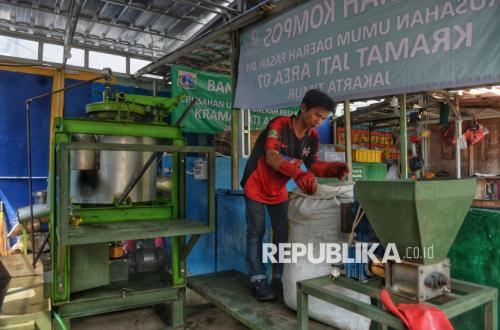
The Jakarta Provincial Government (Pemprov) is strengthening waste management from upstream to downstream to reduce the burden on Bantargebang Integrated Waste Processing Facility (TPST Bantargebang), which from August 2026 will only receive residual waste.
On Sunday, 10 May 2026, the DKI Jakarta Provincial Government announced the movement “Keep Jakarta Clean, Sort Waste”. Through this campaign, residents are encouraged to sort waste at source, whether at home, in residential areas, schools, offices, markets, or public facilities.
Jakarta Governor Pramono Anung said that the Sorting Waste Movement is a follow-up to Governor’s Instruction No. 5 of 2026 and must be implemented together on a broader scale.
“This activity is not half-hearted because it is being carried out simultaneously in five cities and also on the Thousand Islands to sort waste,” he said.
Pramono said that if the movement runs to its maximum, the volume of waste sent to Bantargebang can be reduced significantly.
“I am convinced that if this can be implemented successfully, following the directions of the Minister of Environment, in August Jakarta will only be able to store its residues. Previously everything was transported and dumped at Bantargebang. Now we start by sorting first, organics and inorganics separated,” he explained.
In the waste-sorting movement, residents are asked to sort waste into four types: organic waste, inorganic waste, B3, and residues. Organic waste may be processed into compost, maggot feed, or via a biodigester. For inorganic waste, it is directed to waste banks or recycling facilities, while B3 requires handling according to environmental safety procedures. Residues will be forwarded to end-processing facilities.
Responding to the movement, Zahra (26), a resident of Cawang, East Jakarta, said she strongly supports it. She believes the campaign can raise public awareness of the importance of sorting waste. However, she suggested that the DKI Jakarta Provincial Government add sorting facilities and infrastructure, given that supporting facilities are still limited.
“Perhaps more waste sorting infrastructure and facilities should be added. There have not been enough, so it would be easier for us to sort waste,” she told Republika on Tuesday, 19 May 2026.
Zahra said her family had been sorting waste even before the sorting movement. Plastic waste is separated from other waste before handing over to the waste collectors.
“Until now it’s been disposed of in regular bins, but the plastic has been separated. It is also not mixed with the collectors,” she said.
Similarly, Imas (61), a resident of Manggarai, South Jakarta, also supports the movement. He said he had learned about waste sorting from the Dasawisma programme in his neighbourhood.
“I’ve already received information from Dasawisma, they said we should sort waste,” Imas said.
However, he said he had not yet received detailed information on the technical aspects of sorting that residents must perform. He hopes the socialisation can be expanded so that people understand the types of waste to be sorted and how to manage them.
“I totally agree, but there needs to be more socialisation so that everyone understands,” he said.
Headline: Preparing Processing Technology