
Jakarta's Clubbing Couple's Wealth Revealed to be Stolen
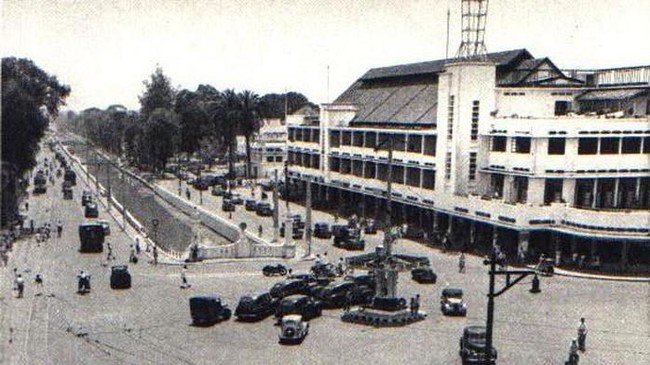
Some individuals take illegal paths to amass wealth due to a reluctance to work hard. Criminal methods are often used as shortcuts to achieve instant riches.
This dark history was once practised by a Dutch couple residing in Batavia (now Jakarta) during the 1s decade of the 1910s. The pair enjoyed a glamorous lifestyle funded by loot stolen from banks, the value of which is estimated to exceed Rp 87 billion when converted to current currency.
The Dutch man, A.M. Sonneveld, and his wife were famously wealthy. Almost every night, the couple frequented nightlife venues in the city centre, such as Societeit Harmoni, where they partied and enjoyed expensive delicacies without regard for their spending.
During Sonneveld’s period of extravagant living, no one suspected his true origins, as he was widely perceived to be genuinely wealthy. Upon arriving in Batavia, Sonneveld had served as an officer in the KNIL (Royal Netherlands East Indies Army), receiving honours from the Queen of the Netherlands for his service.
After an early retirement, he continued working at the largest private bank, Nederlandsch Indie Escompto Maatschappij, as a department head managing customer funds. His substantial salary reinforced the public perception of his legitimate wealth. This perception only changed in early September 1913, following widespread media reports.
In early September, most newspapers in the Dutch East Indies reported illegal activities by a bank employee in Batavia. The reports identified the individual as A.M. Sonneveld. The Deli Courant (5 September 1913), for instance, reported that the 45-year-old man was proven to have stolen 122,000 guilders belonging to customers.
The evidence emerged after Bank Escompto conducted an internal investigation into suspicious transactions, revealing Sonneveld’s fraudulent activities. In 1913, 122,000 guilders could purchase 73 kg of gold, as the price per gram was 1.67 guilders. Converted to modern terms, 70 kg of gold is equivalent to approximately Rp 87.6 billion.
Anticipating that his crimes were about to be uncovered, Sonneveld and his wife fled the city before he could be named a suspect. The police subsequently declared them fugitives and circulated their physical descriptions through various newspapers. The De Sumatra Post (6 September 1913) detailed Sonneveld’s features: brown skin, Dutch descent, with scars on his right cheek and knee.
Fortunately, the dissemination of information led to a breakthrough. It was discovered that the couple had travelled to Bandung by train from Meester Cornelis (now Jatinejava). The Deli Courant reported that police detected him renting a car from Meester Cornelis to reach a hotel in Bandung.
In Bandung, the pair continued their journey to Surabaya by train. The Bataviaasch Nieuwsblad (7 September 1913) reported that during the train journey, Sonneveld met an acquaintance who asked about his destination. The fugitive claimed he was travelling to Hong Kong via Surabaya for a comparative study at the Hong Kong branch of Bank Escompto. However, his acquaintance recognised this as a fabrication and reported the matter to the police.
Consequently, the Dutch East Indies police contacted the Hong Kong police. The journey of Sonneveld and his wife ultimately ended when they were apprehended shortly after arriving in Hong Kong and extradited to the Dutch East Indies. A bag containing the remainder of the stolen money was also seized.
Upon their return to Indonesia, both were brought to trial. In court, Sonneveld confessed to stealing customer funds to fund his luxurious lifestyle, while his wife admitted to knowing about the crimes and attempting to cover them up. Sonneveld was sentenced to five years in prison, while his wife received a three-month sentence. The Sonneveld case remains recorded in history as one of the largest thefts of the 1910s.
In the modern era, robbery methods continue to evolve, with criminals increasingly finding ways to breach bank accounts through online platforms. Therefore, the public must remain vigilant to avoid becoming victims.
Source: jawawa.id (https://jawawa.id/newsitem/jakartas-clubbing-couples-wealth-revealed-to-be-stolen-1789206803)
Originally published by CNBC Indonesia (https://www.cnbcindonesia.com/market/20260912141256-17-767413/pasutri-hobi-dugem-di-jakarta-ternyata-hartanya-hasil-rampok), translated from Indonesian