
Jakarta's Bajaj Increasingly Marginalised
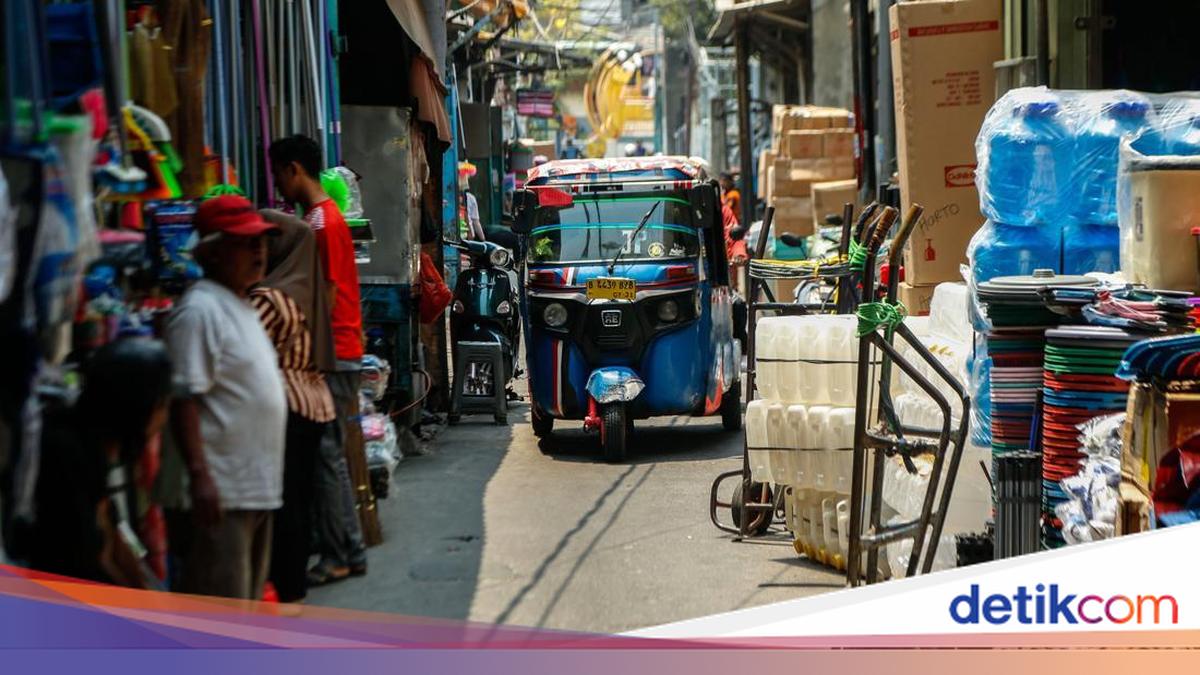
Jakarta’s legendary Bajaj transportation is currently facing a passenger crisis, with its presence in the capital steadily diminishing. In 1999, the number of Bajaj units was recorded at 14,612; today, only about 6,025 units remain.
Bajaj drivers must compete with modern transport options that offer greater ease, comfort, and relatively affordable prices. Consequently, drivers are forced to rely on regular customers and station themselves at specific points to attract passengers.
Muslih, a driver encountered at Jembatan Lima Market, admitted he had yet to find any passengers for the day. He noted that interest in the Bajaj is dwindling, as single passengers tend to prefer motorcycle taxis (ojek online), while groups of two to three passengers prefer taxis or online car services.
Bajajs are occasionally used to transport goods, including transporting ‘ondel-ondel’ (traditional puppets) even outside Jakarta. However, this service now faces stiff competition from app-based delivery services. Furthermore, the introduction of the Jaklingko system has altered the competitive landscape of transportation within residential areas.
Similar grievances are shared by Minta, 60. With a daily rental fee of Rp 60,000, he must earn significantly more to meet daily living expenses. However, even earning Rp 100,000 a day has become difficult, and that income must still be split between fuel costs and food.
At a workshop nicknamed the ‘Bajaj Hospital’ on Jalan Makmur, Duri Pulo, Gambir, mechanics repair everything from CDI units, valves, and electrical systems to corroded bodies. An engine overhaul can cost a driver anywhere from Rp 1.5 million.
For Muslih, the Bajaj was once the primary means to fund his three children’s education. Now, he hopes to save enough to open a small shop in his hometown. Amidst the scarcity of passengers, he chooses to persevere while waiting for fortune on the streets of Jakarta.
Bajajs can still be seen navigating through heavy traffic during rush hour in the Asemka area, demonstrating that this legendary mode of transport still persists in several corners of the city.
Historically, the Bajaj was the ‘king of the neighbourhood’ regarding transport, as its compact size allowed it to navigate narrow alleys. Drivers like Muslih still operate using fares determined through negotiation, allowing for bargaining between driver and passenger.
In an effort to survive the competition, some Bajajs have pivoted to transporting goods, such as carrying ondel-ondel, as seen on Jalan Kramat Raya.
Drivers often gather to discuss news while waiting for passengers in front of St Carolus Hospital, each maintaining specific stations that are believed to have potential, even if they must wait for hours.
In areas like Duri Pulo, known as the ‘Bajaj Hospital’ for decades—servicing everything from the old orange Bajajs to the newer blue gas-powered versions—the struggle continues. The rise of electric motorcycle taxis in the same area further contributes to the shrinking market share of the traditional Bajaj.