
Jakarta's Air Quality Ranks Second Worst in the World This Morning, Here Are the Causes
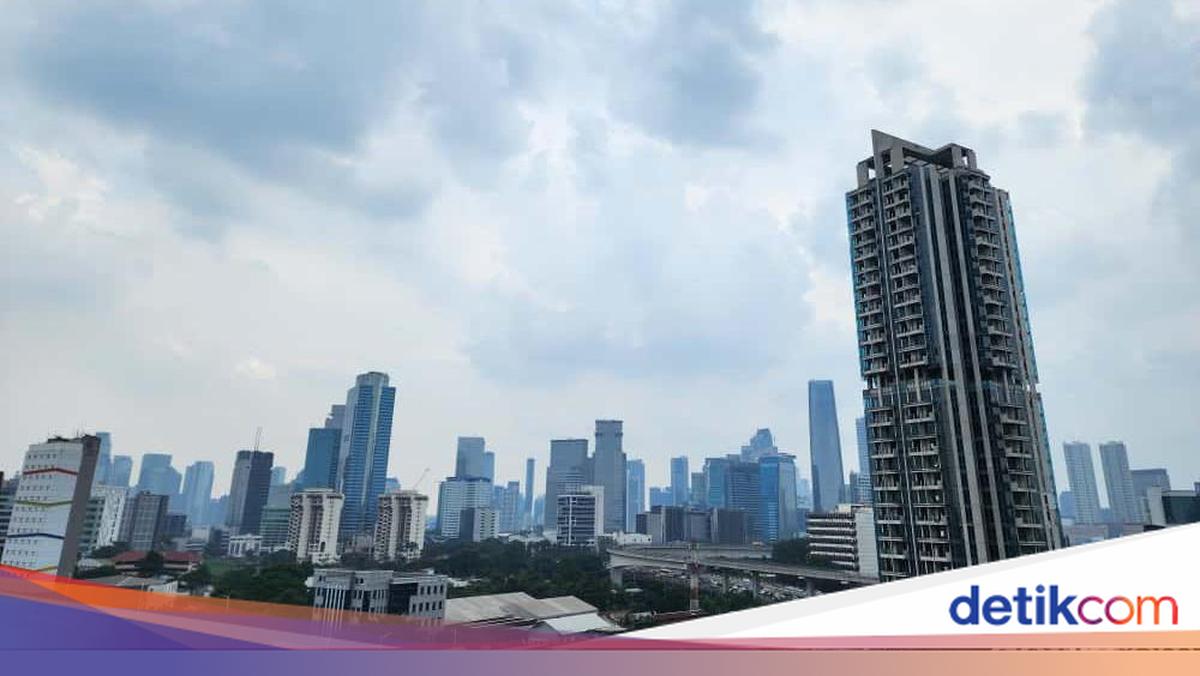
Jakarta was ranked the city with the second worst air quality in the world this morning. The DKI Jakarta Environmental Agency (DLH) has identified several factors influencing the capital’s air quality. Dudi Gardesi, Head of the DKI Jakarta Environmental Agency, stated that air quality is dynamic and can change over time. He explained that conditions on a particular day must be viewed in the context of a longer trend, not solely based on daily rankings.
Dudi explained that Jakarta is currently entering the dry season, which lasts from June to September. Historically, this period is when the capital’s air quality tends to decline. According to him, reduced rainfall and low wind speeds during the dry season make airborne pollutants more difficult to disperse. As a result, pollutants tend to accumulate and cause air quality to deteriorate.
Dudi also mentioned that Jakarta’s air quality had temporarily improved in 2020 during the COVID-19 pandemic. At that time, community activity and vehicle mobility decreased, reducing emissions. However, as economic activity recovered and public mobility increased in recent years, pollutant concentrations have risen again. This condition, Dudi said, is reinforced by the El Niño phenomenon, which has caused the dry season to become longer and drier.
The DKI Jakarta Environmental Agency stated it continues to monitor air quality in real time. The provincial government has also strengthened various emission control measures to curb air pollution in Jakarta. One effort involves integrating an early warning system (EWS) into the Jakarta air quality monitoring dashboard so that air condition information can be monitored more quickly and accurately.
Additionally, the DKI Jakarta Provincial Government has established an air pollution control strategy for the 2023-2030 period through Governor Decree Number 576 of 2023 on the Air Pollution Control Strategy (SPPU). The strategy focuses on strengthening governance of air pollution control, reducing emissions from the transportation sector, and reducing emissions from stationary sources such as industry. Measures being implemented include expanding air quality monitoring through the addition of air quality monitoring stations (SPKU), strengthening the enforcement of motor vehicle emission tests, requiring high-risk industries to install Continuous Emission Monitoring Systems (CEMS), and conducting road spraying when air quality deteriorates. The provincial government is also promoting the use of more environmentally friendly transport, including through Governor Instruction Number 6 of 2025, which requires civil servants (ASN) to use public transport every Wednesday.
Previously, it was reported that Jakarta’s air quality on Wednesday morning (17/6) fell into the unhealthy category. Based on data from the IQAir air quality monitoring site at 06:00 WIB, Jakarta’s Air Quality Index (AQI) stood at 162. The concentration of fine particulate matter (PM2.5) in Jakarta was recorded at 71.0 micrograms per cubic metre, which is 14.2 times the World Health Organisation’s (WHO) annual air quality guideline value.
Source: jawawa.id (https://jawawa.id/newsitem/jakartas-air-quality-ranks-second-worst-in-the-world-this-morning-here-are-the-causes-1781697317)
Originally published by detikcom (https://news.detik.com/berita/d-8535841/kualitas-udara-jakarta-terburuk-kedua-di-dunia-pagi-tadi-ini-penyebabnya), translated from Indonesian