
Jakarta's air quality ranked fifth worst in the world on Wednesday morning
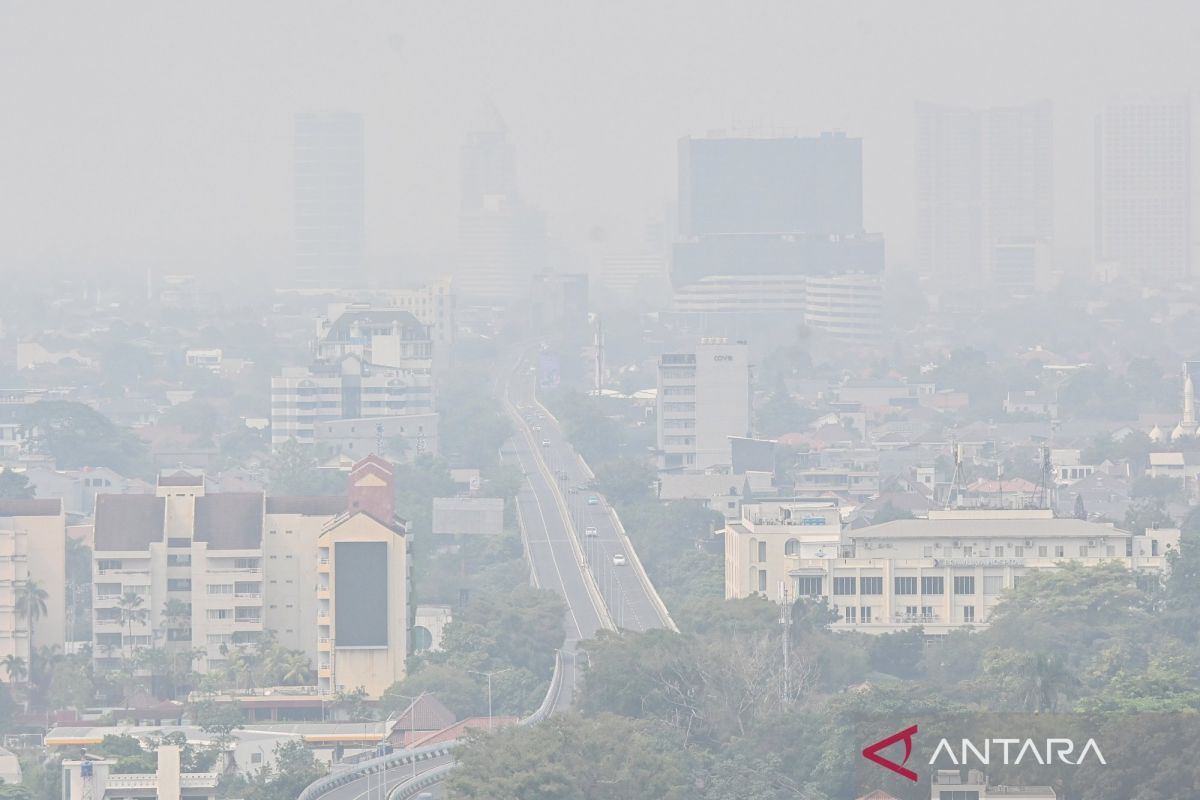
Jakarta (ANTARA) - Jakarta’s air quality on Wednesday morning entered the unhealthy category, ranking within the top five cities with the worst air quality in the world.
Based on data from the IQAir air quality monitoring website at 06:20 WIB, the metropolitan city’s Air Quality Index (AQI) stood at 157, placing it in the unhealthy category. Consequently, the public is advised to wear masks when engaging in outdoor activities.
The unhealthy air quality category means the air is unhealthy for sensitive groups as it can harm humans or sensitive animal groups, and can cause damage to plants or aesthetic values, with a PM2.5 range of 66-150.
Meanwhile, the moderate air quality category does not affect human or animal health, but affects sensitive plants and aesthetic values, with a PM2.5 range of 51-100. The good category refers to air quality levels that do not affect the health of humans or animals and do not impact plants, buildings, or aesthetic values, with a PM2.5 range of 0-50. Furthermore, the very unhealthy category, with a PM2.5 range of 200-299, indicates that air quality can harm the health of certain segments of the exposed population.
As for the cities with the worst air quality in the world, Kuala Lumpur, Malaysia, ranked first with an air quality index of 214, followed by Kolkata, India, in second place at 184, and Dhaka, Bangladesh, in third at 179.
The Jakarta Provincial Government (Pemprov DKI) is preparing a rapid response to tackle air pollution in the capital during the dry season, which is predicted to occur from early May to August.
Rapid measures to handle air pollution during the dry season include improving the quality of air quality monitoring systems and conducting motor vehicle emission tests.
Additionally, the Jakarta Provincial Government is currently evaluating its Air Pollution Control Strategy (SPPU) across various aspects, ranging from PM2.5 trends and emission loads per sector to the impact on public health.
According to the Jakarta Provincial Government, air pollution control cannot be carried out by a single region in isolation; therefore, integrated joint action is required between regional apparatus organisations and cross-regional collaboration with areas surrounding Jakarta.