
Jakarta's 2026 Revised Budget: Rano Karno Pushes Creative Financing and Priorities
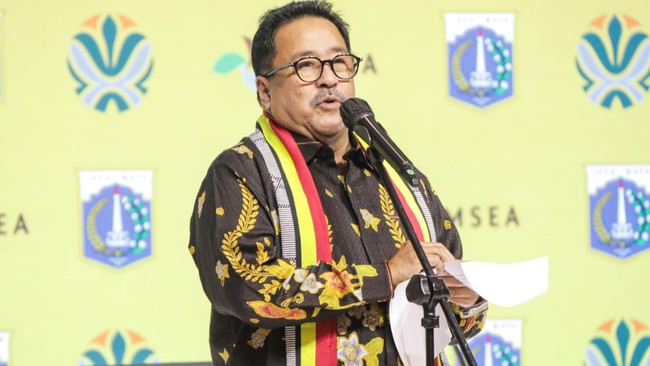
Jakarta Deputy Governor Rano Karno presented the Governor’s response speech on the General Policy of the Revised Regional Budget for Fiscal Year 2026 at the DPRD DKI Jakarta Plenary Session on Monday (31/8/2026). The speech covered Regional Revenue Policy, Regional Expenditure Policy, and Regional Financing Policy.
For Regional Revenue Policy, Rano explained that it includes Regional Taxes and Levies, Separated Regional Wealth Management Results, Other Legitimate Regional Original Revenue (LLPAD), and Transfer Revenue.
Regarding the Regional Tax and Levy Policy implemented by the Executive, Rano said it includes the implementation of Regional Regulation Number 1 of 2024 on Regional Taxes and Levies in accordance with Law Number 1 of 2022 on Financial Relations between the Central Government and Regional Governments, as well as Government Regulation Number 35 of 2023 on Regional Taxes and Levies.
“The preparation of these implementing regulations is to provide legal certainty, improve services, and enhance the governance of regional taxes and levies,” said Rano.
Concerning efforts to improve the achievement of Separated Regional Wealth Management Results, Rano explained that the executive is taking several steps, including strengthening the financial performance and asset utilisation of BUMDs, accelerating digital transformation and service innovation, and strengthening synergy among BUMDs with the DKI Jakarta Provincial Government in supporting the regional development agenda.
To improve the performance of Legitimate LLPAD, Rano said efforts are being made by exploring revenue potential, identifying problems in the revenue collection process, and evaluating and reconciling LLPAD revenue.
Meanwhile, the general policy is focused on optimising the management of transfer revenue, which Rano outlined through various efforts such as submitting reports on the requirements for TKD distribution, aligning regional government work plans with the central government, and coordinating intensively with the Central Government so that TKD management complies with established provisions.
“Regarding the General Policy on Legitimate LLPAD, it is focused through coordination on the distribution of grants carried out by the Central Government,” said Rano.
Regarding the Regional Expenditure Policy, Rano explained that it is in accordance with the Memorandum of Agreement between the Provincial Government and the DPRD of DKI Jakarta Province on the Changes to the General Policy of the APBD and the Changes to the Priorities and Temporary Budget Ceilings of the 2026 APBD.
“Regional Expenditure is intended to pay attention to the priorities set in the Regional Medium-Term Development Plan and the Strategic Plans of Regional Apparatuses, as well as to support the achievement of Asta Cita and national economic growth,” he explained.
It also involves reviewing and prioritising the sustainability of Quickwins programmes, achieving the global city status, and strengthening Jakarta’s fundamentals. Furthermore, it provides budget allocations to sectors that directly affect the public interest, including mandatory affairs related to basic services, guided by the Minimum Service Standards (SPM) in accordance with applicable laws and regulations.
Next, it ensures productive spending allocations by prioritising core expenditure over supporting expenditure and encouraging creative, innovative, and collaborative financing, especially in implementing priority activities.
“The Executive also ensures mandatory and binding expenditure, according to essential minimum needs,” Rano asserted.
Then, it carries out efficiency and re-examination of expenditure programme activities by taking into account the achievement of regional development priority targets while still considering regional financial capacity. It also provides assistance in the form of subsidy expenditure, grant expenditure, social assistance expenditure, and financial assistance expenditure.
Rano also explained the regional financing policy, which is prepared as a response to the dynamics of financing needs and fiscal projection adjustments that occur during the implementation of the 2026 APBD.
The financing revenue policy, Rano revealed, consists of financing revenue from the 2025 Budget Surplus (SiLPA). Then, Regional Debt Financing revenue from the Central Government for the MRT Jakarta project development activities and Regional Loan Financing revenue from financial institutions for multi-year activities.
Meanwhile, the regional financing expenditure policy consists of regional capital participation or investment and payment of principal debt instalments that are due.
According to Rano, the financing expenditure policy is used for Regional Capital Participation in BUMDs, the implementation of which is based on applicable laws and regulations, as well as for the payment of principal debt for JEDI loans, MRT Jakarta Phase 1 loans, and loans to PT Sarana Multi Infrastruktur (Persero) for the National Economic Recovery (PEN) Programme.
In the final section, Rano explained the details of the Draft Regional Regulation on the Revised Regional Budget for Fiscal Year 2026. He stated that the total Revised APBD 2026 is Rp 79.59 trillion, a decrease of 2.13% compared to the 2026 Regional Budget of Rp 81.32 trillion.
Regional Revenue in the Revised APBD 2026 is planned at Rp 69.36 trillion, a decrease of 2.93% compared to the 2026 APBD of Rp 71.45 trillion.
“Regional Revenue is expected to come from Regional Original Revenue of Rp 57.87 trillion, Transfer Revenue of Rp 11.28 trillion, and Other Legitimate Regional Revenue of Rp 207.39 billion,” he said.
Rano expects Regional Original Revenue to be obtained from Regional Taxes of Rp 49.89 trillion, Regional Levies of Rp 2.22 trillion, Separated Regional Wealth Management Results of Rp 719.04 billion, and Other Legitimate Regional Original Revenue of Rp 5.02 trillion.
Meanwhile, Transfer Revenue is expected to reach Rp 11.28 trillion originating from Central Government transfers. Furthermore, Other Legitimate Regional Revenue is expected to be Rp 207.39 billion originating from Grant Revenue.
Rano said that Regional Expenditure in the Revised APBD 2026 is planned at Rp 75.08 trillion, an increase of 1.08% compared to the 2026 APBD of Rp 74.28 trillion.
“The Regional Expenditure plan consists of Operating Expenditure, Capital Expenditure, Unforeseen Expenditure, and Transfer Expenditure,” Rano explained.
Regarding regional financing, Rano explained that financing revenue in the Revised APBD for fiscal year 2026 is planned at Rp 10.24 trillion, originating from the previous year’s SiLPA projected at Rp 5.82 trillion, loan repayment receipts of Rp 28.30 million, and Regional Debt Financing revenue of Rp 4.41 trillion.
“Financing Expenditure is planned at Rp 4.51 trillion, allocated to Regional-Owned Enterprises in the form of Regional Capital Participation of Rp 2.67 trillion and Payment of Principal Debt Instalments Due of Rp 1.84 trillion,” he concluded.