
Jakarta Urged to Review 21-Year-Old Air Pollution Control Regulation
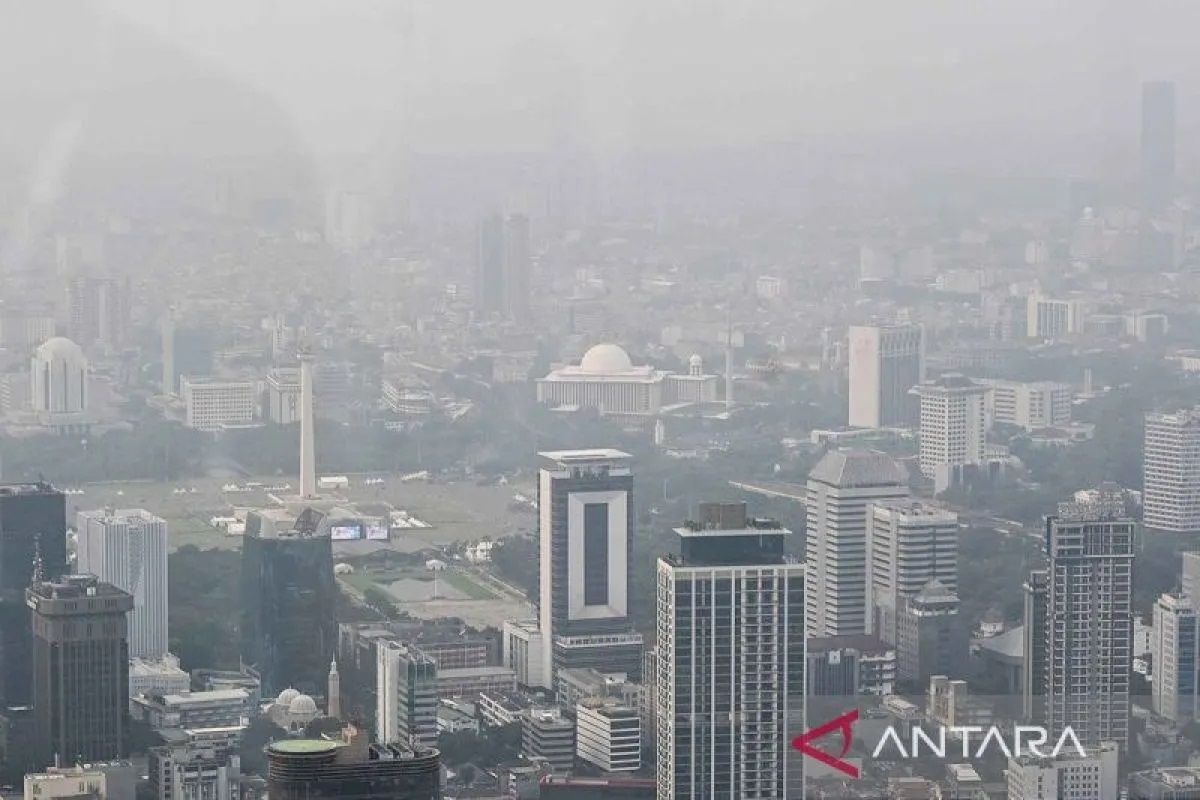
The Committee for the Phasing Out of Leaded Petrol (KPBB) believes the Jakarta Provincial Government must review its air pollution control regulation, Regional Regulation No. 2 of 2005, as it is now 21 years old.
“Normally, a review and revision of a regulation is done every five years. However, Regional Regulation No. 2/2005 is more than 21 years old and has still not been reviewed, let alone revised,” said KPBB Executive Director Ahmad Safrudin in an official statement received in Jakarta on Wednesday.
According to Safrudin, many changes related to the environmental landscape, urban spatial planning, changes in the natural terrain, people’s lifestyles, economic growth, and technological developments necessitate a revision of the regulation.
“So that air pollution control can be carried out effectively,” he said.
The proposed revision of Regional Regulation No. 2/2005 has been submitted by the Jakarta Provincial Government to be included in the 2025 Jakarta Provincial Regional Regulation Formation Programme, so that it becomes an agenda for discussion in the 2026 Regional Regulation Formation Programme.
However, the Jakarta Provincial Regional Legislative Council did not include it in the list for discussion in the 2026 Regional Regulation Formation Programme.
The proposal was then resubmitted for the 2027 Regional Regulation Formation Programme and is currently being discussed by the Jakarta Regional Legislative Council to determine whether it will be prioritised in the 2027 Regional Regulation Formation Programme list.
“The decision will certainly reflect the willingness of the members of the Jakarta Provincial Regional Legislative Council to resolve the acute and chronic problem of air pollution and its fatalistic impacts above,” said Safrudin.
Meanwhile, Jakarta Regional Secretary Uus Kuswanto said the Jakarta Provincial Government and KPBB have met, and that supervision is needed to ensure the environment in Jakarta remains protected and in good condition, so regulations are needed that can answer or resolve the problems.
“The Governor has stated that every policy must have existing rules and provisions. Therefore, regulations are adjusted, so that what is done, especially regarding environmental issues, can be in accordance with existing rules and provisions,” he said.
Safrudin assessed that air pollution in Jakarta is an urban environmental problem that is acute, chronic, complex, cross-regional, and has a direct impact on public health.
In the context of the air quality management system in Jakarta, he added, almost all annual average concentrations of air pollution parameters exceed the ambient air quality standards set by WHO guidelines or national standards.
“PM2.5 concentrations, for example, have reached an annual average of above 45 µg/m3, while the national standard is 15 µg/m3 (WHO standard is 5 µg/m3),” said Safrudin.
This condition has an impact on cases of several diseases such as acute respiratory infections, asthma, pneumonia, coronary heart disease, ischaemic heart disease, and nasopharyngeal cancer.
Therefore, Safrudin assessed that in addition to reviewing the air pollution control regulation in Jakarta, the Jakarta Provincial Government must also review air quality and its impact on public health in Jakarta.