
Jakarta Treaty Strengthens Security Cooperation, Not a Military Pact
Public doubts must be answered with a transparent legal process.
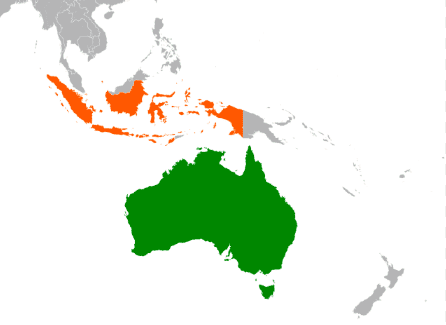
Australian Assistant Foreign Minister Matt Thistlethwaite affirmed that the Indonesia-Australia Treaty on Common Security is not a military alliance like AUKUS, but rather an effort of cooperation between the two countries to address threats faced by either nation.
“But it is also subject to the domestic processes of both governments and parliaments. So, domestic processes surrounding involvement, conflicts, and other measures will be maintained,” said Thistlethwaite in Jakarta on Tuesday (14/7).
He made the remarks at a public discussion, “The Jakarta Treaty: A New Chapter in the Australia-Indonesia Partnership”, organised by the Foreign Policy Community of Indonesia (FPCI) in Jakarta.
He said consultation on security issues is a shared obligation and reflects recognition that both countries have common interests in maintaining collective security in the region.
Thistlethwaite also stressed that the sovereignty of Australia and Indonesia remains preserved despite the new level of cooperation between the two militaries. Although Indonesia-Australia relations have historically experienced ups and downs, Thistlethwaite views the new treaty as different because both countries now recognise their shared interests as middle powers amid regional geostrategic competition, which is why defence cooperation is being elevated to its highest-ever level.
He also explained that the treaty, also known as the “Jakarta Treaty 2026”, allows Indonesian military officers to serve in the 1st Brigade of the Australian Defence Force.
He said the Jakarta Treaty 2026 expands opportunities for joint education and training for young personnel of both countries in order to build long-term professional relationships.
According to the Australian Assistant Foreign Minister, the focus on young personnel is important so they can build networks early in their careers, enabling them to maintain open communication when facing future challenges.
Thistlethwaite further noted that the cooperation could potentially expand to the ASEAN level, given that Australia is now an ASEAN Plus dialogue partner. “We believe this can be elevated to the broader ASEAN sphere, and we are very proud that Australia has been invited as an ASEAN Plus member to participate in dialogue and become an important strategic partner for ASEAN countries,” he said.
He said a new strategy is being prepared to deepen trade and investment cooperation with ASEAN countries, in step with growing awareness within ASEAN and multilateral forums of the threat climate change poses to food security, particularly in the region.
On 6 February, Indonesian President Prabowo Subianto and Australian Prime Minister Anthony Albanese signed the Indonesia-Australia Treaty on Common Security in Jakarta.
Prabowo viewed the common security treaty as reflecting both countries’ determination to continue working closely together to safeguard their respective national security, as well as to make a tangible contribution to peace and stability in the Indo-Pacific region.
For Indonesia, the treaty reflects a firm commitment to the principle of good neighbourliness and Indonesia’s independent and active foreign policy, President Prabowo said. (Ant/P-3)
Defence Minister Sjafrie revealed that the main point of the bilateral meeting was to accelerate the realisation of the Jakarta Treaty, or Common Security Treaty, which had previously been signed.
The strengthening will also target the oversight of cyberspace, which has become a new arena for various violations of international law.