
Jakarta to Reduce Open Dumping at Bantargebang from August, Full Stop by 2029
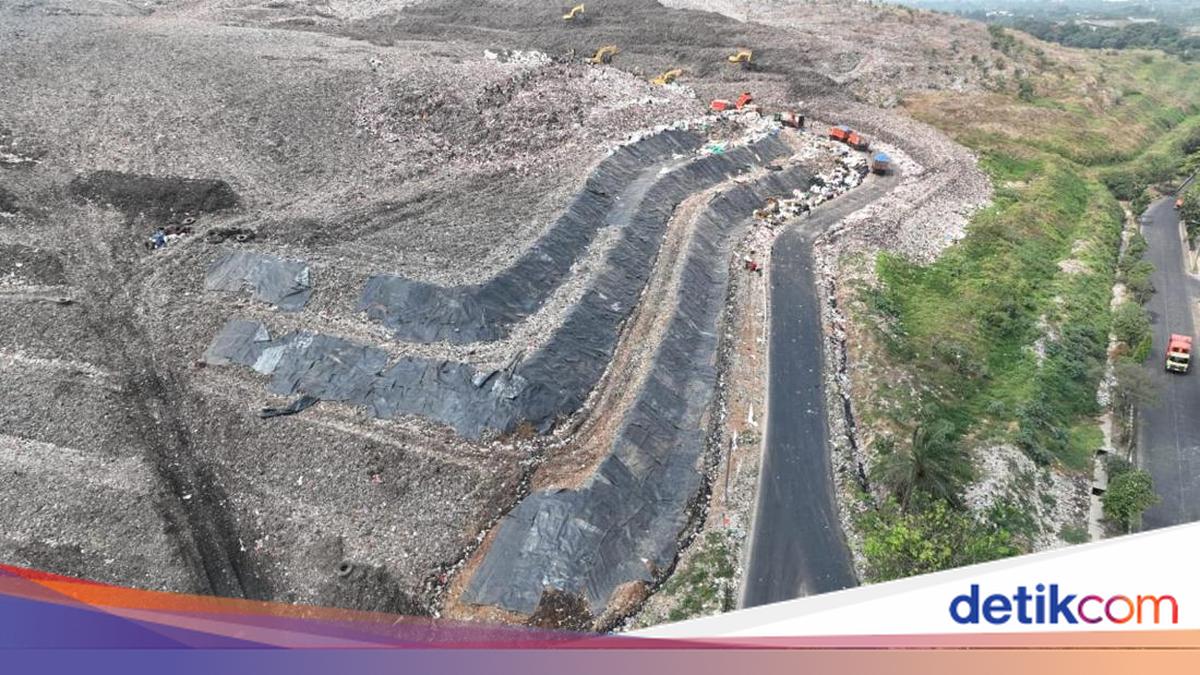
The DKI Jakarta Provincial Government is set to gradually implement a controlled landfill system at the Bantargebang TPST as part of a transformation in waste management. Under this new scheme, the practice of open dumping is targeted to be completely halted by 2029.
Head of the DKI Jakarta Environment Agency, Dudi Gardesi, stated that the changes are being made in stages to ensure waste management services continue uninterrupted. The move also aims to enhance environmental protection and safety within the Bantargebang area.
‘The Provincial Government has a clear and measurable direction for improvement. The transformation is being carried out in stages so that services continue, while environmental protection and the safety of all parties in the Bantargebang area are continuously improved,’ Dudi said in a statement on Tuesday (21/7/2026).
The initial phase of the transformation began in 2026 with the closure of dumping areas using protective media, which will later be reinforced with geomembrane. The installation of this protective media commenced on Friday (17/7) in the upper area of Zone 2 at the Bantargebang TPST.
Under this scheme, dumping areas are covered using protective media in a seven-day operational cycle. Once one area is covered, dumping activities are moved to another prepared site, ensuring operations continue without disruption. According to Dudi, this rotational pattern allows for the arrangement and maintenance of landfill areas without hindering services. In the future, the use of covering media will be reinforced with geomembrane, which is considered more effective and easier to maintain.
Beyond changing the landfill method, the DKI Jakarta Provincial Government is also increasing the proportion of waste that is processed before being sent to Bantargebang. Starting 1 August 2026, approximately 25 per cent of incoming waste is targeted to be residue from processing. ‘Thus, more waste is sorted and processed first, so the volume of waste directly dumped in the landfill can be continuously reduced,’ he explained.
To support the implementation of the controlled landfill, the Environment Agency has prepared several measures, including mapping landslide-prone areas, managing slope stability, mapping community and scavenger activities, improving sanitation, and designing a zone closure system using geomembrane.
The Provincial Government has also outlined the transformation stages through to 2029. In 2027, the use of protective media is targeted for two dumping points, with 50 per cent of incoming waste being processing residue. By 2028, the controlled landfill application will be expanded to three dumping points, with 75 per cent of waste being residue, and the closure of inactive landfill zones will begin. By 2029, all waste entering the Bantargebang TPST is expected to have undergone processing, leaving only residue for landfill, thereby completely ending the practice of open dumping.
Dudi emphasised that the success of this transformation depends not only on management at the Bantargebang TPST but also on efforts to reduce and sort waste at the source, as well as increasing the capacity of waste processing facilities in Jakarta. ‘The more waste that is sorted and processed before being sent to Bantargebang, the less that needs to be landfilled. The DKI Jakarta Provincial Government is committed to consistently implementing these changes so that Bantargebang becomes safer, more organised, and environmentally friendly,’ he concluded.