
Jakarta Stocks Open 1.51% Lower Despite BI’s Liquidity Boost
Jakarta Stocks Open 1.51% Lower Despite BI’s Liquidity Boost
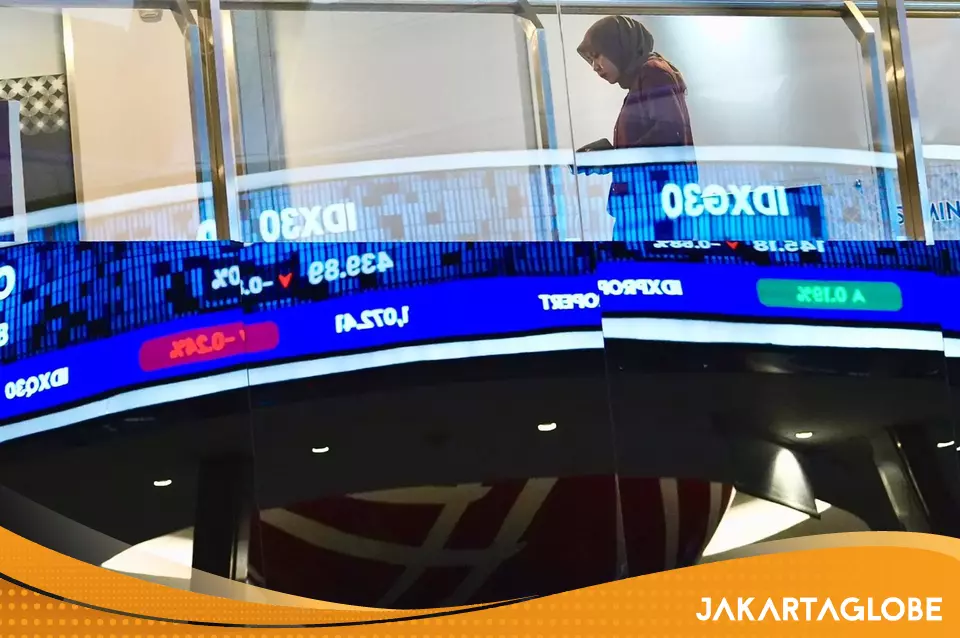
Jakarta. Indonesian stocks opened sharply lower on Thursday, shedding 80 points or 1.51% to 5,247, as investors weighed Bank Indonesia’s liquidity measures against lingering global economic concerns.
Jakarta Composite Index (JCI) moved between 5,185 - 5,350 in early trading. A total of 1.22 billion shares changed hands, with a transaction value of Rp 582.44 billion ($32.27 million) and 76,140 transactions recorded. Decliners dominated the market, with 519 stocks falling, 54 rising and 106 remaining unchanged.
Despite the weak opening, global investors showed interest in Indonesian stocks following President Prabowo Subianto’s speech, according to Pluang Research.
The Indonesia-focused iShares MSCI Indonesia ETF (EIDO), which trades on Wall Street, gained around 2% after the speech, with the increase holding during after-hours trading.
“the performance suggested global investors had not interpreted Prabowo’s remarks as a negative signal, particularly after the Financial Services Authority (OJK) reaffirmed that capital market reforms would continue and that Indonesia’s target of retaining its emerging market status remained unchanged” said Pluang Research through its report Thursday.
Around 48% of EIDO’s holdings consist of major Indonesian banks, including Bank Central Asia (BBCA), Bank Mandiri (BMRI), Bank Negara Indonesia (BBNI) and Bank Rakyat Indonesia (BBRI). Pluang Research said buying the ETF therefore also gives investors substantial exposure to Indonesia’s largest banks.
The research firm said the banks’ valuations had become attractive following a sharp market correction, while state-owned lenders continued to offer double-digit dividend yields. The four banks also had a long track record of consistent dividend payments.
“Investors could gain exposure either by buying bank shares directly on the Indonesia Stock Exchange or through EIDO, which provides exposure to Indonesian stocks in US dollars. However, it cautioned that a single day of gains did not establish a sustained recovery and that volatility could persist until greater clarity emerged from MSCI” said Pluang Research.
Meanwhile, Phintraco Sekuritas said Bank Indonesia’s decision to maintain its benchmark BI Rate at 5.75% and the lending facility rate at 6.5% was outside market expectations. The central bank, however, raised the deposit facility rate by 25 basis points to 5.00%.
The decision was accompanied by increased incentives for Domestic Non-Deliverable Forward (DNDF) instruments to attract foreign capital inflows and maintain rupiah stability.
“This monetary policy remains consistent with the strategy to stabilize the rupiah exchange rate and efforts to keep inflation within the target range,” Phintraco Sekuritas said.
To strengthen rupiah liquidity, Bank Indonesia also lowered the average reserve requirement (Giro Wajib Minimum, or GWM) for conventional commercial banks from 9% to 7%. The reduction will be implemented in two stages, from 9% to 8% starting Nov. 1, 2026, and from 8% to 7% starting Dec. 1.
Kiwoom Sekuritas Indonesia said investor sentiment had improved on the back of technology companies’ performance and optimism about artificial intelligence demand.
However, the inflation outlook remained a concern after US consumer price index (CPI) and producer price index (PPI) data released the previous week pointed to rising price pressures. US housing data also showed that elevated mortgage rates were weighing on demand.
“Investors will watch further economic data and corporate earnings reports to assess the sustainability of the market,” Kiwoom said.
On Wall Street, stocks closed higher on Wednesday. The S&P 500 gained 0.6%, the Nasdaq Composite rose 1.1%, and the Dow Jones Industrial Average added 360 points.
Across Asia, markets weakened in early trading. As of 9:16 a.m. Jakarta time, Japan’s Nikkei 225 fell 0.95%, South Korea’s Kospi declined 1.95%, Hong Kong’s Hang Seng dropped 2.01%, and Shanghai’s SSE Composite Index slipped 0.76%.
Tags: Keywords: