
Jakarta Residents Who Enjoy Eating Crabs and Shellfish Must Heed BRIN's Warning
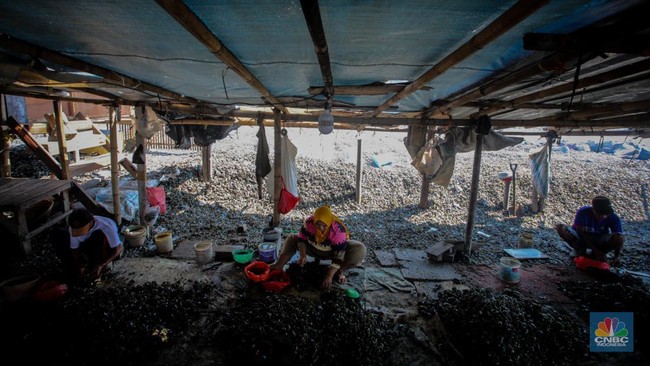
Jakarta, CNBC Indonesia - The National Research and Innovation Agency (BRIN) has found five types of heavy metals in Jakarta Bay, namely zinc (Zn), copper (Cu), nickel (Ni), lead (Pb), and cadmium (Cd).
Researcher from the BRIN Centre for Oceanography Research, Idha Yulia Ikhsani, stated that based on the analysis, zinc was found to be one of the most dominant. In addition, lead and copper also exceed the threshold of international standards in several locations.
“This condition has the potential to impact the marine ecosystem, particularly for benthic aquatic organisms that live in direct contact with sediments,” said Idha, quoted on Tuesday (12/5/2026).
She explained that Jakarta Bay is experiencing significant environmental pressure due to anthropogenic activities, stemming from rapid urbanisation and industrialisation in the Jabodetabek region.
One indicator of this pressure is the discovery of heavy metal pollution in seabed sediments, which play a role in storing various pollutants in the waters. Heavy metals are carried from rivers, domestic waste, industry, and port activities, settling and accumulating at the bottom of the waters.
Human activities on land are also cited as the main factor in the entry of pollutants into coastal areas. For example, through port and shipping activities, industrial waste, river flows carrying urban domestic waste, runoff from densely populated areas, and residues from agricultural activities.
Lestari, a researcher from the BRIN Centre for Oceanography Research, has assessed the risk level of heavy metals in Jakarta Bay using the Risk Assessment Code (RAC) method. Zinc was found to have high potential to be absorbed by marine organisms and enter the food chain, while Cu and Pb are more stable with relatively low risk, but still potentially absorbed by organisms.
“Heavy metals that are absorbed can accumulate in the bodies of marine organisms, especially crabs, shellfish, and other benthic biota. If these organisms are consumed by humans continuously, heavy metals can enter the body and increase long-term health risks,” she explained.
Humans are also at risk of non-carcinogenic effects, particularly due to cadmium accumulation in green mussel tissues.
“Therefore, heavy metal pollution is not only an environmental issue but also directly related to the food security of coastal communities and consumers of marine products,” said Rachma Puspitasari, a researcher from the BRIN Centre for Environmental Technology and Clean Technology Research.
To address this issue, the following efforts are recommended from upstream to downstream:
Controlling industrial waste
Improving domestic wastewater treatment systems
Monitoring the quality of rivers flowing into the bay
Routine monitoring of contamination in sediments and marine biota
Educating the public on the importance of preserving coastal environments and regulating the consumption of marine products.