
Jakarta Residents Turn Household Waste into Compost and Valuable Products
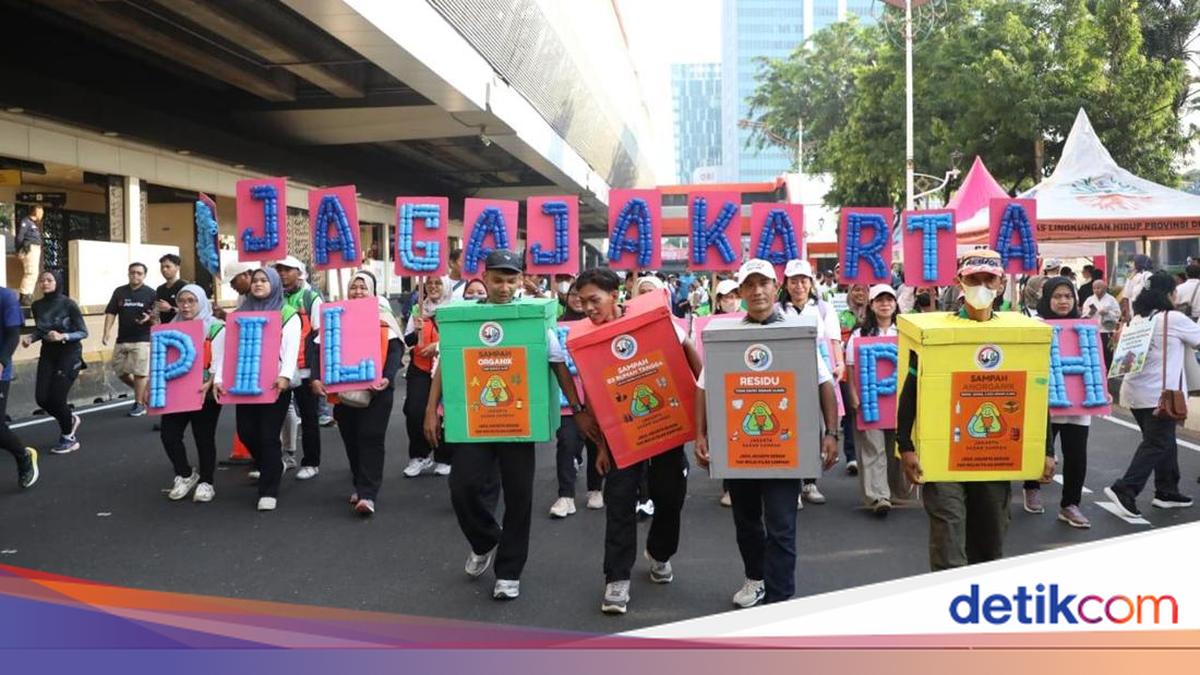
Household waste does not always end up in disposal sites. In several Jakarta residential areas, residents have begun sorting plastic bottles for waste banks, while food scraps and leaves are processed into compost and eco-enzymes. This grassroots movement is part of the DKI Jakarta Provincial Government’s effort to change waste management patterns. Residents are encouraged to no longer mix all their waste, but to sort and process it at the source. Governor of DKI Jakarta Pramono Anung stated that this change requires consistent habits and support from various parties. Collaboration between the government, the public, communities, and businesses is considered essential for waste management to have a real impact. “Consistency and collaboration are key. If all elements of society continue to move together, I am optimistic that waste management in Jakarta will improve and provide real benefits for the environment,” said Pramono at the opening of the Jakarta Eco Future Festival (JEFF) 2026 at Jakarta City Hall on Friday. JEFF 2026, held on 3-4 July, featured discussion forums, workshops, talk shows, impact talks, and awards for environmental actors and communities. Issues discussed included waste management, the circular economy, air quality, and sustainable lifestyles. The festival also served as a practical space. With a Less Waste Event concept, the organisers aimed to reduce waste from the outset, sort the remaining generated waste, and reuse food and beverage containers. “Big changes are born from simple habits carried out consistently. Therefore, I invite all Jakarta residents to make waste sorting a new culture towards a cleaner and more sustainable city,” Pramono said. Head of the DKI Jakarta Environmental Agency Dudi Gardesi Asikin said the minimal waste concept can be applied not only at home but also in events that attract many visitors. “Through JEFF 2026, we want to show that even large events can be held more wisely, orderly, and responsibly towards the environment,” said Dudi. A total of 13 sets of segregated waste bins were placed in the festival area. Each set consisted of containers for organic, inorganic, and residual waste. Officers from Pramuka Saka Kalpataru assisted visitors at each point, helping to ensure waste was placed in the appropriate container and not mixed again. Organic waste from the festival was processed into compost and maggot feed by the Gambir District Environmental Implementation Unit. Inorganic waste was collected through the City Hall Waste Station, while the residue was taken to the Bantargebang Integrated Waste Processing Site. “All waste will be managed according to its type. Organic waste will be processed into compost and maggot feed, inorganic waste will be collected through the City Hall Waste Station, while residual waste will be transported to the Bantargebang TPST,” Dudi explained. JEFF 2026 also implemented a Reuse Protocol with Dietplastik Indonesia. Food and beverage tenants used containers that could be returned to collection points, washed in special facilities, and then reused. During the festival, the DKI Jakarta Provincial Government received a record from the Indonesian World Records Museum (MURI) for the simultaneous making of eco-enzyme with the largest number of participants. Pramono stressed that this achievement was not the end goal, but a driver for more residents to reduce and process household waste. The DKI Jakarta Provincial Government also inaugurated the City Hall Waste Station or Waste Bank. The facility is part of the effort to make the government environment an example of waste sorting implementation. Sorting practices have already grown in several residential areas. In RW 08, Tanah Sereal Urban Village, Tambora District, West Jakarta, the waste sorting movement has been running since March 2026. Head of RW 08 Tanah Sereal Amir Hamzah Lubis said his area has 320 houses spread across nine RTs. Of that number, about 85 percent have participated in sorting waste from home. “We have recorded the houses in the RW 08 Tanah Sereal area, totalling 320 houses. Of that number, about 85 percent have been involved in sorting waste,” he said. According to Amir, resident participation increased after socialisation and assistance were carried out with the urban village and district. The movement was also strengthened after the issuance of DKI Jakarta Governor Instruction Number 5 of 2026 on Waste Sorting and Management from the Source. Settlement density is a particular challenge for Tanah Sereal residents. To overcome this, neighbourhood administrators provided sorting bags so residents could still separate waste despite having limited space. Plastic bottles and other inorganic waste are channelled through the waste bank, while organic waste is processed into compost and eco-enzyme. The area has also created biopore holes to accommodate residents’ cooking scraps. “Here, the active role of the urban village and district is very supportive, while also providing assistance and infrastructure support,” said Amir. A different approach is taken by residents of RW 01 Pondok Bambu, Duren Sawit District, East Jakarta. Through the Berkah Srikandi Waste Bank, residents process kitchen waste using the Takakura method. This method utilises a basket lined with cardboard, sawdust or husks, and mature compost as a starter. Organic waste is then added gradually and covered again with dry leaves, sawdust, or husks to aid the decomposition process while preventing odours. Head of RW 01 Pondok Bambu Edi Suwito said the required tools and materials are relatively easy to find at home.