
Jakarta Remains Indonesia's Capital, IKN Authority Reveals Unexpected Detail
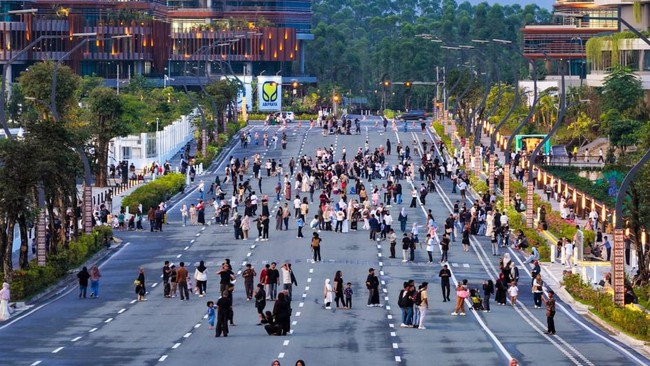
Jakarta, CNBC Indonesia - The Nusantara Capital Authority (OIKN) has reiterated that IKN development is continuing apace. Previously, the Constitutional Court (MK) ruled that Jakarta remains the capital of Indonesia.
The sustainability of IKN development is increasingly supported by investor confidence, with total investment reaching Rp72.39 trillion, OIKN spokesperson Troy Pantouw said. He noted that this figure demonstrates confidence in the IKN continues to grow. ‘The development of the Nusantara Capital City is the future of Indonesian cities, and this will be achieved by building together an ecosystem of living, services, housing, and various economic activities for the people,’ he said in a written statement on Tuesday 19 May 2026.
Currently, total estimated investment in the Nusantara Capital City comprises pure private investment of Rp60.29 trillion, and public facilities and assignments by Ministries/Institutions (K/L) amounting to Rp12.10 trillion. In total, there have been 75 Cooperation Agreements (PKS) with 65 private-sector players and 15 assignments to K/L.
The investment mix also shows involvement of national and international players. Of the 75 PKS, 11 PKS come from foreign investors involving 8 companies from 6 countries — South Korea, China, the United Arab Emirates, Russia, Malaysia, and Singapore — while 64 PKS come from domestic players. The investments span sectors from housing, infrastructure, energy, accommodation, sports centres, to commercial facilities.
On the other hand, economic activity is also growing in the Nusantara area, including through food and beverage businesses and other services to support workers and visitors in the Nusantara area. One example of the evolving business ecosystem is the entry of well-known brand bakery Roti’O. This marks how operators view long-term opportunities in Nusantara.
Responding to this, Pantouw added that incoming investments signal that investors are beginning to view the IKN as a future market. ‘As basic infrastructure, housing, energy, public services, and economic activity begin to take shape, the city will come to life. These investments act as a bridge from development to urban life,’ he concluded.