
Jakarta Relies on Creative Financing to Become a Global City
The Jakarta Provincial Government requires approximately IDR 1,064 trillion to finance development over the next five years. The sheer scale of the need means Jakarta’s development cannot rely solely on the Regional Budget (APBD). The Jakarta Provincial Government is therefore preparing various creative financing schemes, raising funds through collaboration with businesses, investors, financial institutions, and development partners.
Jakarta Governor Pramono Anung stated that this strategy is necessary to achieve the target of Jakarta entering the top 50 global cities by 2030 and the top 20 by 2045. "Our target is for Jakarta to be in the Top 50 Global Cities by 2030 and the Top 20 by 2045. The financing needs for Jakarta’s development over the next five years reach approximately IDR 1,064 trillion," Pramono said during the Investor Daily Roundtable at the Indonesia Stock Exchange in South Jakarta on Tuesday.
According to Pramono, these needs cover basic services and strategic projects, including the Jakarta Sewerage System, the development of a 62.1-kilometre MRT network, a 57.8-kilometre LRT network, and more than 100 programmes to support Jakarta as a global city. "The magnitude of these needs means the government must open various new funding sources so that development can proceed optimally," he said.
The Jakarta Provincial Government positions the APBD as a lever for investment, not the sole source of financing. Schemes being prepared include regional bonds, Government and Business Entity Cooperation (KPBU), naming rights, climate financing, asset optimisation, private investment, BUMD financing, corporate social responsibility, and spatial utilisation funding.
The Jakarta Provincial Government is also preparing the Jakarta Collaboration Fund (JCF). This instrument is designed as a platform to bring together the government with investors, financial institutions, the business community, and development partners. "The Jakarta Provincial Government is preparing the Jakarta Collaboration Fund as a regional financial hub to collect various financing instruments," Pramono said. The JCF is not intended to replace the APBD. The APBD remains prioritised for basic services and social protection, while collaborative financing is directed at covering the funding needs for medium- and long-term projects.
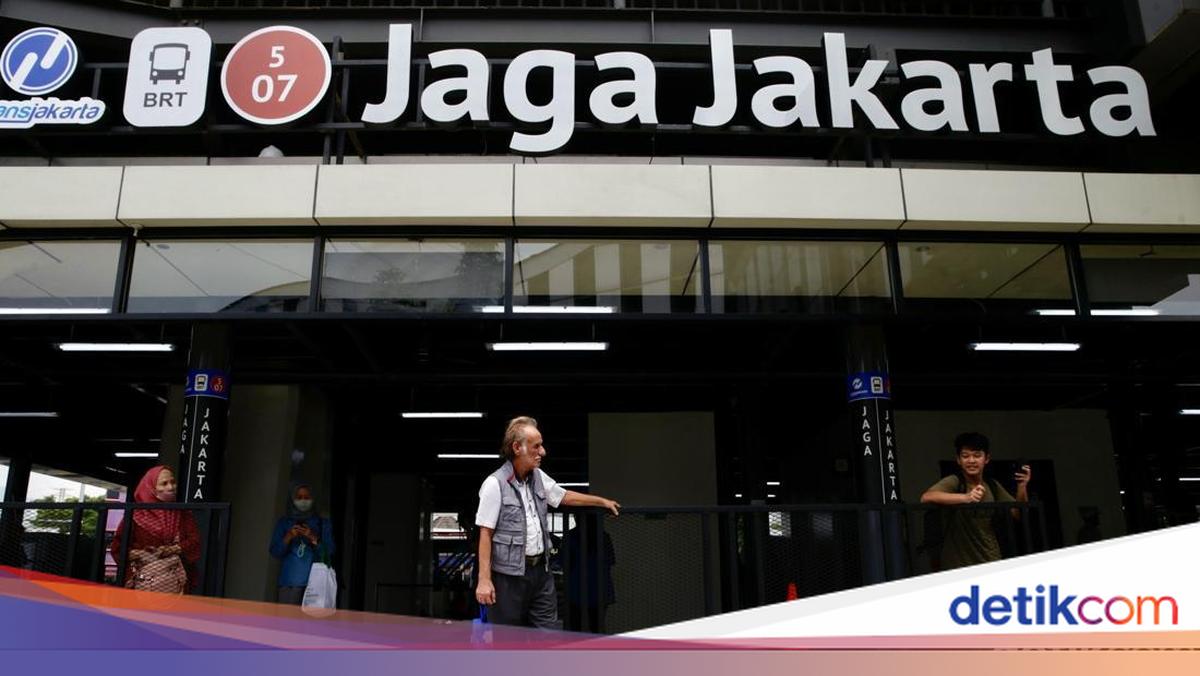
Several forms of creative financing have already been implemented in the construction of public facilities in Jakarta. One example is the granting of naming rights at transport hubs. This scheme has been applied at the Swadarma ParagonCorp bus stop. The collaboration, which began with naming rights, has expanded to include the revitalisation of the stop, the construction of an inclusive pedestrian bridge, the provision of drinking water facilities, a used cosmetic packaging collection point, and prayer rooms at several stops. Pramono noted that collaboration with the private sector can accelerate the development of public facilities without burdening the APBD.
The naming rights scheme has also been applied at the LRT Jakarta Boulevard Utara-Summarecon Mall Kelapa Gading station. The partnership includes the construction of a connecting bridge from the station to the shopping centre to facilitate passenger access. However, not all name changes for public facilities are related to financing. The renaming of the Setiabudi Transjakarta bus stop to Setiabudi Integritas, for example, was a collaboration between the Jakarta Provincial Government and the Corruption Eradication Commission to convey an anti-corruption message in public spaces.
Asset utilisation and developer obligations have also been used to build green open spaces. Taman Bendera Pusaka in Kebayoran Baru, South Jakarta, was built without APBD funds through a mechanism involving floor area ratio bonuses and location clearance approval letters. The approximately 5.5-hectare park connects Taman Langsat, Taman Ayodya, and Taman Leuser. Besides serving as a recreational and sports area, the site is equipped with connecting tunnels between the parks and flood control facilities. "The construction of this park is entirely the result of cooperation with the private sector through the KLB and SP3L mechanisms, so it did not use APBD funds," Pramono said.
Alternative financing is also being prepared to support the development of public transport-oriented areas. One project being developed is the Dukuh Atas Pedestrian Deck. The facility is designed to strengthen passenger interchange in an area served by the MRT, LRT Jabodebek, KRL Commuter Line, Airport Train, and Transjakarta. The project is also intended to become a public space and commercial area supporting transit-oriented development. The Jakarta Provincial Government and BUMD are also offering the Bundaran HI Extended Concourse project to investment partners. This project involves expanding the Bundaran HI MRT station area with public spaces, passenger facilities, commercial areas, new entrances, and underground pedestrian tunnels to surrounding buildings.
The Jakarta Provincial Government continues to develop various financing schemes for sanitation, mass transport, clean water, waste management, and urban spatial planning projects. Pramono assessed that collaboration is a necessity because the APBD’s capacity is limited compared to Jakarta’s development needs. Despite involving the private sector, the government retains control over policy direction, service standards, tariffs, and public protection.