
Jakarta Provincial Government to End Open Dumping Practices by 2029
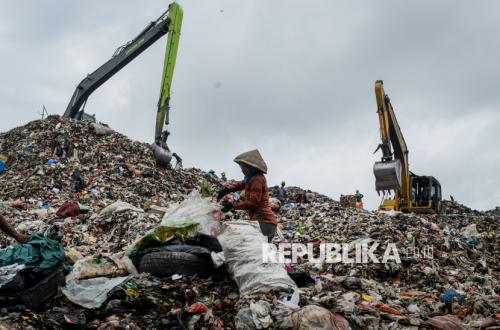
The Jakarta Provincial Government is targeting an end to open dumping practices by 2029. This target is outlined in a Waste Management Roadmap prepared in collaboration with the Ministry of Environment.
Head of the Jakarta Environment Agency, Dudi Gardesi, stated that the roadmap serves as a guide for the gradual improvement of waste management, from reduction and sorting to processing at the source. The administration also plans to increase the capacity of processing facilities within the city and implement a controlled landfill system at the Bantargebang Integrated Waste Processing Site.
“This roadmap ensures that the transformation of Jakarta’s waste management is directed and measurable. We are strengthening waste reduction at the source, increasing processing capacity, and improving operations at the Bantargebang TPST to gradually phase out open dumping practices,” Dudi said in a statement on Tuesday.
He explained that the roadmap aligns with the national target in the 2025–2029 National Medium-Term Development Plan, which aims for 100 percent managed waste by 2029. In the third and fourth quarters of 2026, the provincial government will begin reducing the portion of waste handled through open dumping systems.
Additionally, the administration will gradually implement a controlled landfill system while continuing to increase waste processing capacity through various facilities within the city. Dudi noted that services for collection and transportation are being improved, existing processing facilities are being optimised, and programmes for waste reduction, sorting, and processing at the source are being expanded. Through these measures, dependence on open dumping is expected to be significantly reduced by 2027.
“At this stage, strengthening the management system at the regional level is also being carried out so that the waste sent to Bantargebang TPST is increasingly dominated by residue that can no longer be processed,” he said.
According to Dudi, the transformation will accelerate in 2028, marking a crucial phase towards the complete cessation of open dumping. Processing facility capacities will be increased more massively, while waste that must still be handled at Bantargebang TPST will be managed through a safer and more controlled landfill system.
“We will continue to increase the capacity of processing facilities. The target is clear: to reduce dependence on final processing sites and replace open dumping with a controlled landfill system that is safer for the environment,” Dudi said.
Beyond strengthening infrastructure and governance, the Jakarta Provincial Government is also optimising waste management services at the regional level. This is being done by improving transportation facilities, strengthening processing facilities, and collaborating with area managers, businesses, and the community.
Dudi stressed that the roadmap’s success is highly dependent on public participation in reducing, sorting, and processing waste from the source. “Waste management is not just a problem at the Bantargebang TPST. Change must start from households, markets, schools, offices, commercial areas, and business premises. The more waste is reduced and processed at the source, the lighter the burden on downstream management,” he said.
According to him, all stages of the transformation will enter a phase of refinement and strengthening of system sustainability by 2029. Open dumping practices are targeted to be completely halted, while all systems of reduction, collection, transportation, processing, and final disposal are ensured to run in an integrated manner so that the target of 100 percent managed waste can be achieved and maintained.