
Jakarta Provincial Government States Car Free Day Helps Reduce Air Pollution
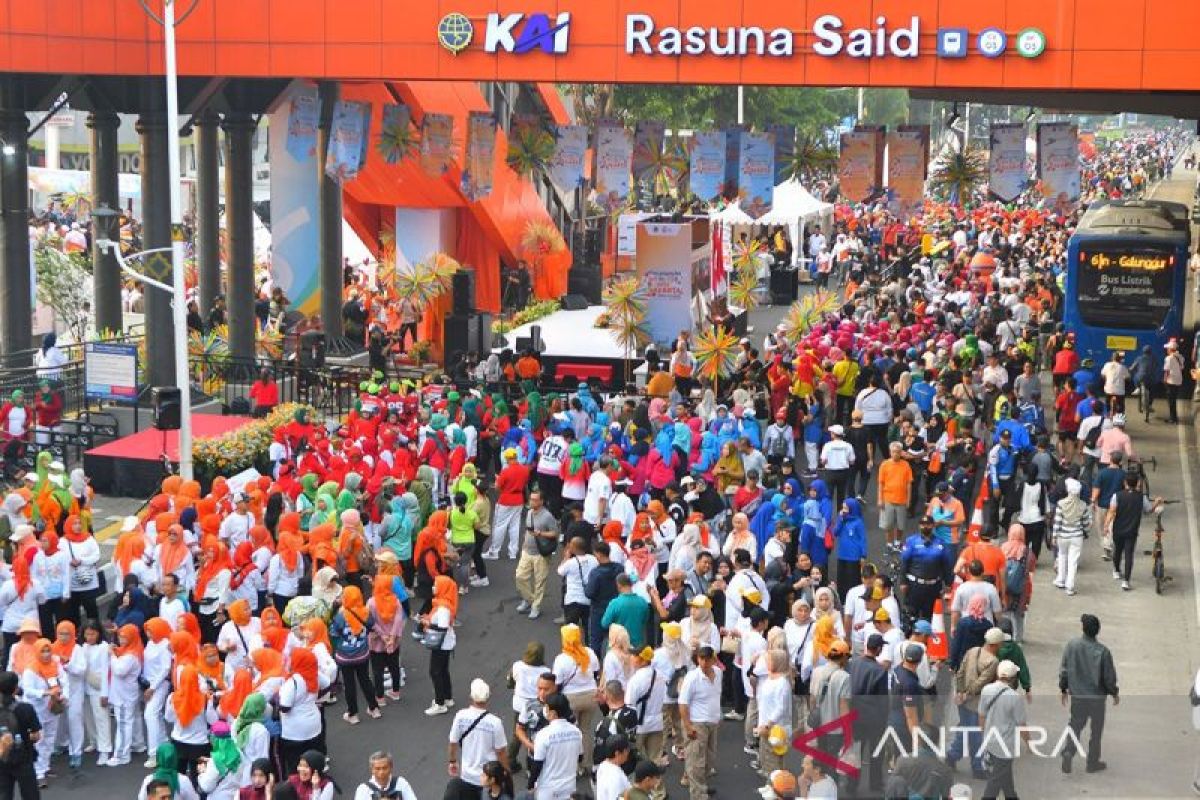
The Jakarta Provincial Government has stated that the implementation of Car Free Day (HBKB) has proven to help reduce motor vehicle emissions and suppress air pollution in Jakarta.
The Head of the Jakarta Environmental Agency (DLH), Dudi Gardesi, stated in Jakarta on Monday that PM2.5 concentrations at Bundaran HI on Sunday (7/6) decreased during the Car Free Day period. The concentration dropped from 86.15 µg/m³ at approximately 03:00 WIB to 77.75 µg/m³ at 04:00 WIB, then to 75.62 µg/m³ at 05:00 WIB, followed by 68.93 µg/m³ at 06:00 WIB, 62.70 µg/m³ at 07:00 WIB, and finally reaching approximately 60.30 µg/m³ between 09:00 and 10:00 WIB.
“The reduction in concentration from the peak to the CFD period reached approximately 27 µg/m³, or about 31 per cent,” said Dudi.
A similar pattern was observed via the Mobile Air Quality Monitoring Station (SPKU Mobile) at Rasuna Said. PM2.5 concentrations decreased from 76.10 µg/m³ at 03:00 WIB to 71.10 µg/m³ at 04:00 WIB, then to 61.4 µg/m³ at 05:00 WIB, and remained in the range of 54.9–55.5 µg/m³ between 06:00 and 09:00 WIB.
According to Dudi, these conditions indicate that during the Car Free Day, there is a decrease in PM2.5 concentrations compared to the peak levels recorded in the early hours of the morning. He acknowledged that the transport sector remains one of the primary contributors to air pollution in Jakarta.
Consequently, the Jakarta Provincial Government continues to encourage the reduction of private vehicle use through various policies, including the implementation of Car Free Day. “Car Free Day in Rasuna Said and the Sudirman-Thamrin area is part of the effort to reduce motor vehicle emissions while encouraging the public to switch to more environmentally friendly modes of transport,” Dudi noted.
In addition to providing a healthier and more comfortable public space for the community, he added that the implementation of Car Free Day is also expected to increase public awareness regarding the importance of maintaining air quality. He emphasised that controlling air pollution requires the involvement of all parties, including both the government and the public.
Furthermore, he urged residents to begin reducing their use of private vehicles and to utilise public transport, walking, or cycling in their daily activities. “Changing public mobility patterns is one of the important steps toward improving Jakarta’s air quality,” Dudi concluded.