
Jakarta Provincial Government Expands Free Private School Programme, Ready to Accommodate 23,000 Students
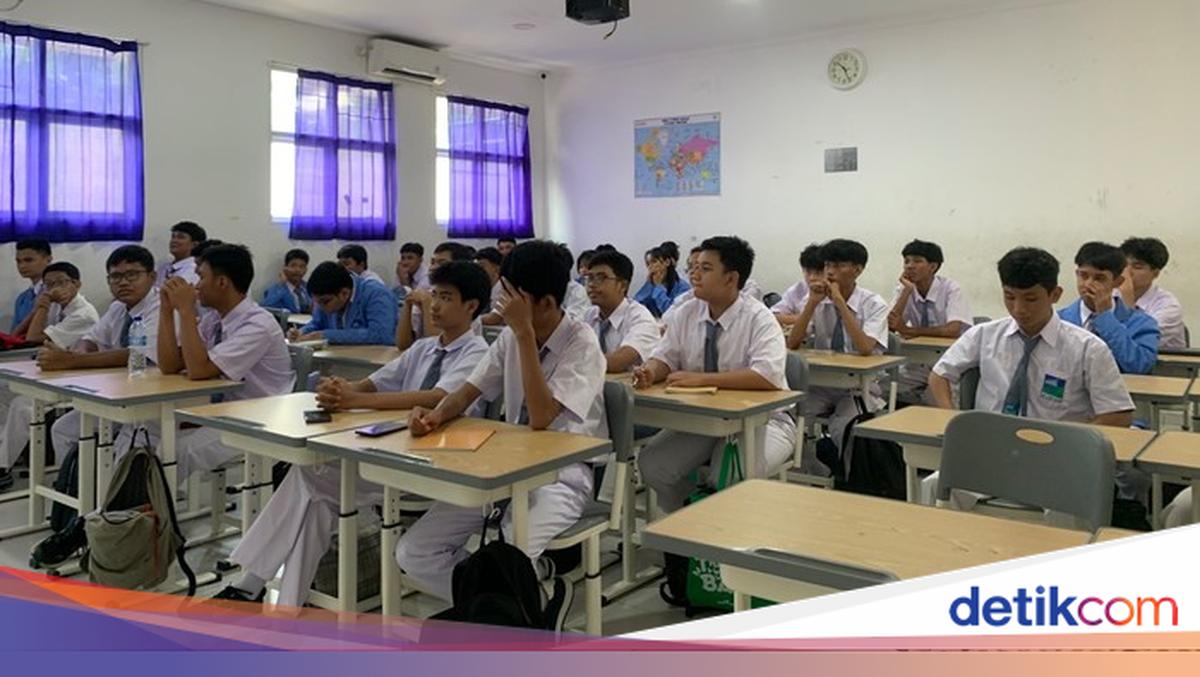
The Jakarta Provincial Government has allocated a budget of Rp253,625,139,600 to implement free private school programmes this year. Out of a total of 103 schools, 40 are continuing recipients with funding spanning January to December 2026, while 63 are new recipients with funding from July to December 2026.
Jakarta Governor Pramono Anung expressed hope that this programme will assist children from low-income families in gaining access to education. “Jakarta is earnestly beginning to allocate a budget for free private schools. Hopefully, what the Jakarta Provincial Government does can break the cycle of misfortune for underprivileged families,” Pramono stated in a press release.
The provincial government is also exploring the possibility of increasing the number of participating schools in the following year. Religious-based schools, including madrasahs under the Ministry of Religion, may be eligible for the programme depending on fiscal conditions. Pramono emphasised that private schools participating in the programme are strictly prohibited from collecting fees from students; any school found levying charges will face evaluation and potential removal from the programme.
The programme specifically targets students who are unable to secure placement in state schools. Muhammad Fahmi, Head of the East Jakarta Education Sub-Department, noted that 23 of the 103 free private schools are located in East Jakarta. He explained that while the programme is designed for students who missed out on state school admissions, the selection process remains at the discretion of the individual school foundations.
Nahdiana, Head of the Jakarta Education Office, stated that participating schools are selected based on specific criteria: they must be located in areas lacking state schools, possess valid operational permits and National School Identification Numbers (NPSN), be accredited, and actively report accurate educational data. Priority is given to private educational units in sub-districts (kelurahan) that do not have schools managed by the provincial government. Furthermore, participating schools must provide complete educational levels, from primary to secondary or vocational levels.
The programme has already significantly boosted enrolment in some institutions. Momon Darmawan, Head of SMKS Laboratorium Jakarta in East Jakarta, reported that student numbers rose from 54 to 153 following the programme’s implementation, with the number of study groups doubling from three to six. He noted that the 108-student quota for the 2025/2026 academic year was filled in just one day.
According to Darmawan, the programme is a massive relief for parents as all educational costs—including uniforms, enrolment fees, books, exams, school activities, and practical requirements—are fully covered. One parent, Leli, shared that after being informed the school had joined the free programme, all previously paid fees were 100% refunded by the school.