
Jakarta Provincial Government and BMKG Develop More Accurate Air Pollution Prediction System
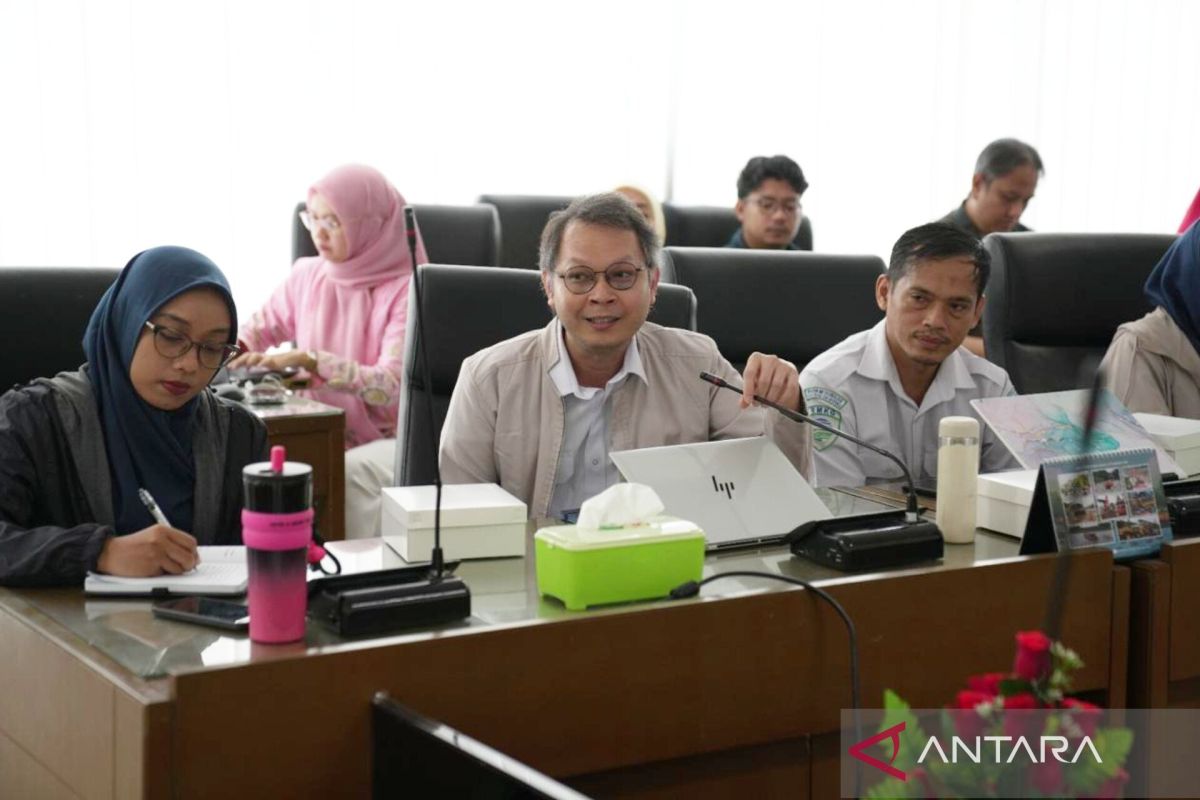
The Jakarta Provincial Government, together with the Meteorology, Climatology, and Geophysics Agency (BMKG), is preparing an air quality Early Warning System (EWS) to predict air pollution with greater accuracy.
“We are preparing this air quality EWS as a preventive instrument. By knowing the potential air quality conditions for the coming days, the government can strengthen the necessary mitigation measures,” said the Head of the Jakarta Environmental Office, Dudi Gardesi, in Jakarta on Saturday.
The development of the air quality EWS is part of the Jakarta Provincial Government’s long-term strategy to reduce the impact of air pollution and improve the quality of life for its citizens. “The public will have time to adjust their activities and take self-protection measures early,” Dudi added.
According to Dudi, the existence of this early warning system can provide significant benefits, particularly for groups vulnerable to the impacts of air pollution. These groups include children, the elderly, pregnant women, and individuals with histories of respiratory diseases, such as asthma and other lung disorders.
With more accurate and accessible air quality forecasts, Dudi noted that the public can take various preventive steps when air quality is expected to deteriorate, such as wearing masks during outdoor activities, limiting physical activity in open areas, and reducing exposure to potentially harmful air pollution.
Supported by SILAM Urban technology, residents will have access to more detailed, accurate, and easy-to-understand air quality information, thereby increasing preparedness against the risks of air pollution.
Meanwhile, Albert C. Nahas, Coordinator of the Greenhouse Gas Informative Sub-field at BMKG, explained that SILAM Urban is developed using various local emission inventory data, covering both sectoral emissions and pollutant emissions. Through this approach, the system can produce more accurate air quality forecasts that reflect the actual conditions in the Jakarta region.
According to Albert, the information provided through SILAM Urban is not limited to general air quality forecasts. The generated information covers six main types of pollutants, including PM2.5. Through SILAM Urban, the public can view air quality maps per sub-district in Jakarta, trends of the Air Pollution Standard Index (ISPU) up to three days in advance, and meteorological conditions.
“This includes sub-district rankings based on air quality, as well as pollutant concentration graphs to facilitate daily air quality monitoring,” said Albert.
The development of this air quality forecasting system is being carried out by BMKG through the use of spatial-based air quality modelling technology known as the Student Information and Service System (SILAM) Urban. This technology enables more detailed mapping of air pollution conditions across all 44 sub-districts of Jakarta. Furthermore, the system is capable of providing information within a one-kilometre radius, ensuring the data presented is specific and relevant to the community.