
Jakarta Prepared to Serve as a Hub for Carbon Economy Projects and Financing
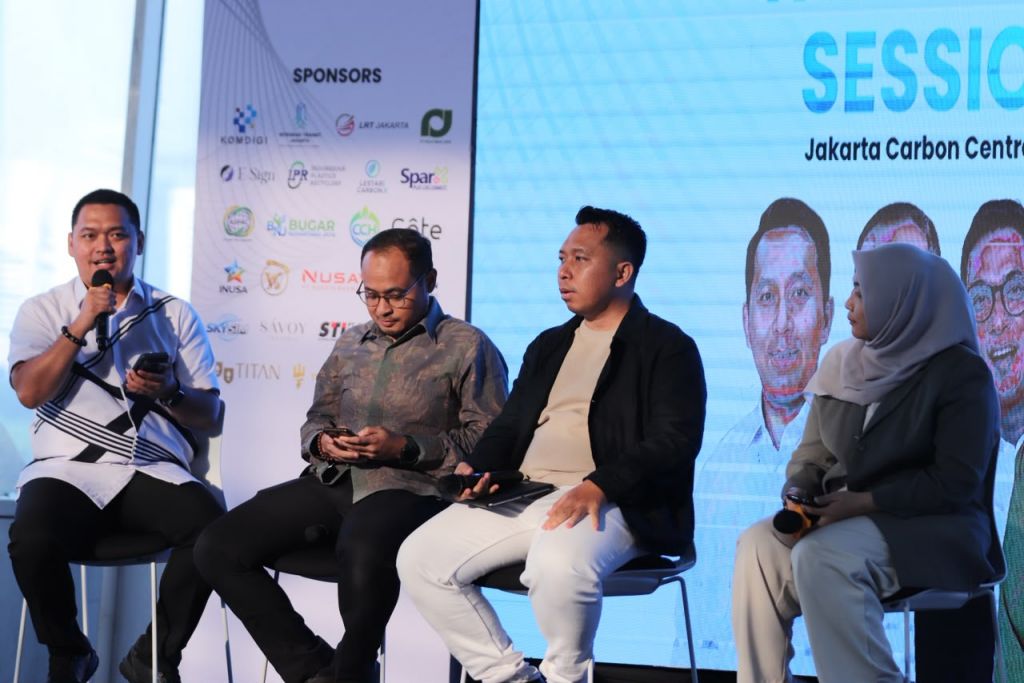
The development of a low-carbon economy is beginning to create new opportunities for the business world in Indonesia, specifically through the creation of an ecosystem that brings together project owners, business actors, investors, financial institutions, technology providers, and the government.
This effort is being undertaken by the Indonesian Native Entrepreneurs Association (HIPPI) Central Jakarta, in collaboration with LestarX, through the development of the Jakarta Carbon Central Hub (CCH). The collaboration was formalised with the signing of a Memorandum of Understanding to explore the development of a carbon economy ecosystem.
Zulfahmy Wahab, Co-Founder of LestarX (Lestari Carbon X), stated that Indonesia possesses immense potential for developing a carbon economy. However, this potential requires an ecosystem capable of connecting various parties, ranging from project owners to financing and markets.
According to Zulf-ahmy, the future green economy is not merely about carbon credit trading. Its development is also linked to investment, industry, technology, employment, and various business activities that support the decarbonisation process.
Connecting Projects and Financing
The Jakarta Carbon Central Hub is designed as a space to bridge various segments of the carbon economy ecosystem. On the upstream side, there is potential in forestry and land use, mangroves and blue carbon, regenerative agriculture, waste management, renewable energy, energy efficiency, and carbon removal technologies such as biochar.
Meanwhile, the demand for emission reductions comes from various sectors, including corporations, industrial estates, financial institutions, investors, and global supply chains. The CCH is directed to meet these needs through project development, capacity building, MRV (Measurement, Reporting, and Verification) technology, access to green finance, market development, and investment partnerships.
“We want to build a bridge between Indonesia’s carbon potential, which is spread across various regions, and the capital, technology, industry, and market that are concentrated in Jakarta. In doing so, the economic value of carbon will not stop at the issuance of carbon credits but will evolve into a new industrial ecosystem,” explained Zulfahmy.
Opportunities for the Business World
The Chairperson of HIPPI Central Jakarta, Denma Willyando, stated that the development of the low-carbon economy must be accessible to businesses of all scales, including national enterprises and SMEs. According to Denma, HIPPI’s involvement in the Carbon Central Hub is part of an effort to provide businesses with access to the knowledge and opportunities arising from the energy transition and sustainable development.
“The green economy must not be a space accessible only to large corporations. National entrepreneurs and SMEs must be part of the carbon economy value chain. HIPPI aims to open access to knowledge, technology, projects, financing, and markets so that the green transition also fosters new Indonesian entrepreneurs,” said Denma Willyando.
The collaboration between HIPPI Central Jakarta and LestarX is also aimed at exploring carbon projects that deliver economic impacts to local communities and regions.
Five Areas of Development
The development of the Carbon Central Hub is also linked to Jakarta’s position as one of the nation’s primary economic and business hubs. The city possesses an ecosystem consisting of financial institutions, corporations, investors, business associations, technology providers, and various other institutions.
In its design, the CCH encompasses five main areas: Carbon Project Development, Carbon Market & Offtake, Green Finance & Investment, Technology & MRV, and Capacity Building & Green Entrepreneurship.
These five areas are intended to bring together carbon project potential from various regions in Indonesia with decarbonisation needs and sources of funding.
Seeking Added Value from the Carbon Economy
Zulfahmy believes that the development of the carbon economy must be accompanied by efforts to increase domestic added value. He noted that resources such as forests, mangroves, biomass, agricultural land, renewable energy, and carbon removal potential can be developed alongside supporting technologies and industries.
“We do not want to repeat the history of an extractive economy in a new form. Indonesia has extraordinary forests, mangroves, biomass, agricultural land, renewable energy sources, and carbon removal potential. We must convert this wealth into intellectual property, technology, investment, industry, employment, and the greatest possible economic value for Indonesia,” Zulfahmy asserted.
Moving forward, the collaborative forum will involve various parties, including central and regional governments, State-Owned Enterprises (SOEs), the private sector, industrial estates, financial institutions, universities, business associations, communities, project owners, and international partners.
Several sectors to be explored include biochar and biomass utilisation, forestry and agroforestry, blue carbon, waste management and the circular economy, clean energy, industrial efficiency, and carbon removal solutions.
HIPPI Central Jakarta and LestarX will next prepare a roadmap for the development of the Carbon Central Hub and identify several projects with potential for development.
“The grand vision is simple: carbon projects can be located throughout the archipelago, but Jakarta must be the meeting point for capital, technology, talent, and the market. From Jakarta, we want to bring Indonesia’s carbon economic value to the global stage,” concluded Zulfahmy.
Source: jawawa.id (https://jawawa.id/newsitem/jakarta-prepared-to-serve-as-a-hub-for-carbon-economy-projects-and-financing-1788677492)
Originally published by metrotvnews.com (https://www.metrotvnews.com/read/NQAC0GZq-jakarta-disiapkan-jadi-penghubung-proyek-dan-pembiayaan-ekonomi-karbon), translated from Indonesian