
Jakarta Partners with Milan to Enhance Public Art and Creative Economy
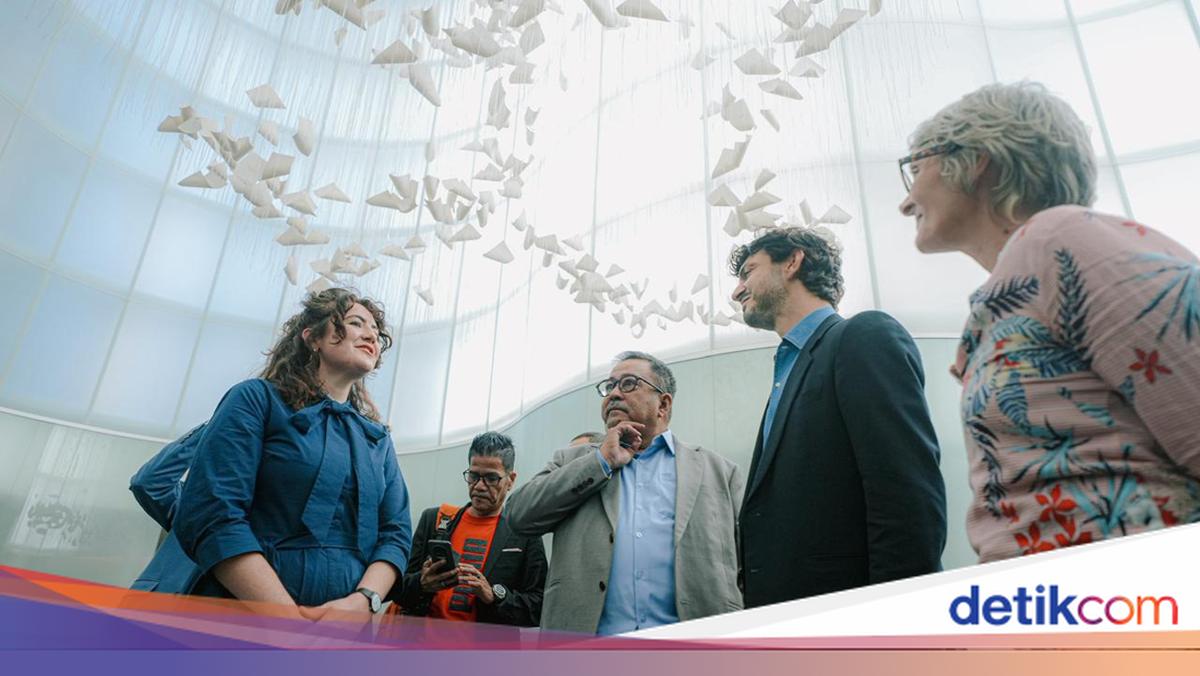
The Jakarta Provincial Government (Pemprov) DKI Jakarta aims to replicate a similar concept by transforming public spaces into platforms for collaboration across art, culture, and community creativity. This initiative is part of the effort to establish Jakarta as a global city that is not only physically modern but also rich in cultural expression.
To achieve this, the Vice Governor of DKI Jakarta, Rano Karno, participated in the Leadership Exchange Programme at the Museo delle Culture (MUDEC) in Milan, Italy, from May 9-16, 2026. This program, facilitated by the World Cities Culture Forum, serves as a platform for exchanging knowledge and experience between Jakarta and Milan in developing cultural policies, public art, and urban space activation.
Rano stated that Jakarta wants to learn from global cities that have successfully integrated art and culture into urban life.
“Jakarta aims to create vibrant public spaces through art and culture, while also opening up opportunities for creative collaboration among Jakarta’s communities and artists. A global city is not just about skyscrapers and modern infrastructure, but also about how its citizens have spaces to express themselves, interact, and take pride in their city’s identity,” he said, quoted from a press release on Friday (May 15, 2026).
“Jakarta wants public spaces to be more than just transit areas, but also spaces for interaction, creativity, and civic pride. Art should be accessible to the community,” Rano added.
This year, Jakarta is one of 19 cities worldwide selected for the international program with the theme ‘Public Art and Co-Creation.’ Through this theme, Jakarta and Milan are promoting the development of community-based public art through collaboration between governments, cultural institutions, creative communities, artists, and the public.
Jakarta and Milan Prepare for Public Art Collaboration
Through the Leadership Exchange Programme, the DKI Jakarta Provincial Government and the Milan City Government agreed to explore a public art collaboration to be held in Jakarta from July 18-24, 2026.
As part of the activities, artists and cultural practitioners from Milan are scheduled to visit Jakarta to participate in workshops, knowledge exchange, and the development of public art installations together with Jakarta artists.
In addition to public art, the delegation from the DKI Jakarta Provincial Government also studied how Milan manages historical areas, museums, and public spaces to keep them vibrant, comfortable, and able to drive community economic growth through tourism, culture, and creative activities.
Rano also held a strategic discussion with Isabella Valentini from the World Cities Culture Forum regarding strengthening cultural collaboration and exploring opportunities for developing creative city partnerships between Jakarta and the network of global cities.
This collaboration is expected to create more inclusive and creative public spaces in Jakarta, representing Jakarta’s identity as a modern global city that remains deeply rooted in its local character and culture.
The Underpass of Pasar Rebo is Transformed into a Creative Space for Residents
A recent example of public space utilization in Jakarta can be seen under the Pasar Rebo flyover in East Jakarta. The area, which was previously a hotspot for gang violence, has been transformed into a positive activity space for the community, especially young people.
The East Jakarta City Government has built a boxing arena and a skateboard park in the area to provide a venue for young people to channel their energy, hobbies, and talents into more productive activities.
The Mayor of East Jakarta, Munjirin, said that the facilities are expected to be an alternative activity that is more beneficial for teenagers.
“The area will be equipped with a boxing arena, which is expected to be a place for children and teenagers to channel their talents and energy in a positive direction, rather than engaging in gang violence,” he said, quoted from Antara.
Similarly, the Head of Ciracas District, Panangaran Ritonga, emphasized that public spaces can be a means for residents to engage in activities and develop their potential.
“Instead of engaging in gang violence, it is better to channel their energy in sports arenas. So this area becomes a public space for the community to enjoy the facilities and express their hobbies and talents,” he explained.
The transformation of the Pasar Rebo flyover underpass shows that public spaces in Jakarta can be utilized not only as urban facilities but also as places for interaction, creativity, and youth development. This concept aligns with the DKI Jakarta Provincial Government’s efforts to create vibrant, inclusive, and beneficial urban spaces for the community.
Cooperation with Italy is Expanded
During his visit to Milan, Rano also met with the Indonesian Ambassador to Italy, Junimart Girsang, on Monday (May 11) afternoon local time.
In the meeting, which lasted about an hour, they discussed several opportunities for cooperation between the DKI Jakarta Provincial Government and strategic cities in Italy, such as Milan and Rome.
This cooperation aims to strengthen Jakarta’s position as a global city, especially through the creative economy, fashion, culture, tourism, and the promotion of local products in international markets.
“This is a very good opportunity to meet with the Indonesian Ambassador to Italy. In 2027, Jakarta will celebrate its 500th anniversary. Therefore, in the next year, Jakarta will be more aggressive in building cooperation with global cities, including important cities in Italy,” said Rano.
Furthermore, Rano affirmed that the DKI Jakarta Provincial Government fully supports local products to be more confident in the international market. According to him, Jakarta’s creative economy should not be limited to local products but should move up to become part of the global value chain.
“Jakarta has many good creative products. There is fashion, cuisine, handicrafts, accessories, and even Betawi cultural products that have a strong character. The government’s task is to pave the way and connect creative players with the market.”