
Jakarta Now Number One, Surpassing Tokyo and Shanghai, UN Reveals Reasons
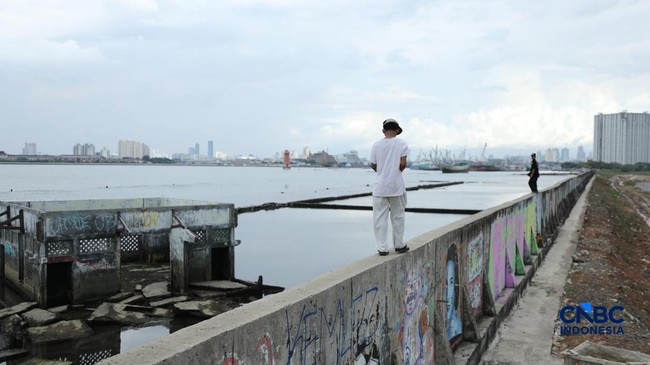
The incessant sound of horns, crowds on every street corner, and long queues at stations that depict daily life in Jakarta are now officially recorded in global data. According to the latest World Urbanization Prospects 2025 report released by the United Nations (UN), Jakarta has officially become the city with the largest population in the world, displacing Tokyo which had held the position for years since 2000. The figure is startling. Nearly 41.9 million people now live and work in the Jakarta metropolitan area and its surroundings. This number has jumped sharply from its previous second-place position, far surpassing Dhaka (Bangladesh) in second place with 36.6 million residents, and Tokyo which is now in third place with 33.4 million people, a number that tends to be stable. So, what is the real reason Jakarta could leap to the top of this list? The UN explains there are three main factors that have made Indonesia’s capital and its buffer zones grow so rapidly. 1. A New Definition as One Unified Entity with Jabodetabek. This is the most fundamental reason. The UN changed the method of calculating city populations, no longer based solely on official administrative boundaries, but by looking at functional areas or urban zones that are physically and economically integrated. This means the figure of 41.9 million is not just the population of DKI Jakarta alone, but encompasses the entire Jabodetabekpunjur area, namely Jakarta, Bogor, Depok, Tangerang, Bekasi, and parts of the Puncak and Cianjur regions that are fully connected to the capital. Although the official administrative data for DKI Jakarta is only around 11 million people, millions of others enter, leave, and live in these satellite cities every day, working, shopping, or attending school in the core area. For the UN, this entire region functions as one giant inseparable city, and is therefore counted as a single unit. 2. An Unshakeable Economic Magnet. As with Dhaka in Bangladesh, Jakarta’s population growth is heavily driven by massive urbanization. Residents from various regions across Indonesia continue to arrive because Jakarta remains the country’s largest centre for the economy, business, education, and health services. Here, opportunities for work, enterprise, and income are perceived to be far greater than in their home regions. The relocation of the national capital to Nusantara in East Kalimantan has also proven unable to stem this tide. The UN projects that over the next 25 years, the population of the Jakarta area will still increase by about 10 million more people. The economic pull of the capital is evidently far stronger than the mere transfer of the government centre. 3. Climate and Environmental Pressures Play a Role. In Bangladesh, migration to Dhaka occurs because many areas are threatened by flooding and rising sea levels. In Indonesia, a similar phenomenon is happening. Many residents from coastal areas or regions prone to climate disasters choose to move to Jakarta for safety and better access to facilities, even though Jakarta itself is now facing a similar threat: about a quarter of its area is predicted to be submerged or waterlogged by 2050 due to land subsidence and climate change. A Changing World Map. This new ranking alters the world’s demographic map. Of the 10 most populous cities, 9 are in Asia. Only Cairo in Egypt is on the list as the sole city outside the continent. The number of large cities or ‘megacities’ (with populations above 10 million) now stands at 33 worldwide, a fourfold increase compared to 1975. Here is the complete list of the 10 most populous cities in the world according to the UN 2025 report: Jakarta, Indonesia: 41.9 million; Dhaka, Bangladesh: 36.6 million; Tokyo, Japan: 33.4 million; New Delhi, India: 30.2 million; Shanghai, China: 29.6 million; Guangzhou, China: 27.6 million; Manila, Philippines: 24.7 million; Kolkata, India: 22.5 million; Seoul, South Korea: 22.5 million; Mumbai, India: 21.3 million. Dhaka is projected to overtake Jakarta and become the world’s most populous city by 2050, along with its very rapid population growth. Meanwhile, the most populous city in the Americas is São Paulo (18.9 million people), and in Africa, Lagos is the largest in the sub-Saharan region. Being the world’s number one city brings two sides of the coin. On one hand, a very large population means a giant economic market, an abundant workforce, and unlimited business potential. Activity on the streets, markets, and shopping centres never ceases. On the other hand, the challenges are extraordinarily heavy. This extreme density burdens the transport, clean water, sanitation, and health systems. Severe congestion, air pollution, and flood risks are increasingly difficult to control. The UN reminds that this title is not merely an achievement, but a strong signal for the government and citizens to immediately design much better, sustainable urban governance that is ready to face climate change.