
Jakarta Needs New Air Pollution Control Regulation
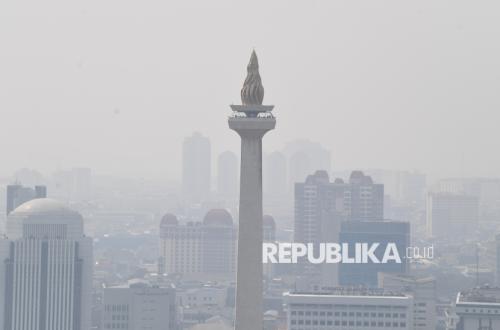
Jakarta’s air pollution control regulation is considered to be in urgent need of updating in order to address the increasingly complex challenges of pollution. The bylaw, which has been in force for more than two decades, is deemed not to have accommodated the development of pollution sources, pollutant types, or the air quality protection approaches that have emerged today.
As the 2027 Regional Legislation Programme (Propemperda) is being discussed, the organisation Bicara Udara is urging the Jakarta Regional House of Representatives (DPRD DKI Jakarta) to prioritise deliberation of the draft regional regulation (Raperda) intended to replace Regional Regulation Number 2 of 2005 on Air Pollution Control. The draft is one of 57 proposals that will be selected to become 15 discussion priorities.
Bicara Udara Co-Founder Novita Natalia said the current bylaw is no longer adequate to respond to the development of air quality issues in Jakarta.
“When this bylaw was passed in 2005, Jakarta’s air pollution challenges were certainly different from today. Over the past two decades, new pollutants such as PM2.5 have been identified that have an impact on public health. Therefore, we hope that the revision of this bylaw becomes a priority for the DPRD,” she said.
According to Novita, sources of air pollution are now increasingly diverse, ranging from the transport sector, industry, construction, open waste burning, to cross-regional pollution. Therefore, the new regulation needs to adopt a more comprehensive approach, not only focusing on pollution control but also on the protection and management of air quality.
“Every Jakarta resident has the right to breathe healthy air. The revision of this bylaw is the foundation for making air pollution control policies stronger, data-based, and oriented towards protecting public health,” she said.
Bicara Udara also considers the regulatory update important because the impact of air pollution is felt directly by the public. Exposure to air pollution increases the risk of various diseases, especially for children, the elderly, and vulnerable groups.
“What is more important is ensuring that Jakarta has rules capable of protecting public health through better emission control, transparent air quality monitoring, and inter-regional coordination,” Novita added.
In addition to strengthening public health protection, the organisation considers that a more adaptive regulation is also needed to support Jakarta’s position as a global city. Air quality is regarded as one of the important indicators of the quality of life of residents as well as the city’s competitiveness at the international level.
“We hope that the DPRD of DKI Jakarta Province can pay attention to the urgency of revising this bylaw so that the deliberation process can be continued immediately and produce a regulation capable of answering Jakarta’s air quality challenges in the future,” she said.