
Jakarta Moves Away from Open Dumping; Satellite Cities Urged to Reform
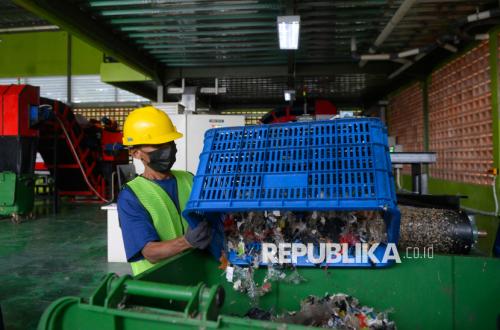
The waste management transformation undertaken by the Jakarta Provincial Government is considered a necessary move that should be followed by the surrounding local governments in the Jabodetlag area. Urban planning observers suggest that the cessation of open dumping practices should serve as a momentum for other regions to overhaul their waste management systems comprehensively.
Yayat Supriyatna, an urban planning observer from Trisakti University, stated that Jakarta’s policy of implementing a ‘sort-transport-process’ system and ending open dumping is the correct step. He noted that open dumping patterns merely accumulate waste without generating any added value.
“In truth, the policy to stop open dumping is a good one and has been long overdue. Open dumping simply builds mountains of waste and collects refuse without creating any added value,” Yayat said on Friday (31/07/2026).
Yayat noted that satellite cities such as Bekasi, Depok, Bogor, and Tangerang still face various issues regarding landfill management and limited waste infrastructure. Therefore, he believes the transformation implemented by Jakarta can serve as a reference for other local governments within the metropolitan area.
“Satellite cities in Jabodetabek urgently need to emulate the Jakarta Provincial Government’s steps in implementing waste processing breakthroughs,” Yayat added.
According to Yayat, the cessation of open dumping practices at the Bantargebang landfill is part of a national policy direction. In its place, Jakarta is beginning to implement a controlled landfill approach and is preparing for the construction of waste-to-energy facilities.
He assessed that this change should be directed so that waste is no longer viewed merely as refuse, but as a resource with economic value. “Furthermore, if waste-to-energy power plants are established, they can generate economic added value. Thus, waste is not just waste, but part of the waste is converted into energy.”
However, Yayat warned that building processing facilities alone is insufficient to achieve a waste management transformation. He argued that the success of the policy also depends on waste sorting systems at the source, so that the volume of waste entering landfills can be continuously reduced.
Previously, the Governor of Jakarta, Pramono Anung, announced that starting 1 August 2026, only residual waste that can no longer be processed will be sent to the Bantargebang landfill. This policy was implemented following the issuance of Governor’s Instruction Number 5 of 2026, as part of the shift in the waste management system from a ‘collect-transport-dispose’ pattern to a ‘sort-transport-process’ model, aiming for a zero open dumping target by 2029.
Source: jawawa.id (https://jawawa.id/newsitem/jakarta-moves-away-from-open-dumping-satellite-cities-urged-to-reform-1785502715)
Originally published by Republika (https://esgnow.republika.co.id/berita/tj1989416/dki-tinggalkan-open-dumping-daerah-penyangga-diminta-ikut-berbenah), translated from Indonesian