
Jakarta Mobile Phone Shops See Fewer Buyers as Traders Struggle
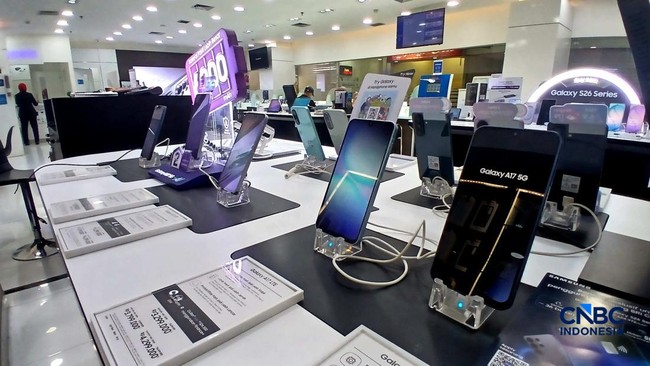
Smartphone prices in Indonesia have risen as a result of chip and RAM shortages, triggering a decline in retail mobile phone sales and putting pressure on traders’ incomes.
A shop employee displays a range of smartphones at a mall in Jakarta on Wednesday (8/7/2026). Indonesia’s smartphone market entered 2026 with increasingly expensive devices owing to the chip shortage. (CNBC Indonesia/Tri Susilo)
Retail mobile phone traders at electronics shopping centres have reported declining sales throughout the past year.
According to traders in the field, overall mobile phone sales in 2025 fell compared with the figures achieved in 2024.
The decline was felt to be quite sharp, with 2025 considered tougher for business owners than the previous year. This has had an impact on increasingly thin earnings.
The pressure on the retail market did not come suddenly at the start of the new year. Traders revealed that phone prices had in fact begun creeping up since late last year.
“Since last year, phone prices have already started rising,” said a mobile phone trader at Blok M Plaza.
The trader said the phenomenon was visible across major brands such as Oppo and Vivo, which raised the selling prices of their products before December.
Phone traders also admitted they had no choice but to follow the trend of rising prices. The price increases at the local retail level are a direct consequence of global supply chain turmoil.
Citing the International Data Corporation (IDC), this year’s smartphone price surge is estimated to be driven by a shortage of Random Access Memory (RAM), as major manufacturers focus their efforts on artificial intelligence (AI).