
Jakarta LRT Reaches Manggarai; KAI Backs Completion of Direct Access to Manggarai Station
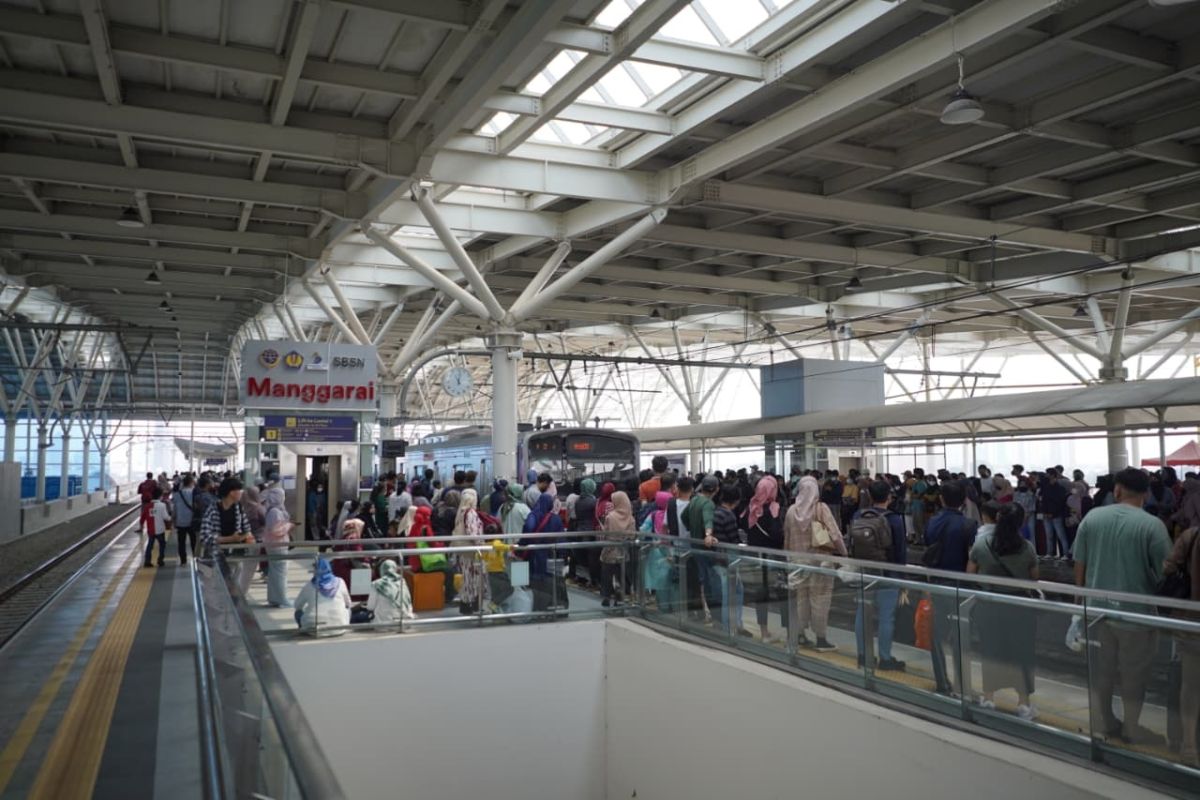
Jakarta (ANTARA) – PT Kereta Api Indonesia (Persero), or KAI, supports the development of integrated public transport in the Manggarai area following the launch of Jakarta LRT services on the Kelapa Gading–Manggarai station route on 16 September 2026.
LRT Manggarai station and KAI Manggarai station are physically separate stations located in the same area. Work to complete a direct link between them is under way, with the aim of making future transfers between modes easier for passengers.
The Kelapa Gading–Manggarai Jakarta LRT route is 12.2 kilometres long, serves 11 stations and takes about 28 minutes.
KAI Vice President of Corporate Communications Anne Purba said the Jakarta LRT’s arrival in Manggarai offered broader connectivity opportunities for public transport users.
“LRT Manggarai station and KAI Manggarai station are separate facilities. They are in the same area and are intended to be connected by integration facilities. Jakarta LRT is already operating as far as Manggarai, while direct access to KAI Manggarai station is still being completed with the relevant parties,” Anne said.
8.17 million KRL gate movements through September
The scale of the potential integration is reflected in passenger activity at KAI Manggarai station. According to data from KAI Commuter, 4,149,826 passengers entered through the gates and 4,022,954 exited between January and September 2026 on the KRL Commuter Line service.
This brought the total number of passenger movements through the station’s KRL gates to 8,172,780 in the first nine months of 2026.
In September 2026 alone, there were 500,934 entries and 485,049 exits, or 985,983 passenger movements in total.
These figures count passengers entering and exiting through the gates and do not include those transferring between trains within the station without passing through a gate.
“Manggarai sees substantial transit flows. Many passengers arrive on one journey and continue on another. Completing intermodal connectivity will therefore bring direct benefits to people’s daily journeys,” Anne said.
On 22 March 2026, KAI Manggarai station recorded 201,617 transit passengers in a single day, a record during the 2026 Eid al-Fitr transport period.
Bogor, Cikarang and airport trains meet at Manggarai
KAI Manggarai station serves the Bogor and Cikarang Commuter Line routes. These services make Manggarai part of journeys to and from Bogor, Depok, Nambo, Bekasi, Cikarang and various parts of Jakarta.
The station also serves the Soekarno-Hatta Airport Commuter Line. From January to September 2026, the service recorded 340,002 gate entries and 375,915 exits at KAI Manggarai station. Total gate activity for the Airport Commuter Line during the period reached 715,917 passenger movements.
Some long-distance trains travelling to and from Gambir station also pass through the Manggarai area, but do not pick up or set down passengers at KAI Manggarai station.
KAI has previously said Manggarai station handles about 700–750 train journeys a day, including Jabodetabek Commuter Line and Soekarno-Hatta Airport Commuter Line services. As the available corporate data is given as a range, KAI has not converted it into a single figure.
Direct link planned across three zones
The integration plan for LRT Manggarai and KAI Manggarai stations is divided into three connecting zones. According to planning documents, Zone 1 is on the side facing Sultan Agung Hospital and Pasaraya Manggarai; Zone 2 is intended to connect with a TransJakarta bus stop and Manggarai Terminal; and Zone 3 is within the KAI area, designed to connect via a linkway to the Airport Train concourse at the west entrance of KAI Manggarai station.
The construction area also interfaces with existing infrastructure, including a pedestrian bridge owned by the Jakarta Public Works Agency, a TransJakarta bus stop, the Ciliwung River watershed area and KAI Manggarai station.
Integration documents show that the structure linking to KAI Manggarai station is planned for the west entrance area, with part of KAI’s car park also set aside for construction.
Anne said completing this stage was important because good integration should make transfers between transport modes clearer and more comfortable for passengers.
“When the direct link is complete, people will have more travel options. Passengers from Bogor, Depok, Bekasi, Cikarang and Soekarno-Hatta Airport will be able to continue on to the Jakarta LRT network, and vice versa. The focus is on making those transfers simpler for passengers,” she said.
The Jakarta provincial government has previously said that work to connect LRT Manggarai station directly with the KAI Manggarai station area is being carried out in collaboration with KAI.
“Manggarai already handles large volumes of movement every day. The arrival of Jakarta LRT adds another travel option in the area. KAI will continue coordinating to ensure the completion of intermodal access proceeds smoothly and provides a more comfortable travel experience for the public,” Anne said.
Source: jawawa.id (https://jawawa.id/newsitem/jakarta-lrt-reaches-manggarai-kai-backs-completion-of-direct-access-to-manggarai-station-1792144549)
Originally published by Antara (Indonesian) (https://www.antaranews.com/berita/5791381/lrt-jakarta-sudah-sampai-manggarai-kai-dukung-penyelesaian-akses-langsung-ke-stasiun-kai-manggarai), translated from Indonesian