
Jakarta Loses Potential Revenue of Rp 2 Trillion from Electric Vehicle Tax, Says Pramono
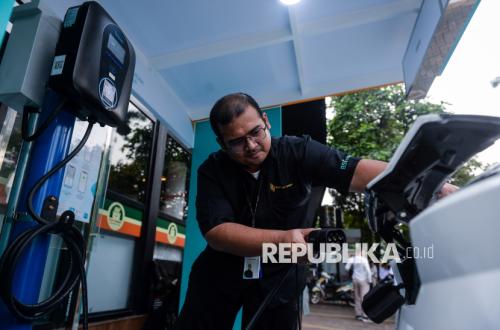
Jakarta Governor Pramono Anung has emphasised that the authority to provide tax incentives for electric vehicles lies with the central government. Consequently, the DKI Jakarta Provincial Government will adhere to the established rules, including the exemption of Motor Vehicle Tax (PKB) and Motor Vehicle Title Transfer Fee (BBNKB).
This statement was made in response to data from the DKI Jakarta Regional Revenue Agency (Bapenda), which recorded a potential loss of regional revenue of approximately Rp 2 trillion up to the second quarter of 2026 due to the electric vehicle tax exemption policy. “Previously, there was a desire to impose a tax on electric vehicles, but it was later revoked. That might be what led to the calculation of the potential Rp 2 trillion revenue loss,” Pramono said at DKI Jakarta City Hall on Thursday (23/7/2026).
He asserted that the Jakarta Provincial Government does not have the authority to alter the policy, as all fiscal incentive regulations for electric vehicles are determined by the central government. “For the DKI Jakarta Government, we will fully implement the rules issued by the central government. Whether the policy exists or not is the authority of the central government, the Ministry of Finance, and the Ministry of Home Affairs,” he stated.
Previously, Head of Bapenda DKI Jakarta Lusiana Herawati revealed that the growth of electric vehicles in Jakarta had reached 33 percent by the second quarter of 2026. This growth has impacted regional revenue potential due to the PKB and BBNKB exemption incentives. According to Lusiana, the potential loss of revenue from the PKB sector reached Rp 515 billion, originating from approximately 109,432 electric vehicle units. Meanwhile, the potential loss of revenue from BBNKB is estimated at Rp 1.5 trillion for around 53,419 units.
“The growth of electric vehicles in Jakarta up to the second quarter has reached 33 percent, so our potential revenue loss from PKB and BBNKB is quite significant,” Lusiana said. She added that as of June 2026, electric vehicle sales in Jakarta were the highest nationally, with around 63 percent of electric vehicle sales in Indonesia recorded in the capital. Lusiana also noted that 78 percent of electric car owners in Jakarta already owned other vehicles. For this reason, she believes the fiscal incentive policy for electric vehicles needs to be evaluated jointly with the central government from the perspective of beneficiary fairness. “From the fairness perspective, we need to review this policy together with the central government,” she said.