
Jakarta KAI logs increasing passenger numbers for Cikuray train since 2022
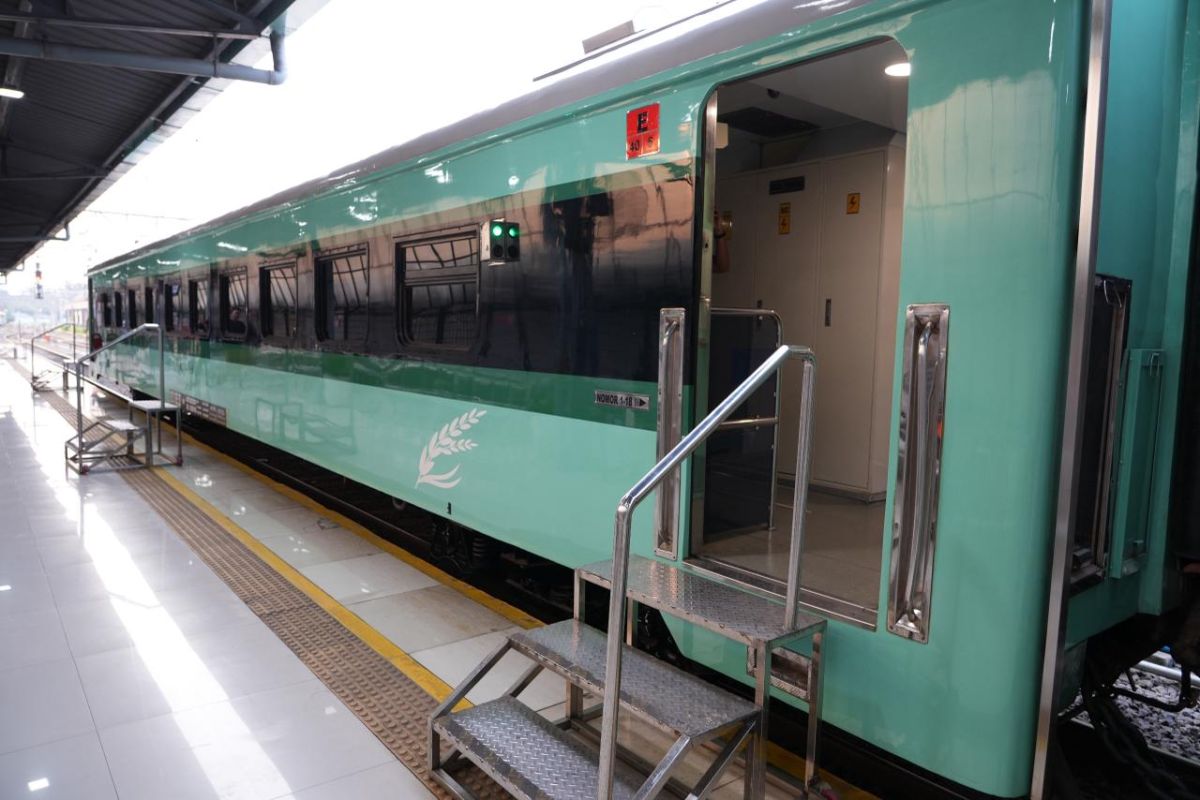
PT KAI Operational Area (Daop) 1 Jakarta has recorded a continuous increase in passenger numbers for the Cikuray train, which serves the furthest relation of Garut-Pasar Senen at a fare of Rp45,000, from 2022 up to 2026. KAI Daop 1 Jakarta Public Relations Manager Franoto Wibowo stated that in 2022, the Cikuray train served 293,265 passengers, which then rose to 514,767 customers in 2023, and to 591,089 passengers in 2024. It then reached 615,723 customers in 2025. Meanwhile, from January to May 2026, the Cikuray train has served 266,993 customers, Franoto said in a statement in Jakarta on Thursday. Operationally, the Cikuray train serves 12 stopping stations, namely Pasarsenen, Bekasi, Cikarang, Karawang, Cikampek, Purwakarta, Cimahi, Bandung, Kiaracondong, Leles, Cibatu, and Garut. For the Pasar Senen-Garut relation, the Cikuray train departs from Pasar Senen Station at 17.20 WIB. The route connects regions with diverse and complementary economic characteristics. The journey starts from Garut, known as one of the agricultural and horticultural centres in West Java. Various commodities, including potatoes, carrots, cabbages, tomatoes, chillies, spring onions, oranges, and avocados, grow in this region. The journey then continues towards Greater Bandung, which is developing as a centre for education, trade, services, and the creative economy. Subsequently, the Cikuray train serves Purwakarta, strategic industrial zones in Karawang and Cikarang, up to Bekasi and Jakarta as the centre of national economic activity. This concept is realised through the operation of the People’s Economy Train, designed by adapting the design and service characteristics to be more responsive to the needs of the community, who are the primary users of the Cikuray train. Franoto said this step aims to strengthen public transport access while supporting real sector economic activity along the journey’s route. The concept is also designed to help reduce geographical and economic barriers, giving the community broader opportunities to reach educational centres, trade centres, industrial areas, and various other activity hubs. Besides presenting the People’s Economy Train, KAI is preparing to develop Farmers’ and Traders’ Train services as the next stage of the People’s Economy Rail concept. These services are designed as mobility solutions and business activity support for farmers, market traders, and micro, small, and medium enterprise (MSME) operators, who form an important part of regional economic movement.