
Jakarta intensifies efforts to boost public compliance with vehicle emission tests
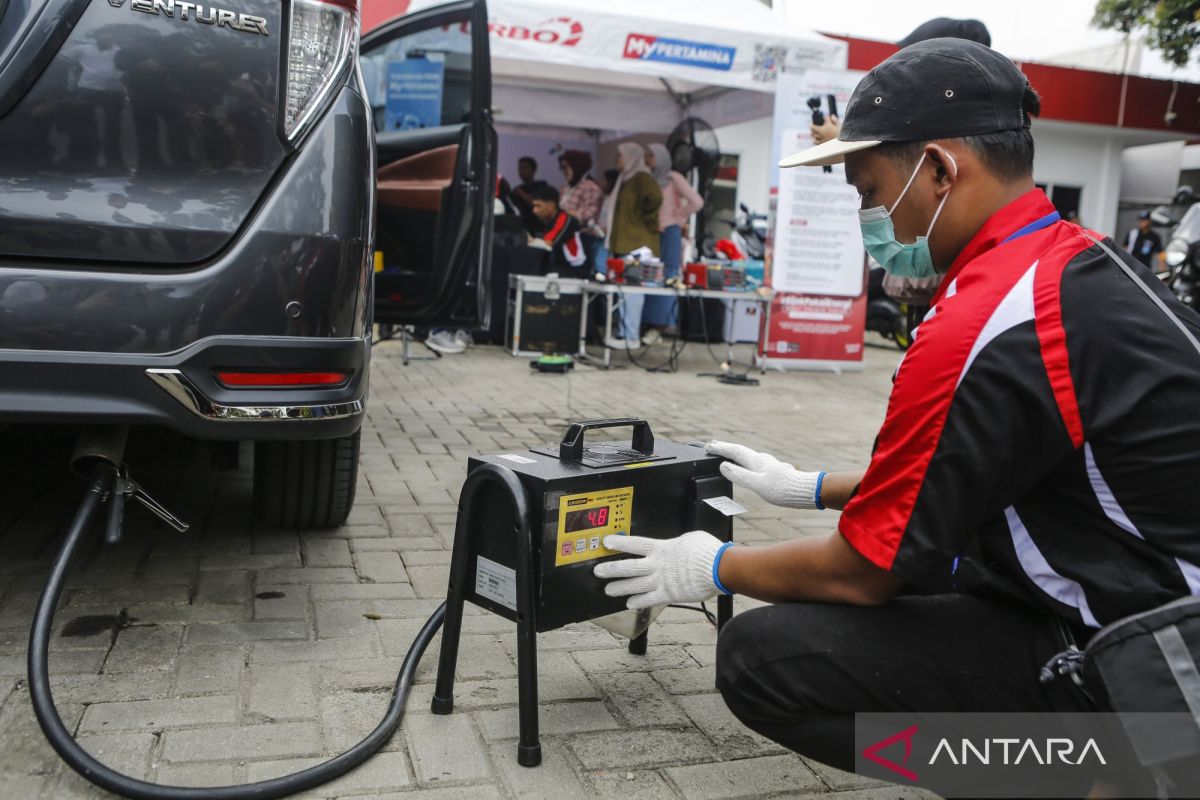
The Jakarta Provincial Government is steadily working to increase compliance among capital residents with private vehicle emission testing, as part of efforts to control air pollution. “Efforts to improve compliance involve providing education and public awareness campaigns about the importance of emission tests,” said Tiyana Brotoadi, Head of the Environmental Pollution Prevention Subgroup at the Jakarta Environmental Agency, on Thursday.
He stated that in June, the agency conducted 11 emission testing sessions, inspecting 1,458 vehicles. “The compliance rate was 17.38 per cent,” he said. This year, emission testing activities will be carried out 56 times, matching last year’s total. The compliance rate in 2025 reached 33.12 per cent.
Emission tests are conducted to gauge public compliance, particularly among motor vehicle owners, regarding the combustion efficiency of vehicle engines and the levels of pollutants produced. Additionally, the government seeks to build citizens’ awareness of their contribution to air quality conditions. The obligation for vehicle emission testing is stipulated in Jakarta Governor Regulation Number 66 of 2020 concerning Exhaust Emission Testing.
However, given that vehicles mobilising within Jakarta are not solely owned by city residents, but also by those from outside Jakarta, where similar regulations may not yet exist, emission testing activities are also carried out in border areas.
Meanwhile, air quality in Jakarta on Thursday morning fell into the unhealthy category, ranking first as the city with the worst air in the world. Based on data from the air quality monitoring site IQAir at 6:10 a.m. Western Indonesian Time, the air quality index in Jakarta stood at 171, categorised as unhealthy, with PM2.5 pollution and a concentration value of 84 microgrammes per cubic metre. This level indicates unhealthy air quality for sensitive groups, posing risks to sensitive humans or animal populations and potentially causing damage to plants or aesthetic values.