
Jakarta Information Commission urges AI use to strengthen transparency evaluations
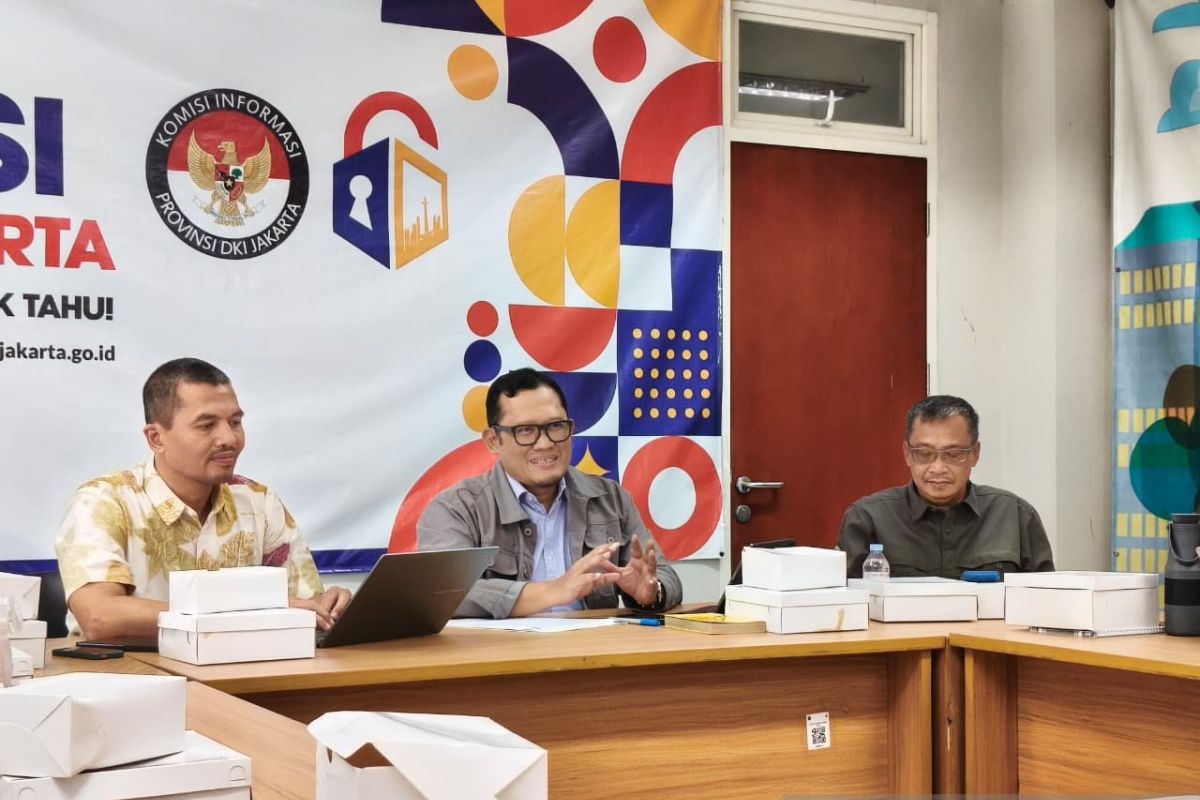
Jakarta (ANTARA) – The Jakarta Information Commission (KI DKI) is urging the use of artificial intelligence (AI) to strengthen its electronic monitoring and evaluation system (e-monev) for public information transparency.
“We must adapt AI positively in our work. It can have a faster and extraordinary impact,” KI DKI Deputy Chair Luqman Hakim Arifin said in Jakarta on Friday.
Yogyakarta Special Region Information Commission (KI DIY) Deputy Chair Bayu Februarino Putro and commissioner Ahmad Nasir also shared their experience of implementing e-monev and using AI to improve the quality of assessments of public information transparency.
Bayu said e-monev in Yogyakarta is guided by Information Commission regulations (Perki) and regional regulations. KI DIY’s assessment system is now in its third generation, using AI to crawl the websites and social media accounts of public bodies.
He added that Yogyakarta’s e-monev programme adopts a specific theme each year to address the needs of strengthening information transparency. In 2024, it focused on establishing Information and Documentation Management Officers (PPID) at junior and senior secondary schools; in 2025, the focus is on subdistrict offices and regionally owned enterprises (BUMD); and in 2026, it will cover disaster management.
The assessment uses six indicators: organisational commitment, facilities and infrastructure, digitalisation, types of information, information quality, and public information services. The first four indicators are assessed through a self-assessment questionnaire (SAQ).
Information quality is assessed by reviewing website and social media content, while the public service aspect is measured through access testing.
KI DIY Commissioner Ahmad Nasir stressed that a public body’s “Informative” status must be tested against the experience and perspective of members of the public using its information services.
“An SAQ alone is not enough to measure the quality of information transparency and services because it only records administrative conditions. Social media and website content are like the food, while access testing measures the response to information requests,” Nasir said.
Nasir said administrative assessments through SAQs were insufficient to provide a comprehensive picture of information transparency.
Agus Wijayanto Nugroho, head of KI DKI’s Information Dispute Resolution division, added that good practices adopted in other regions could be used to strengthen e-monev in Jakarta.
“Evaluations must also promote accountability among government institutions and universities in implementing information-transparency policies, so that their stated commitment does not stop at meeting administrative requirements,” Agus said.
Source: jawawa.id (https://jawawa.id/newsitem/jakarta-information-commission-urges-ai-use-to-strengthen-transparency-evaluations-1792169517)
Originally published by Antara (Indonesian) (https://www.antaranews.com/berita/5792433/ki-dki-dorong-pemanfaatan-ai-perkuat-evaluasi-keterbukaan-informasi), translated from Indonesian