
Jakarta Information Commission stresses public-focused access to information
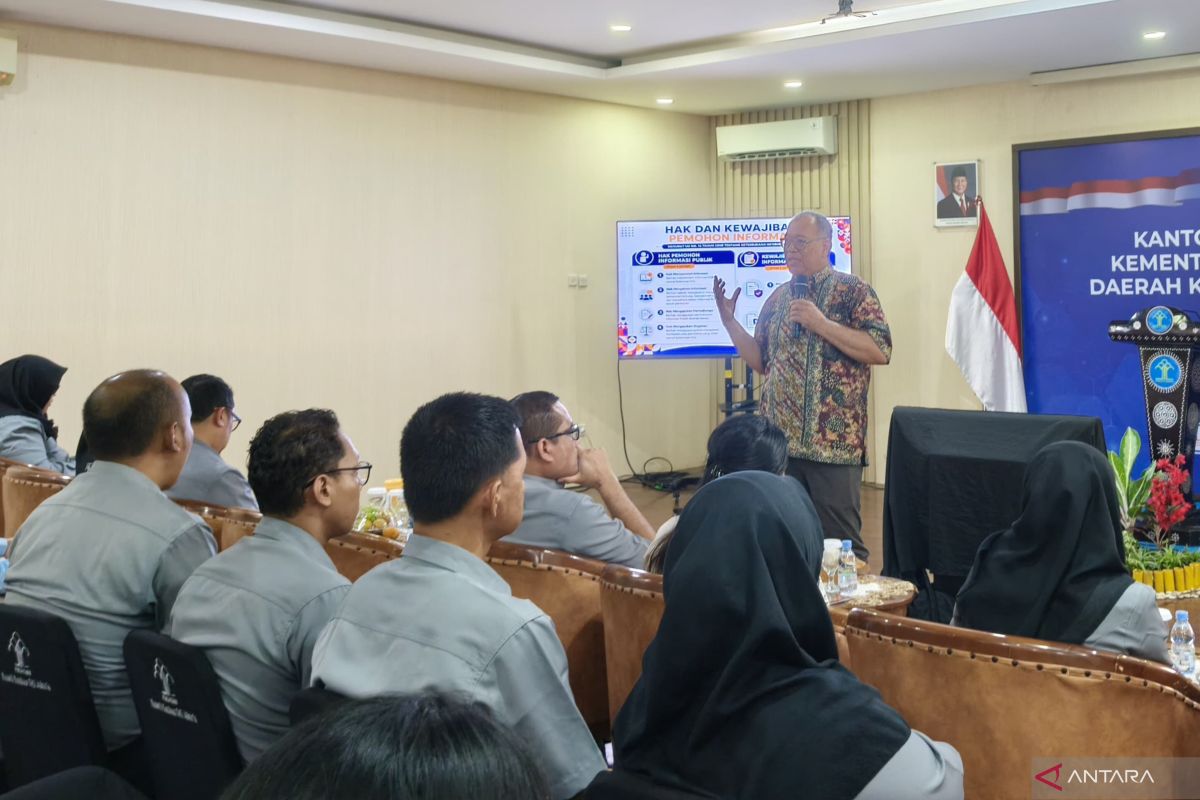
Jakarta (ANTARA) – The Jakarta Information Commission (KI DKI Jakarta) has stressed the importance of strengthening public information governance in a way that responds to residents’ needs, in order to improve institutional accountability.
“Public information disclosure ensures that people can obtain the information they need to access their rights and public services. When people receive accurate and adequate information, they can use it to improve their quality of life,” said Ferid Nugroho, head of the commission’s education, outreach and advocacy division, in Jakarta on Tuesday.
Ferid explained that the public’s right to information is guaranteed under Article 28F of the 1945 Constitution. This right enables people to access information they need, including details of government assistance programmes such as the Jakarta Smart Card (KJP) and direct cash assistance (BLT).
He identified three main actors in implementing public information disclosure: public bodies, information applicants and the Information Commission. Public bodies are required to provide information services through Information and Documentation Management Officers (PPID), while the Information Commission is responsible for resolving public information disputes within its remit.
According to Ferid, information disclosure is also a means for the public to assess institutional performance and accountability. He highlighted the importance of managing official documents and arrangements for sharing information between public bodies.
“Requested information needs to be managed in accordance with applicable regulations, including through direct requests to the relevant public body or by using the Indonesia One Data Portal under the available procedures,” Ferid said.
He added that public bodies must provide written notice in response to an information request no later than 10 working days after receiving it. This period may be extended by up to seven working days, provided written reasons are given.
If applicants receive no response or object to the service provided, they can submit an objection to the PPID’s superior, followed by a public information dispute resolution process through the Information Commission in accordance with the procedures.
“For public bodies, providing information that is open under the rules will make services easier and help prevent disputes. Conversely, exempt information must be handled carefully based on a consequences test and applicable legal provisions,” Ferid said.
Meanwhile, Magribi Putu Judhono, head of general affairs and administration at the Jakarta Regional Office of the Ministry of Law, said public information disclosure was closely linked to public trust in institutions.
Magribi said information management should not focus solely on procedures, information requests or PPID reports, but should also address the public’s real needs.
“Public information disclosure is not merely a matter of procedures, information requests or PPID reports; it is also about building public trust in institutions. Information governance must therefore be oriented towards the needs of the public,” Magribi said.