
Jakarta Information Commission Believes AI Utilisation Can Optimise Public Information Distribution
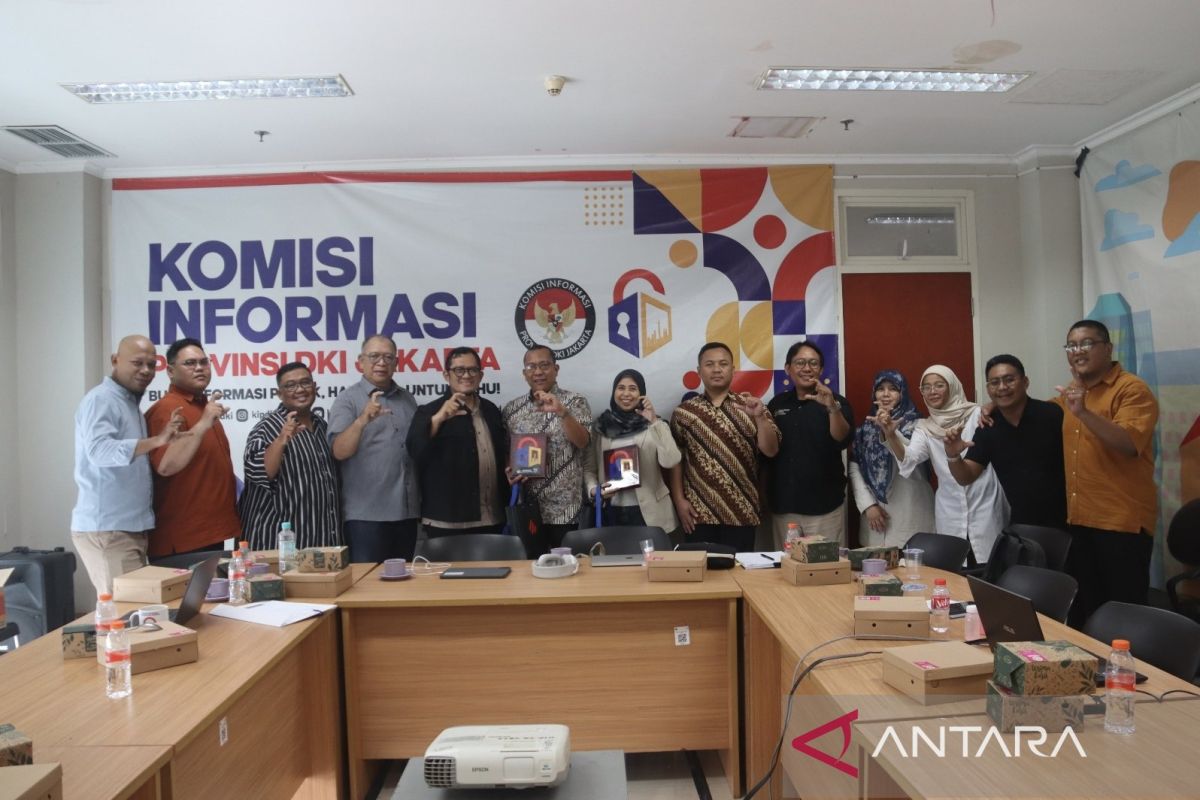
Jakarta (ANTARA) - The Jakarta Information Commission (KI) believes that the utilisation of Artificial Intelligence (AI) can optimise the distribution of public information to make it more widespread, accurate, and equitable.
Speaking at a Focus Group Discussion (FGD) titled “Public Information Transparency in the AI Era: The Role of Press and Cyber Media” in Jakarta on Monday, the Vice Chairman of KI Jakarta, Luqman Hakim Arifin, stated that current public information consumption trends have shifted towards AI-based platforms.
“Public information consumption in the current AI era is undergoing a change. Previously, people might have accessed news via websites, but it is now shifting towards AI Overviews. Therefore, news provided by the KI must be produced while considering these AI trends,” Luperman said in his statement in Jakarta.
He emphasised that the FGD serves as a vital momentum to gain insights and recommendations for strengthening Public Information Disclosure (KIP) in the digital era, which is closely linked to the role of the press in disseminating information.
Meanwhile, FGD speaker Ilona Juwita noted that AI is transforming into one of the primary sources for the public when searching for news. “Citing data from the Reuters Institute Digital News Report 2026, 12 per cent of Indonesians have used AI Chatbots as a weekly news source, placing Indonesia 4th in the world,” Ilona remarked.
“This behavioural change is triggering the ‘zero-click’ phenomenon, where 68 per cent of searches in the United States in early 2026 ended without a click to a website. Although content is cited by AI, it does not necessarily generate direct traffic to media outlets. Therefore, we need to adapt from mere SEO (Search Engine Optimisation) towards GEO (Generative Engine Optimisation),” Ilona explained.
Furthermore, she explained that the GEO framework prioritises clear facts, proven structures, and high credibility based on the principles of Experience, Expertise, Authoritativeness, and Trustworthiness (E-E-A-T). Local media providing first-hand reporting and hyper-local issues are considered to have a structural advantage in being noticed by AI systems.
During the same event, Bonar, a speaker from PWI Jaya Penerus, emphasised the importance of collaboration between the Information Commission and the media to mainstream public information disclosure so that it can enter AI-based search ecosystems, such as AI Overviews. However, he cautioned that the use of AI in news production still requires human verification.
“AI is merely a tool; verification is still necessary. Ultimately, the responsibility lies with the writer, not the AI,” Bonar concluded.