
Jakarta Housing Backlog Reaches 402,000 Households
Jakarta still faces major challenges in housing provision amid its efforts to transform into a global city. The capital’s housing backlog is recorded at around 402,287 households, while approximately 29,000 apartment units are said to remain unabsorbed by the market.
This situation was among the concerns raised at the REI DKI Jakarta 2026 Regional Working Meeting on Thursday (27/8). The DKI Jakarta provincial government and property industry players are encouraging the use of existing housing, the development of public transport-based areas, and financing schemes better suited to people’s means.
DKI Jakarta Regional Secretary Uus Kuswanto said Jakarta’s development cannot be marked only by the addition of infrastructure. It must also have an impact on people’s quality of life, including access to housing.
“What we are building is not only infrastructure, but also the quality of life of the community. Therefore, collaboration between the government and REI is very important so that more Jakarta residents can obtain decent and affordable housing,” Uus said.
According to Uus, one direction of Jakarta’s development is to strengthen housing integrated with the public transport system, or transit-oriented development. With this approach, residents can live closer to the MRT, LRT, KRL and TransJakarta networks, reducing mobility and travel costs to workplaces.
The DKI provincial government is also encouraging private sector involvement through creative financing schemes so that the development of city facilities does not depend entirely on the regional budget. A number of transport and public space integration projects have been developed through collaboration between the government and the business sector.
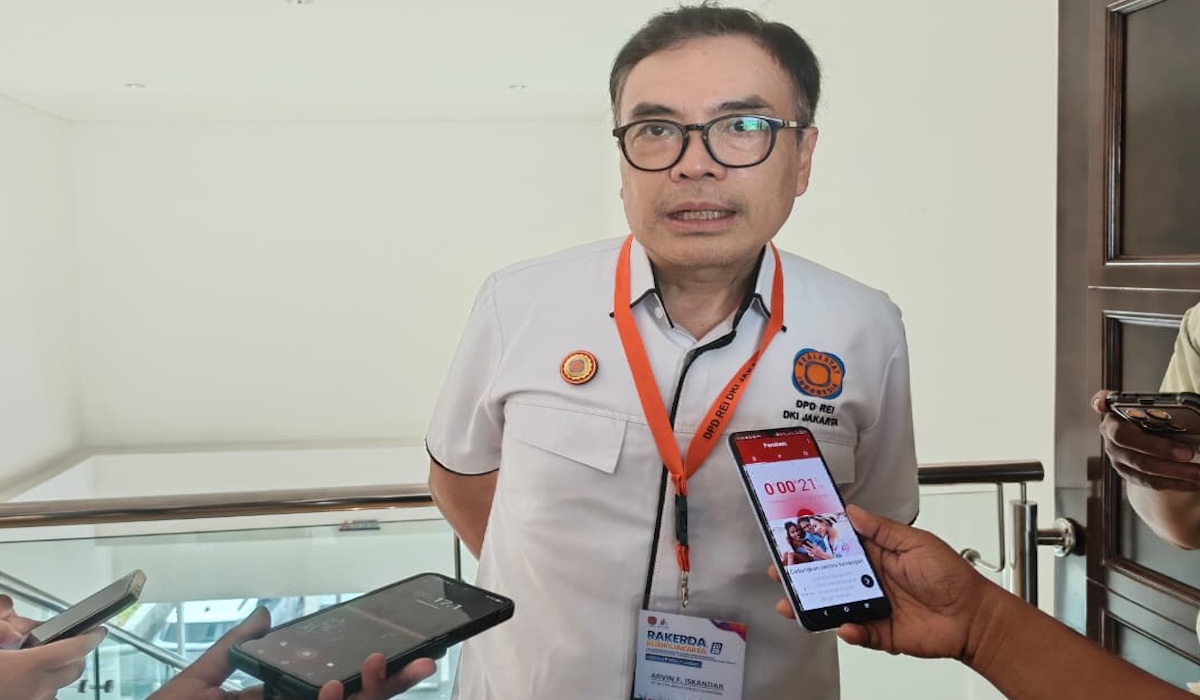
Chairman of REI DPD DKI Jakarta Arvin F. Iskandar said that amid still-high housing demand, there are around 29,000 apartment units in Jakarta that have not been absorbed by the market. According to him, the figure refers to research by Colliers Indonesia used as a reference by REI DKI Jakarta.
“Part of the solution is already in front of us. Now the question is how we make it accessible to the people who need it,” Arvin said.
He assessed that optimising existing units could be one way to accelerate housing provision if supported by policies, incentives and financing schemes that match people’s means.
Head of the Housing Financing and Partnership Division at the DKI Jakarta Public Housing and Settlement Areas Agency, Lady Natalia, said purchasing power remains the main challenge. Rising land prices make it increasingly difficult for some people to obtain housing in locations close to employment centres and public transport.
The DKI provincial government, among other measures, relies on the Housing Financing Facility as one instrument to expand access to home ownership. The scheme offers financing with a fixed interest rate of 5 per cent until the end of the tenor, financing of up to 100 per cent without a down payment, and a term of up to 20 years. The programme can also be used for existing housing.
REI DKI Jakarta is also pushing for housing policy to pay attention to the Certain Income Communities group, namely the group between low-income communities receiving subsidies and people who can afford commercial housing.
“They need housing close to workplaces and public transport, but may not necessarily be able to access commercial housing at market prices,” Arvin said.
The drafting of the Regional Regulation on Flats is also seen as a momentum to strengthen vertical housing policy in Jakarta. The DKI provincial government and businesses have previously collaborated on a number of housing projects, including Menara Samawa, Menara Kanaya, Sentraland Cengkareng and Bandar Kemayoran.
Through the integration of housing, transport and financing policies, the government and industry players hope that Jakarta’s transformation into a global city will be marked not only by modern infrastructure development, but also by residents’ ability to obtain decent and affordable housing near activity centres.