
Jakarta Hotel Occupancy Stagnates at 52 Percent, Squeezed Between a Saturated Market and Digital Lifestyles
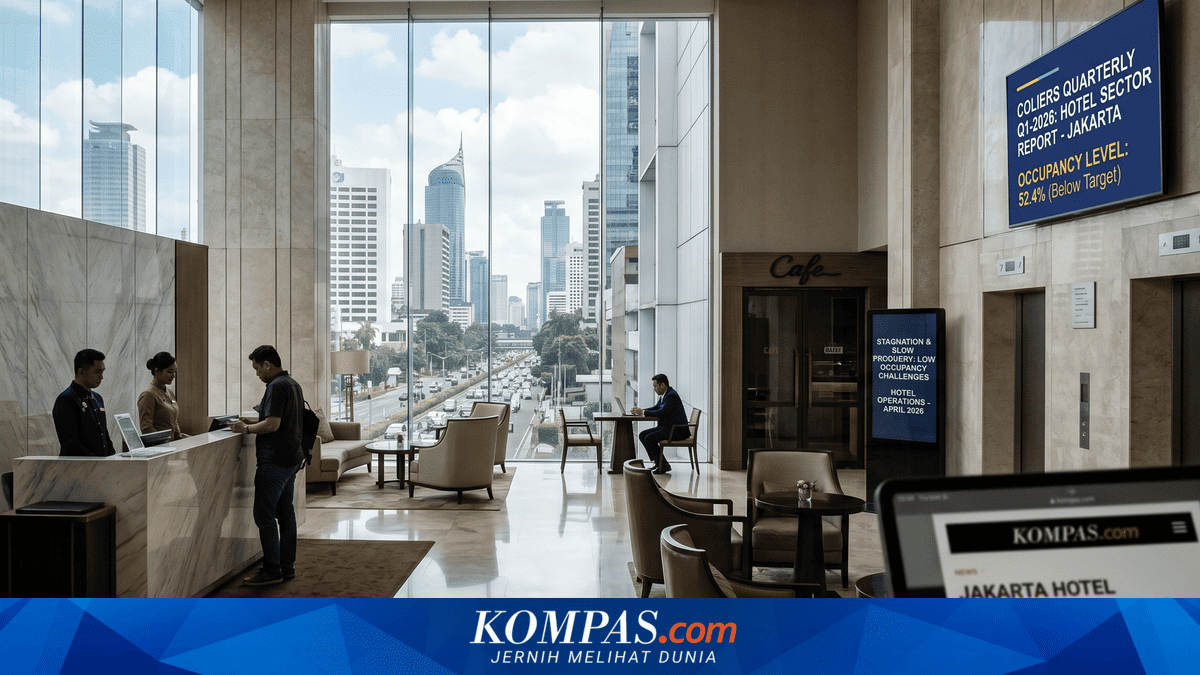
The hospitality sector in Jakarta remains mired in a difficult recovery phase throughout the first quarter of 2026. Although societal mobility has returned to normal, the industry has yet to escape the pressures of low occupancy rates and slowing new supply expansions. Hotels in the capital are grappling with a saturated market situation, while operational costs continue to rise. Head of Research at Colliers Indonesia, Ferry Salanto, assesses that the main challenge facing the hospitality sector currently is the persistent instability in the balance between supply and demand. Jakarta’s hotel market is experiencing clear stagnation. Property owners are now squeezed between the need to maintain service standards and the market’s low absorption capacity. “Without a push from large-scale business activities or massive international events, occupancy will struggle to break through ideal levels,” said Ferry, in the Colliers Quarterly Q1-2026 report, quoted by Kompas.com on Monday (20/4/2026). Based on operational data up to April 2026, the number of hotel rooms in Jakarta has grown only marginally. Delays in project completions have become a common phenomenon as investors tend to hold back from injecting capital into a sector with slowing returns. Meanwhile, the average daily room rate has seen a slight increase of 3 percent, but this rise is more attributable to inflation in energy and raw material costs rather than increased demand. Several hotels scheduled to open in the early part of the year have been forced to shift their operational targets to the end of 2026 or even 2027. Up to March 2026, only a few new properties have opened to the public. Among them is the Fairmont Signature Suite, which represents limited capacity addition in Central Jakarta. Then there is the Park Hyatt Extension, focused on the luxury segment with a highly niche market. Jakarta hotels’ reliance on the Meeting, Incentive, Convention, and Exhibition (MICE) segment has become a weak point. Reduced corporate business travel budgets and the permanent shift of meetings to digital platforms have cut off the main revenue stream for hotels in the Sudirman-Thamrin area. Ferry added that market segmentation is now the only way to survive. Hotels without a strong identity or adequate MICE facilities will increasingly fall behind. “We are seeing a change in consumer behaviour. Hotels can no longer just sell rooms. They must become lifestyle hubs or flexible work destinations. If they rely solely on conventional overnight guests, this business will continue to languish,” Ferry added.