
Jakarta Government Launches 'Traktir Kucing' Programme at Public Markets
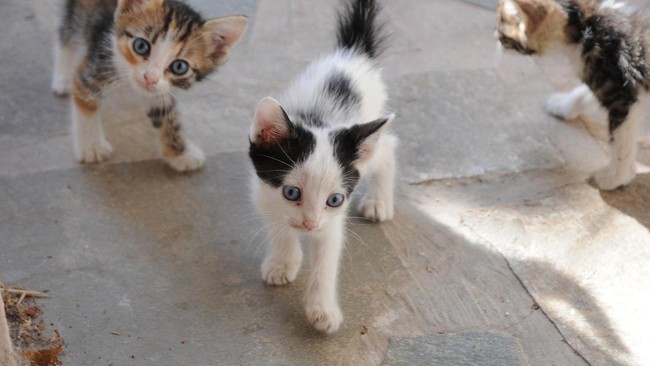
The Jakarta Provincial Government, through the Department of Food Security, Marine, and Agriculture (KPKP), has officially expanded the scope of the ‘Trakers Kucing’ (Transfer of Information and Education on Animal Welfare) programme. Following successful implementation in several residential areas, this programme, which focuses on animal sterilisation, is now targeting public areas, including Pasar Santa in Kebayoran Baru, South Jakarta.
This step was taken in response to the increasing population of stray cats in market areas, which frequently triggers hygiene and environmental health issues. Through this programme, the Jakarta Provincial Government also facilitates other actions, such as providing rabies vaccinations and educating market traders and visitors on animal handling.
A member of Commission B of the Jakarta Regional House of Representatives (DPRD) from the PSI Faction, Francine Widjojo, expressed appreciation for PD Pasar Jaya for introducing the sterilisation programme and establishing two ‘cat feeding’ points at Pasar Santa.
“This is a very good initiative from the Jakarta Provincial Government,” said Francine in her statement on Thursday.
The cat feeding points at Pasar Santa were inaugurated on 24 June 2026. The inauguration was attended by the Head of the South Jakarta KPKP Sub-department Ridho S. Yudyantoro, the Head of the Livestock and Animal Health Section of KPKP Irawati Harry Artharini, Pasar Jaya Area 11 Manager Dewi Ratna Furi, and the Head of Pasar Santa Shiva Ramadhania.
In addition to inaugurating the feeding points, the activity included the installation of educational banners and stickers to encourage the public to feed cats at the designated locations. The two feeding points are located at the entrance area near Tuku and Kawaki Roastery.
Francine noted that similar programmes have previously been implemented in various public spaces. In 2022, the Jakarta Provincial Government introduced cat feeding points within the Jakarta MRT environment. Subsequently, in 2025, similar facilities were built at the Kebayoran, Velbak, and Kuningan Madya TransJakarta bus stops, as well as at the Kebayoran KRL Station.
According to Francine, the addition of these facilities is part of the effort to realise Jakarta’s vision as an animal-friendly global city.
“I hope there will be even more cat feeding places in public spaces so that Jakarta becomes an animal-friendly global city,” she said.
She reminded that the addition of these facilities must be accompanied by public education to maintain environmental cleanliness and comfort, such as using paper-based containers and prioritising the use of dry food or kibble.
In addition to providing facilities, Francine requested that Pasar Jaya collaborate with the South Jakarta KPKP Sub-department to implement the Trap-Neuter-Return (TNR) programme at Pasar Santa.
She stated that sterilisation is a crucial step in controlling the cat population while simultaneously increasing public awareness regarding animal welfare.
Currently, data collection regarding the number of unsterilised cats at Pasar Santa is underway. Once the data collection is complete, these cats will participate in a free sterilisation programme facilitated by the South Jakarta KPKP Sub-department.
“The sterilisation is free from the South Jakarta KPKP Sub-department as a quota has already been allocated,” she revealed.
Francine also mentioned that the quota for free cat sterilisation in Jakarta continues to increase. From an initial 9,000 animals in 2024, the quota rose to 21,000 in 2025 and has further increased to 22,000 in 2026.
She added that access to animal health services will become even easier with the presence of six Animal Health Centres (Puskeswan) and five Veterinary Service Mobile Units (Moyanvet) in Jakarta this year.