
Jakarta Expands E-Waste Drop Boxes to Schools
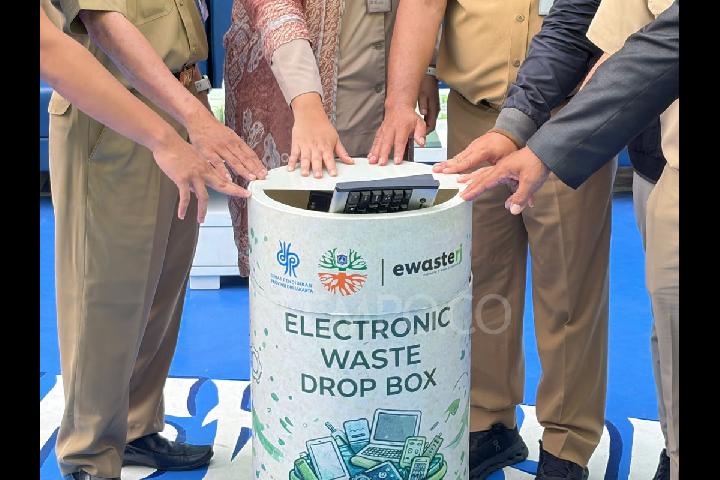
TEMPO.CO, Jakarta - The Jakarta Provincial Government is expanding its electronic waste management efforts through the E-Waste School Movement program. Initiated by community organization PT Daur Ulang Sampah Elektronik (EwasteRJ) in tandem with the Jakarta Environmental Agency and the Education Agency, the initiative launched at SMAN 68 Jakarta.
The Head of the Community Participation, Data, and Information Division at the Jakarta Environmental Agency, Elisabeth Tarigan, stated that the program aims to strengthen public awareness regarding waste management and sorting, particularly for electronic waste. She explained that the initiative began at eco-friendly Adiwiyata schools before expanding to other educational institutions across the capital.
“SMAN 68 was selected as the initial representative, and the program will then move to other Adiwiyata schools. There are 441 Adiwiyata schools out of approximately 9,000 schools across Jakarta,” Elisabeth said following the kickoff event at SMAN 68 Jakarta on Tuesday, September 22, 2026.
She added that expanding the initiative is necessary to broaden public access to electronic waste collection facilities. While the Jakarta Environmental Agency previously placed e-waste drop boxes in several government offices and public buildings, the rollout faced equipment and budgetary constraints.
Under the program, participating schools will receive a designated drop box to collect electronic waste. “Electronic waste does not accumulate in the same high volumes as organic or inorganic waste,” she noted.
The collected electronic items will be transported to specialized processing facilities. Transport schedules will adapt to each school’s needs, triggered either when a drop box reaches capacity or according to a set timetable.
Elisabeth expressed hope that the program will allow the electronic waste management process to be tracked systematically through to final processing. “Processing e-waste is more complex than processing plastic. Plastic recycling has presented long-standing challenges, and electronic waste processing is even more difficult,” she said.
EwasteRJ Founder Rafa Jafar stated that the organization aims to reach all designated Adiwiyata schools within a year. “We will not stop at a single city, but will continue this roadshow, starting with Adiwiyata schools first,” Rafa remarked.
Rafa noted that a similar outreach effort will simultaneously expand to several other regions. “In tandem with Jakarta, we will extend operations to Yogyakarta, Bali, and Bandung,” he said.
According to Rafa, managing electronic waste effectively requires not only physical infrastructure such as recycling plants, but also social infrastructure in the form of public literacy. He emphasized that establishing drop boxes must go hand in hand with educating the community about the nature of electronic waste.
“If people people don’t even know what e-waste is, there’s no point in having a million drop box locations as no one will dispose of it there,” he concluded.
Read: 40,000 Children Among 174,000 Cases of Respiratory Issues in Haze-Hit Indonesia
Click here to get the latest news updates from Tempo on Google News