
Jakarta Eradicates Sailfin Catfish, While US and Australia Battle Invasive Rats
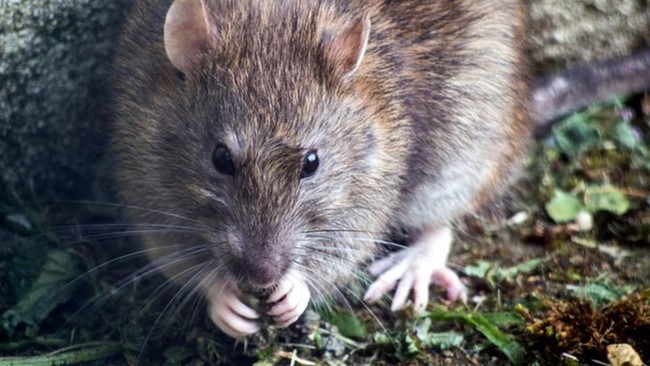
The restoration of ecosystems in various regions and countries often requires radical policies, including the eradication of certain animals.
The Jakarta Provincial Government (Pemprov) conducted a mass capture operation for sailfin catfish in several water bodies in the Capital on Friday. As a result, 6.9 tonnes of sailfin catfish were successfully removed from Jakarta’s rivers and reservoirs.
This operation is part of efforts to restore Jakarta’s aquatic ecosystems. Pemprov assesses that the dominance of sailfin catfish has disrupted environmental balance because this invasive species reproduces very quickly and suppresses local fish populations.
Sailfin catfish are known to survive in polluted waters and have a high reproduction rate. Consequently, this species often dominates rivers and reservoirs, threatening the habitats of other organisms.
Therefore, controlling the sailfin catfish population is deemed necessary on an ongoing basis, not only through capture operations but also through improving water quality and monitoring the release of foreign species into public waters.
Pemprov hopes that through collaboration between government, communities, and the public, the water quality and river ecosystems in Jakarta can continue to improve in the future.
US Hunts Rats
Jakarta is not alone; similar policies have been implemented in several countries.
The Pacific region has shown significant results following the eradication programme or extermination of invasive rats at Wake Atoll in the North Pacific Ocean starting from the end of 2024.
Invasive rats have long been known as the main predators that prey on seabird eggs and chicks, thereby suppressing the reproductive success rates of native species.
Eradicating rats at Wake Atoll was no easy task. Its extremely remote location, extreme weather, and sensitive military infrastructure posed major challenges.
To address this, a collaboration was formed between Island Conservation, the United States Department of Agriculture (USDA), and the US Air Force Civil Engineer Squadron.
Before the operation, the rat population there even exceeded the human population with a ratio of 1,000 to 1. The rats damaged electrical cables, contaminated food supplies, and even ran over residents while they slept.
Nature Revives in a Short Time
In just one year after the rat eradication programme, ecosystem recovery showed results that exceeded expectations.
Sixteen species of seabirds returned to nest in the area, including Laysan Albatross, Black-footed Albatross, Wedge-tailed Shearwater, Red-footed Booby, and Red-tailed Tropicbird. The return of these various species marks the recovery of natural habitats previously disrupted by invasive predators.
The most striking phenomenon was the appearance of a colony of around 2,000 Sooty Terns at Bikar Atoll, whereas the previous year not a single Sooty Tern was found at the location.
On land, recovery also occurred rapidly. Thousands of Pisonia tree seedlings grew in areas that were previously barren, followed by a surge in populations of small fauna such as hermit crabs, geckos, spiders, and moths. This demonstrates that the removal of predator pressure opens space for comprehensive ecosystem regeneration.
This ecosystem recovery not only impacts the environment but is also directly felt by residents on the island. The elimination of invasive rats has significantly reduced the risk of disease transmission, while creating a safer and more comfortable environment. These changes have also transformed the island’s atmosphere into something more vibrant, with the return of various native species.
The positive impacts have also spurred community participation in environmental conservation. Residents have begun organising beach clean-up activities and follow-up conservation actions as a form of care for the recovering ecosystem.
The success at Wake Atoll now serves as a concrete example for ecosystem restoration efforts on other remote islands in the Pacific region.
South Georgia Island Officially Rat-Free, Rare Birds Revive
On 18 May 2018, South Georgia Island was officially declared free of rats and mice following a massive eradication project led by the South Georgia Heritage Trust.
Rats are believed to have entered during the era of seal hunting expeditions, then spread to nearly two-thirds of the island’s coastline. For two centuries, these invasive animals consumed bird eggs and chicks, causing local bird populations to plummet sharply and some species to face extinction.
To counter this, three stages of bait distribution were carried out in 2011, 2013, and 2015 using helicopters and manual methods. In the final stage from 2017-2018, a special team spent six months searching for remaining rats using thousands of detection devices and tracker dogs.
As a result, no more signs of rats were found. In contrast, endemic birds such as the South Georgia pipit and South Georgia pintail began to recover dramatically.
Covering an area of more than 100,000 hectares, this project became one of the largest rat eradication operations in the world and is now protected by strict biosecurity systems to prevent rats from returning.
The world’s largest project to eradicate dangerous invasive species was declared successful after the remote island of South Georgia became free of rats and mice that had damaged its wildlife for nearly 250 years.
Rats and mice were inadvertently brought to the island—which lies off the southern tip of South America and near Antarctica—by ships docking there, generally during whaling expeditions. The impact on native bird populations was enormous. Unaccustomed to predators, the birds nested on the ground or in burrows, making them easily accessible to the rodents.
Two bird species unique to the island, namely the South Georgia pipit and South Georgia pintail, were largely forced to survive on a few small offshore islands unreachable by rats. Meanwhile, populations of penguins and various other seabirds were also threatened.
Macquarie Island