
Jakarta Education Office: Industry-SMK collaboration key to meeting hybrid and EV era
Jakarta (ANTARA) – The Jakarta Provincial Education Office is promoting sustained collaboration between vocational high schools (SMKs) and industry, saying it is key to preparing workers who can adapt to developments in automotive technology, including the transition to electric and hybrid vehicles.
Erni Mawarni, head of the Education Office’s Vocational High Schools, Courses and Training Division, said industry involvement was needed to ensure teaching kept pace with workplace requirements and to update teachers’ skills, as they are at the forefront of vocational education.
“This collaboration is very important, so our learning cannot be confined to the school. Before the students, the teachers should first be equipped with knowledge of this technology. That is why we are working with industry, including from overseas,” Erni said in Jakarta on Thursday.
She said the demand for skilled workers also extended to the servicing and repair of electric vehicles. Human-resource readiness therefore needed to keep pace with the growing use of the technology, as well as increased investment in manufacturing facilities by foreign automotive brands in Indonesia.
“It is not just about having the cars; it is also about what happens if there is a problem, and whether workshops and technicians are ready, among other things,” she said.
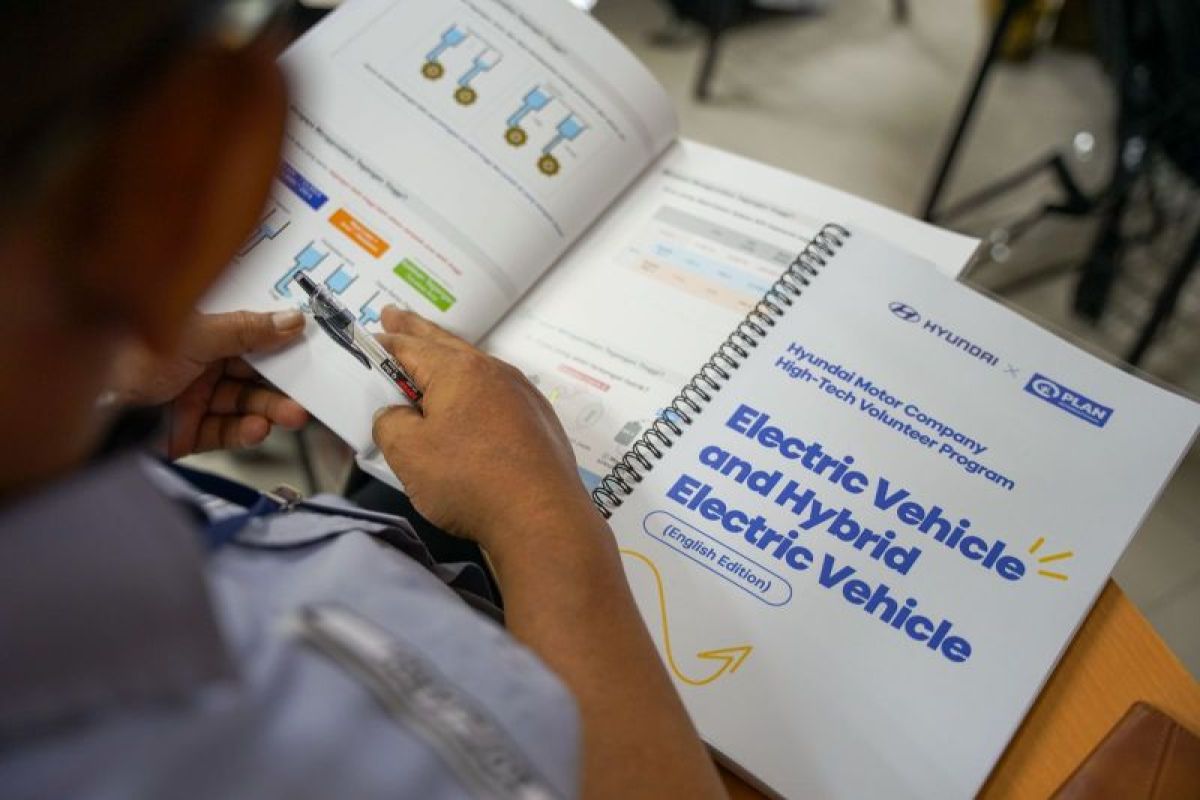
One such initiative is the Hyundai Motor Company High-Tech Volunteer Programme, held from 13 to 15 October 2026 at the Industrial Development Job Training Centre (PPKPI) in East Jakarta.
The programme, a collaboration between Plan Indonesia, Plan Korea and Hyundai Motor Company, was attended by 60 vocational teachers and instructors, including four women.
“Whether we like it or not, we have to adapt. That is why we continue to work with industries, so our young people are ready when they enter employment or start a business,” Erni said.
Erni hopes activities of this kind will continue, so that improvements in educators’ skills will benefit classroom learning and help prepare students for the evolving needs of the automotive industry.