
Jakarta DPRD Seats at Risk of Losing 21; Revision of DKJ Law Urged to Enter National Legislation Programme
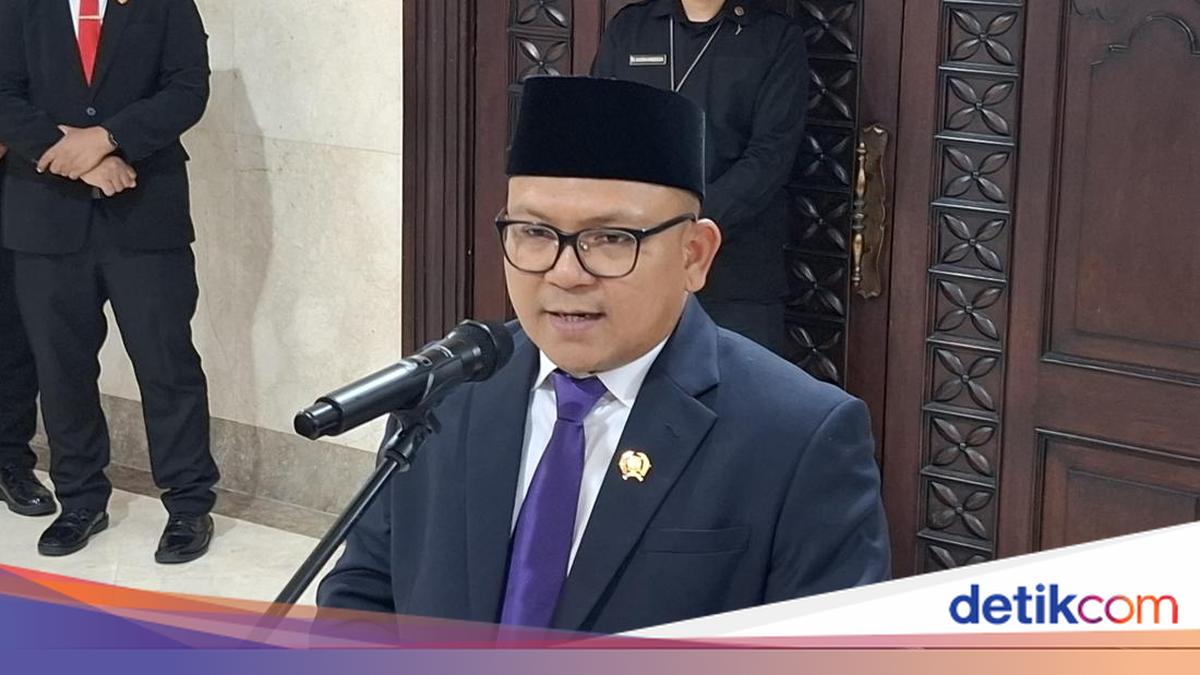
The leadership of the Jakarta DPRD is urging the revision of Law Number 2 of 2024 concerning the Special Region of Jakarta (DKJ) to be included as a priority in the House of Representatives’ National Legislation Programme (Prolegnas). This revision is considered vital to maintaining the number of Jakarta DPRD seats, which are currently threatened with a reduction from 106 to 85.
Deputy Chairman of the Jakarta DPRD, Basri Baco, stated that the current 106 members are based on Law Number 29 of 2007 regarding the Government of the Province of DKI Jakarta as the Capital of the Republic of Indonesia. “I urge that the revision of Law Number 2 of 2024 concerning the Special Region of Jakarta (DKJ), particularly Article 11, paragraph 3, enters the priority of the National Legislation Programme (Prolegnas) in the DPR RI,” Baco said at the Jakarta DPRD Building on Monday (5/10/2026).
Baco explained that without such specific provisions, the number of Jakarta DPRD seats could potentially follow the general formula stipulated in election-related regulations. Based on those calculations, the number of Jakarta DPRD members could drop to only 85 people. Conversely, if the special provision allowing for a maximum of 125 per cent is reinstated, the number of seats could be maintained at 106.
According to Baco, this issue was the primary reason the Jakarta DPRD leadership held an audience with the Legislative Body (Baleg) of the DPR RI last Friday (2/10). They are pushing for the DKJ Law revision to be included in the Prolegnas. He noted that the special provision regarding the number of seats needs to be maintained because the relocation of the national capital to Nusantara (IKN) has not yet been officially established via Presidential Regulation (Perpres).
“The capital has not officially moved to Nusantara (IKN), so we are still using DKI Jakarta according to Law Number 29 of 2007,” he said. Baco emphasised that this effort is not an attempt to seek additional privileges for Jakarta. He argued that the number of DPRD seats is directly related to the representation of the community within the regional legislative institution.
“This is why we requested justice during our audience with the Baleg, seeking a revision for the good of the people of Jakarta and for Jakarta’s development. We are not asking for more than that, so please do not misinterpret this,” he asserted.
He further compared the ratio of population to DPRD members in Jakarta with other regions. Baco noted that with the current number of seats, one Jakarta DPRD member represents approximately 100,000 citizens. In contrast, in Banten Province, one DPRD member represents about 26,000 citizens, while in West Java and East Java, the figure is around 30,000 citizens per member.
He argued that if the number of Jakarta DPRD seats decreases, the space for representing public aspirations could become increasingly limited. While pushing to maintain the special seat allocation for now, Baco stated that Jakarta should be treated like any other province once it officially ceases to be the national capital, both de jure and de facto.
In his view, such a change in status must be accompanied by adjustments to regional governance, including the direct election of mayors and regents by the public and the formation of DPRD at the city and regency levels. He cited Special Regions like Yogyakarta, Aceh, and Papua, which possess special status but also maintain DPRD at the city and regency levels.
He added that the revision of the rules regarding the number of Jakarta DPRD seats must be completed before the election stages reach their specified deadline. Baco noted that the General Elections Commission (KPU) has warned that regulatory changes need to be finalised at least two years before an election to serve as a reference for determining the number of DPRD members. “Because the KPU will rely on the DKJ Law to regulate the number of Jakarta DPRD members when they work on the Election Law alongside Commission II of the DPR RI,” Baco said.
Previously, the Legislative Body (Baleg) of the DPR RI held a public hearing with the Jakarta DPRD. During this meeting, the Jakarta DPRD requested a revision to the Law on the Special Region of Jakarta (DKJ) and also proposed an increase in the number of seats. The Chairman of the Jakarta DPRD Regional Regulation Formation Body (Bapemperda), Abdul Azis, initially stated that the current number of seats is 106. He also highlighted the heavy workload of the Jakarta DPRD.
“The proposal for the amendment of Article 11, paragraph 3 of the DKJ Law is: The members of the Jakarta Province DPRD shall number at most 125% of the number of DPRD seats based on the population category of the Special Region of Jakarta as determined by the election law. This, if we are moderate, would maintain the 106 seats. In fact, we are not just looking to stay at 106,” Azis said during the meeting at the DPR on Friday (2/10).