
Jakarta DPRD Member: Number of Teachers in Jakarta is Not Yet Proportional, Leading to Heavy Workloads
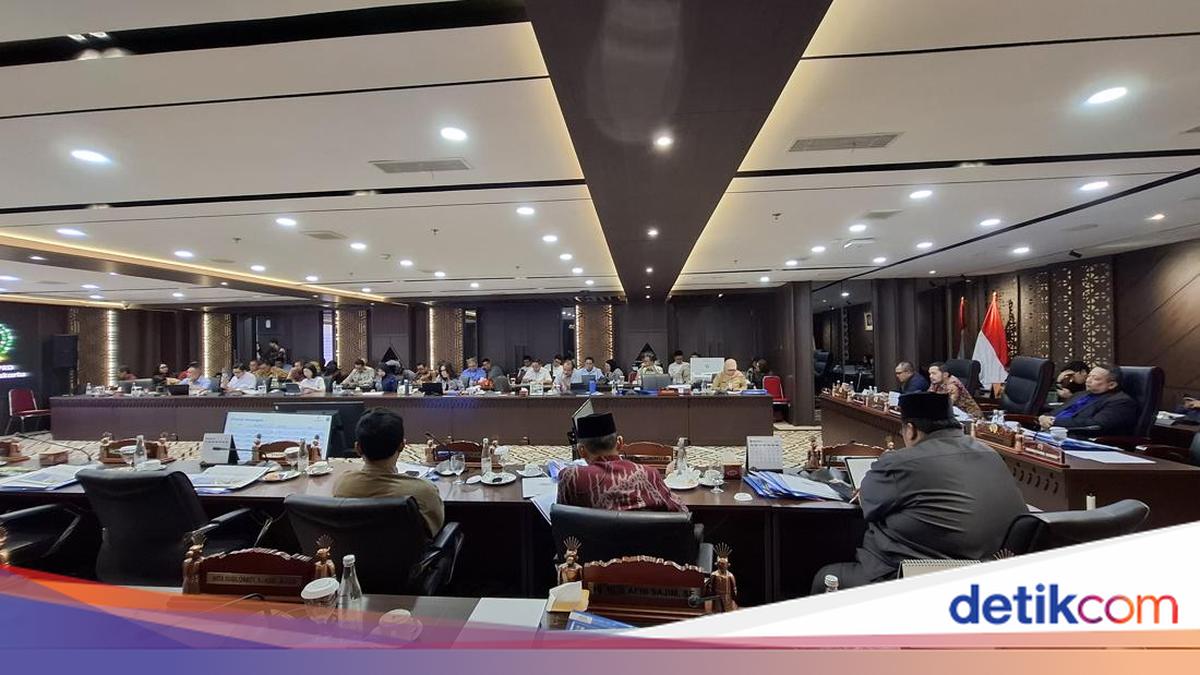
A member of the Jakarta DPRD has highlighted that the number of teachers in Jakarta is not yet proportional to school needs. This condition is said to result in a significant workload for many educators.
Ghozi Zulazmi, a member of Commission E of the Jakarta DPRD, stated that increasing the number of teachers is necessary to meet school requirements. However, he emphasised that such additions must also consider the rights of non-ASN (non-civil servant) teachers who are already teaching.
“According to our records during meetings with the Education Office, as well as field reports from school teachers, the number of teachers in Jakarta is not yet proportional. Consequently, many teachers are facing heavy workloads,” Ghozi said at the Jakarta DPRD building on Thursday (24/9/2026).
The PKS legislator suggested that increasing the teacher count could be achieved by strengthening the KKI (Individual Work Contract) pathway, which is currently managed by the Jakarta Education Office. He noted that this policy must go hand-in-hand with protecting the rights of existing non-ASN teachers.
“Ideally, increasing the number of teachers is very much needed, but this addition must be accompanied by the alignment of non-ASN teachers’ rights and must not hinder the rights of existing staff,” he added.
Based on data presented during the 2026 Regional Budget (RAPBD) discussions, 2,545 KKI positions have been opened for 2026. This consists of 1,879 educator positions and 666 educational staff positions, spanning from early childhood education (PAUD) to vocational high schools (SMK).
Ghozi stated that the demand for teachers in Jakarta has not been fully met, with vacancies particularly prevalent in certain subjects.
“On the other hand, the ASN/PPPK quota allocated to Jakarta is very limited for 2026, meaning additions through the central ministry pathway are disproportionate to the real needs,” he explained.
He noted that teacher shortages are occurring in subjects such as Mathematics, Physics, and English, as well as for vocational teachers at the SMK level.
Therefore, Ghozi believes the KKI pathway can be strengthened as an effort to meet Jakarta’s teaching needs. However, he cautioned that such policies must remain mindful of the regional financial capacity.
“The teacher deficit in Jakarta is real and exacerbated by central government quota restrictions. The proposal to add teachers is relevant, but its development must strengthen the existing KKI pathway, ensure equal pay and rights according to regulations, and maintain the proportion of personnel expenditure so as not to burden the regional budget,” he said.
Ghozi also emphasised the importance of teacher professionalism, for both ASN and non-ASN staff. He noted that Teacher Professional Education (PPG) requirements must still be observed in the process of meeting teacher needs.
“PPG is a mandatory professionalism requirement for all teachers, including those on the non-ASN pathway,” he added.
Responding to this, the Head of the Regional Civil Service Agency (BKD), Premi Lasari, ensured that thousands of honorary teachers within the Jakarta Provincial Government are still permitted to teach until December 2026.
Regarding the clarity of teacher employment status, direct support from the central government is required. Jakarta still faces a shortage of teacher positions because the 2026 CPNS (Civil Servant) formations from the central government are prioritising specific sectors.
“CPNS formations are only for BGN, Koperasi Merah Putih, and integrated schools,” Premi revealed.
He explained that approximately 7,000 Individual Work Contract (KKI) personnel under the Education Office are mostly honorary teachers.
“We have coordinated with the Ministry of Primary and Secondary Education regarding the fate of the Jakarta Provincial Government’s honorary teachers listed in the Ministry’s Dapodik (Basic Education Data) system,” said Premi.
The Jakarta Provincial Government will continue to monitor the situation to ensure that educators in the Dapodik system have status certainty through the P3K (Government Employees with Work Agreement) mechanism.
“We are awaiting further policy direction,” he concluded.
Source: jawawa.id (https://jawawa.id/newsitem/jakarta-dprd-member-number-of-teachers-in-jakarta-is-not-yet-proportional-leading-to-heavy-workloads-1790222549)
Originally published by detikcom (https://news.detik.com/berita/d-8676704/anggota-dprd-jumlah-guru-di-jakarta-belum-proporsional-beban-kerja-besar), translated from Indonesian